

|
Getting your Trinity Audio player ready...
|
We recently sat down with Julio López, Director General of Grupo Hendez, a Cabo-based firm specializing in project management, construction oversight, and owner representation for residential builds. Over the course of the conversation, we discussed what actually determines whether a project succeeds or fails when building from abroad, where control is most often lost, and how factors like documentation, financial structure, and market volatility shape outcomes in Baja. What follows is a practical, on-the-ground perspective for anyone considering building in Los Cabos.
For someone building a home in Cabo while living in the U.S., what decisions most determine whether the project goes well?
Everything begins with who you hire. The builder, project manager, or architect you choose will define the outcome of the entire project. But one of the most common mistakes is relying on a single referral. It is important to speak with several teams, understand how they work, and compare their approach before making a decision.
Once you have the right team, the next step is having a complete executive project. That means a full set of drawings and detailed specifications that clearly define what is being built and what is included in the budget. Without that level of definition, there is too much room for interpretation during construction.
The third key element is a financial chart. This allows you to track the project’s progress remotely, linking construction milestones to disbursements. If you have the right people, a well-defined project, and clear financial visibility, you are in a strong position to keep control of the process even from a distance.
Many buyers rely on a single referral when choosing a builder or project manager. Where does that approach tend to break down?
It breaks down because a referral is only one perspective. In many cases, a real estate agent or contact will recommend a single builder, and the client moves forward without exploring other options. That limits your understanding of how different teams operate, structure their projects, and manage costs and timelines.
Today, there is much more access to information. You can review websites, speak directly with different builders, and ask about their procedures. When you compare approaches, you begin to see differences in organization, transparency, and communication.
Choosing the right team is the foundation of the project. If that decision is made too quickly or without comparison, it can affect everything that follows, from the quality of construction to the control you have over time and budget.

Villa Aqua by Grupo Hendez
You emphasize the need for a complete “executive project.” What does that include, and what risks appear when it’s incomplete?
A complete executive project includes all architectural drawings and a full set of specifications. The drawings define the structure, but the specifications define exactly what you will receive: finishes, materials, systems, appliances, and every detail that affects cost and execution.
This is where many projects begin to lose control. If the specifications are not clear, decisions are made during construction instead of before. That often leads to changes, delays, and additional costs that were not originally anticipated.
Today, with the level of systems involved in a home, from finishes to automation, it is very easy for expenses to increase if those elements are not defined early. A well-prepared executive project removes ambiguity. It allows both the client and the builder to work with the same expectations from the beginning.
Once a project is underway, what should a well-managed build look like on a weekly or monthly basis from the owner’s perspective?
A well-managed project is guided by a financial chart that tracks construction progress over time. This chart is typically structured by months and broken down into weekly milestones, allowing you to see how the project is advancing step by step.
Each phase of construction, from site preparation and foundations to structure and finishes, is tied to a percentage of completion. That makes it possible to align progress with payments, so disbursements correspond to work that has actually been completed.
With current technology, this process is supported by regular reports, including photos and videos, so the owner can follow the project remotely. In some cases, it is also advisable to have an external supervisor who verifies that the work is being executed in accordance with the specifications and the agreed schedule.
When all of these elements are in place, the owner has visibility and control, even without being physically present.
When a project starts to go wrong, where does it usually begin to slip out of control?
It usually begins with the financial chart. If the project is not following the planned schedule, that is the first signal that something is off. Each phase of construction should correspond to a defined percentage of progress, and when those benchmarks are not being met, the timeline and the budget begin to drift.
From there, the problem compounds. If payments are not aligned with actual progress, you lose a key control mechanism. The project may continue moving forward, but without a clear link between completed work and disbursed funds, it becomes difficult to correct course.
Construction follows a sequence, from site preparation and foundations through structure and finishes. When that sequence is not tracked carefully against the financial plan, delays and cost overruns tend to appear. In most cases, projects do not fail suddenly. They gradually move off track as visibility is lost.
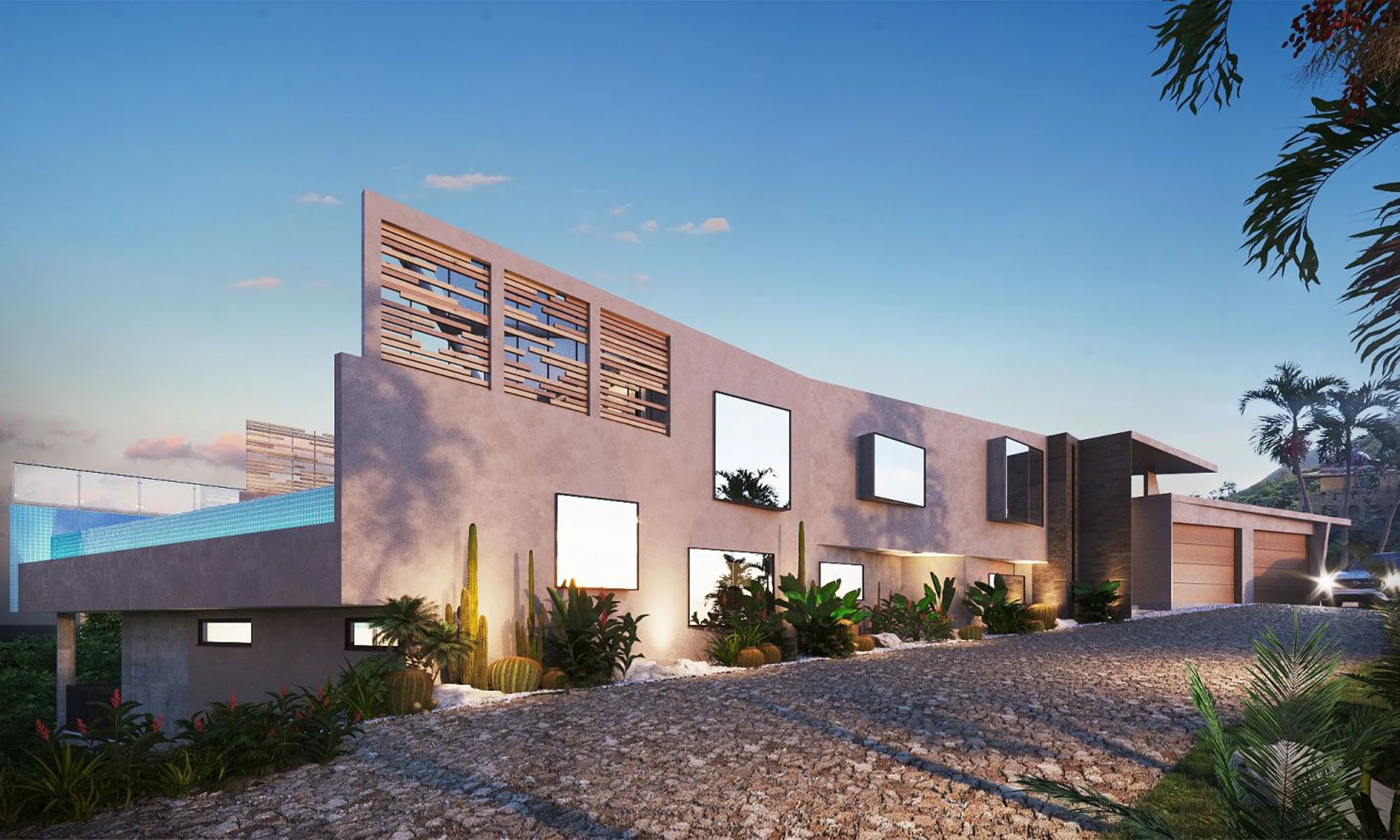
Villa Nikana by Grupo Hendez
How do factors like exchange rate volatility, inflation, and logistics in Baja affect construction budgets and timelines?
These factors have a direct impact and need to be considered from the beginning. In the past, working in dollars provided a level of comfort because exchange rates often offset inflation. That is no longer always the case. If a contract does not include a clause that accounts for currency fluctuations, one side can be exposed to significant losses.
In Baja, this is compounded by logistics. Most materials and goods are brought in from mainland Mexico or the United States, so costs are sensitive to fuel prices and transportation. When energy costs rise, it affects everything, from materials to labor.
There is also the reality that the region operates with its own infrastructure constraints, including energy generation. All of this means that external variables can influence a project’s cost over time.
For that reason, it is important to structure contracts carefully, include provisions for adjustment when necessary, and maintain clear communication so that changes in external conditions do not become unexpected problems during construction.
Is it ever realistic for a foreign buyer to manage a build on their own, or does that typically lead to problems?
In smaller projects, or when someone has prior construction experience, some buyers attempt to manage the process themselves. But even in those cases, they quickly encounter a very different environment. Construction in Cabo relies primarily on concrete systems, which behave differently from the wood-based methods many buyers are familiar with in the U.S. or Canada.
There are also practical barriers. Language, local processes, and coordination with crews all add complexity. Some buyers try to assemble their own teams, but the final result is often not as consistent or well-executed as expected.
In higher-end projects, this is less common. Buyers at that level tend to understand the scale of the investment and the importance of having an experienced team in place. The challenges usually arise when someone assumes the process is simpler than it is or believes it can be managed informally.
If you had to give one piece of advice to someone building remotely in Cabo, what would it be?
Have a complete set of drawings with full specifications, supported by a clear financial chart, and make sure everything is documented and agreed in writing. Those elements create transparency for both sides and define how the project will move forward.
With current technology, communication is easier than ever. Progress can be shared through reports, images, and video, keeping the owner informed at all times. If needed, an additional supervisor can also be brought in to review progress and approve disbursements.
When expectations are clearly defined and communication is consistent, the project becomes much more manageable. The goal is to ensure that both parties understand the scope, the process, and the objectives from the beginning, so there are no surprises along the way.
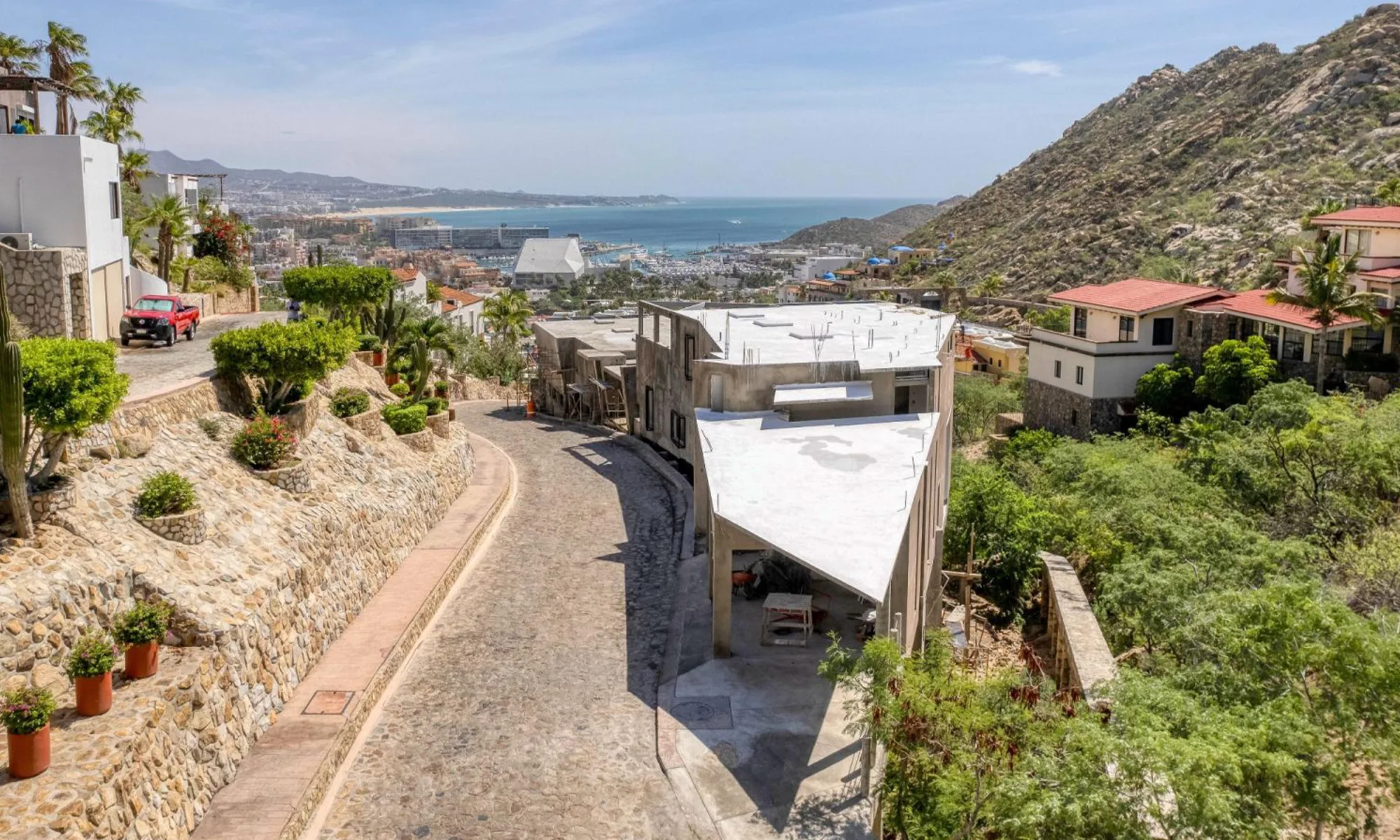
Villa Nikana by Grupo Hendez