
|
Getting your Trinity Audio player ready...
|
Hector Pérez moved from Mexico City to Los Barriles in 2008 to start a property management company, arriving just as the subprime crisis hit. For eight months, he had just one client, and the early years were lean. He stayed, built the business back up, and started noticing something across the homes he managed: cars, boats, houses, all uninsured. With a background in corporate finance, he started asking clients if they wanted to cover what they were leaving behind. That’s how the insurance side began.
Wolf Insurance & Property Management now covers the East Cape from La Ribera to El Cardonal. Hector sat down with Destino Magazine to walk through what expats get wrong about insurance in Mexico, and what to check in the policy you already have.
Before You Look at Your Specific Policy, Read This
Why the policy you’ve been paying for might not cover you
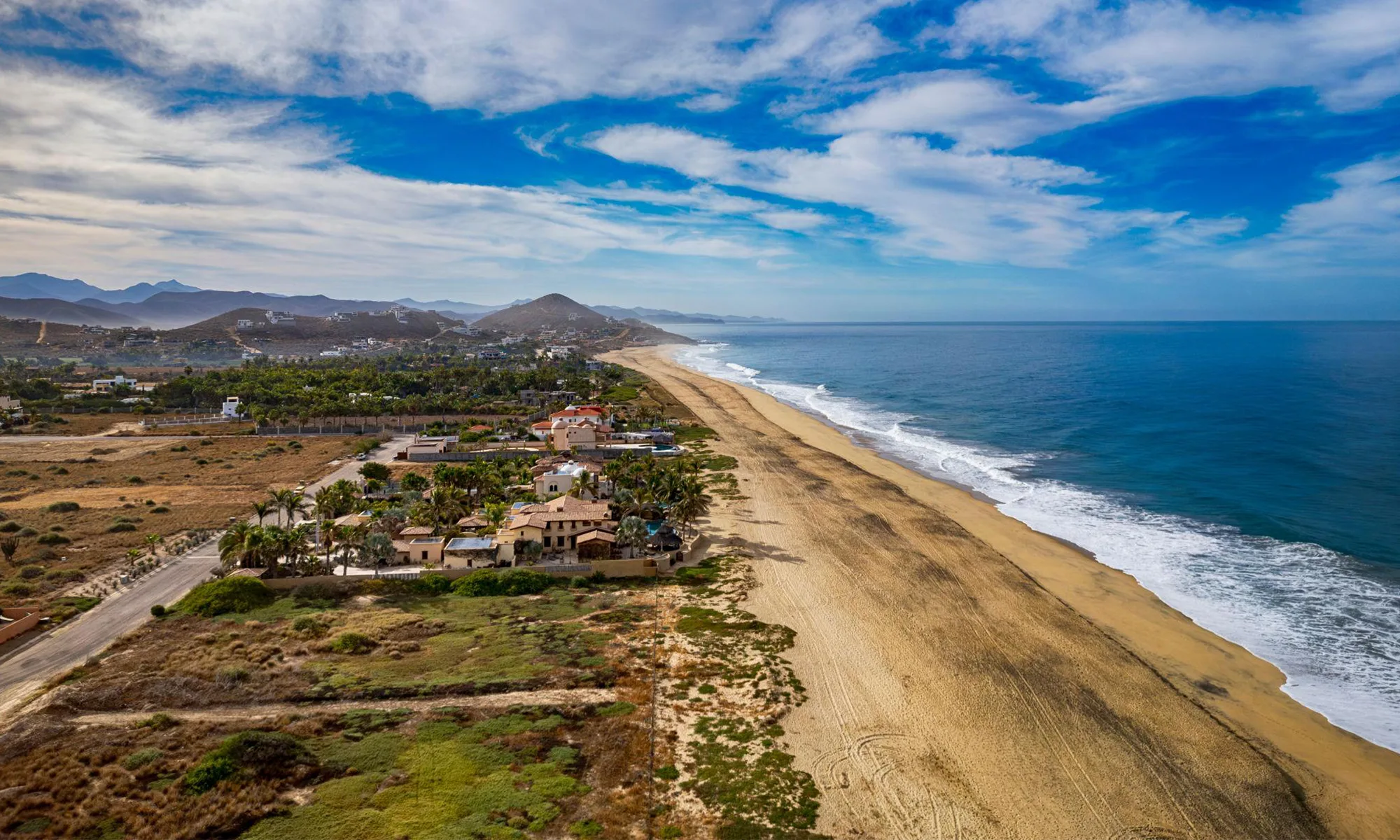
A homeowner walks in with a policy they’ve held for five or ten years, premiums paid on time every year. Read it closely, though, and there may be a problem that would void a claim. The most common version: the property is beachfront, but the policy doesn’t list it as within 500 meters of the ocean. Properties that close to the water face far more hurricane damage, and the insurer prices the premium accordingly. If your policy doesn’t reflect where your house actually sits, you’ve been paying the rate for a lower-risk property, and when a claim comes, the insurer has grounds to reduce the payout or refuse it.
These errors rarely come from the homeowner. They come from how the policy was written and whether anyone checked it against the actual property. The fix is simple but must happen before you file: pull out your policy, read what it says about your home, and compare it to reality.
What surprises expats about how insurance works in Mexico
Most of the basic concepts carry over from the US. Deductibles work the same way, premiums work the same way, and the general structure of a policy will look familiar. What catches expats off guard is what happens around those basics.
In the US, most validation work is done on the insurer’s side. You fill out a form, they run their checks, and the policy comes back sound. In Mexico, more of that work sits with you and your agent. Policies are built around specifics — where the house sits, what the roof is made of, whether there’s a palapa outside — and those details have to be entered correctly at the start. If they aren’t, the policy looks fine on paper and fails when you try to use it.
Timelines are also longer than expats expect. A vehicle policy can come together in a day or stretch to two weeks. A home policy usually takes one to three weeks. The delay is the validation step: confirming that what’s on the policy matches what you actually own. Agents who skip that step sell faster, and their clients find out the difference later.
What your agent isn’t doing. And why it matters when you file a claim
Many agents in Mexico sell the policy and step back. The sale closes, the paperwork goes in, and the client doesn’t hear from them again until renewal. That’s fine as long as nothing is going wrong. It becomes a problem the moment you file a claim.
A claim in Mexico is a back-and-forth process. The insurer sends adjusters and requests technical reports from engineers or plumbers, and it moves at its own pace. Left alone, a claim can sit for weeks without progress. What moves it forward is someone on your side staying in contact with the insurer and escalating when the file stalls. If your agent isn’t doing that, the claim drifts.
There’s a version of this that expats often run into. A client complains that a particular insurer is terrible, slow, and unwilling to pay. A look at the file usually shows something different. The insurer was doing what insurers do. The agent was the one who went quiet. The agent was friendly, the relationship felt good, and the client assumed the work was being done behind the scenes.
The question to ask before you need to file is: What does your agent actually do when a claim comes in? Do they report it for you, or do they tell you to call the insurer yourself? Do they follow the file through the insurer’s internal process, or hand you a case number and wait? The answers shape whether a claim takes two weeks or two years.
How claims actually work in Mexico, and what you have to do yourself
The first thing to know is that you are the one who has to report the claim. Not your agent, not your property manager, not anyone else. Mexican law requires the policyholder to call the insurer directly and open the case. The number to call is printed on the policy. You give the details of the incident and receive a case number. That case number is what everything else is built on, and nothing else can happen until it exists.
This surprises expats who assume they can call their agent and have the whole thing handled. The agent can help at every stage after the report, but not before. If you’re in Baja and English is a concern, most major insurers now have agents or adjusters who can take the report in English. It’s worth confirming that when you buy the policy, rather than finding out at the worst possible moment.
Once the case number exists, the back-and-forth begins. The insurer sends an adjuster to assess the damage. Depending on what happened, they may also request reports from specialists such as a structural engineer or a plumber. Each of those visits has to be scheduled, completed, and documented. Each one can add days or weeks. A straightforward claim might resolve in a few weeks, while a complicated one, like a large HOA building or a full structural loss, can take up to two years.
The final stage is the settlement. The insurer rarely offers what the policyholder asked for on the first pass. You say ten; they offer five; you counter with eight; they land at seven. That’s the normal shape of it. The number is based on the adjuster’s assessment and what the policy covers, but there’s room inside those numbers, and someone working on your behalf makes the difference between accepting a first offer and negotiating a fair one.
What to Check Depending on What You Own
Property: the beachfront clause that voids your coverage
If your home is within 500 meters of the ocean, the policy must state so. This is the single most important line to check on a property policy in Baja, and it’s the line that most often turns out to be wrong.
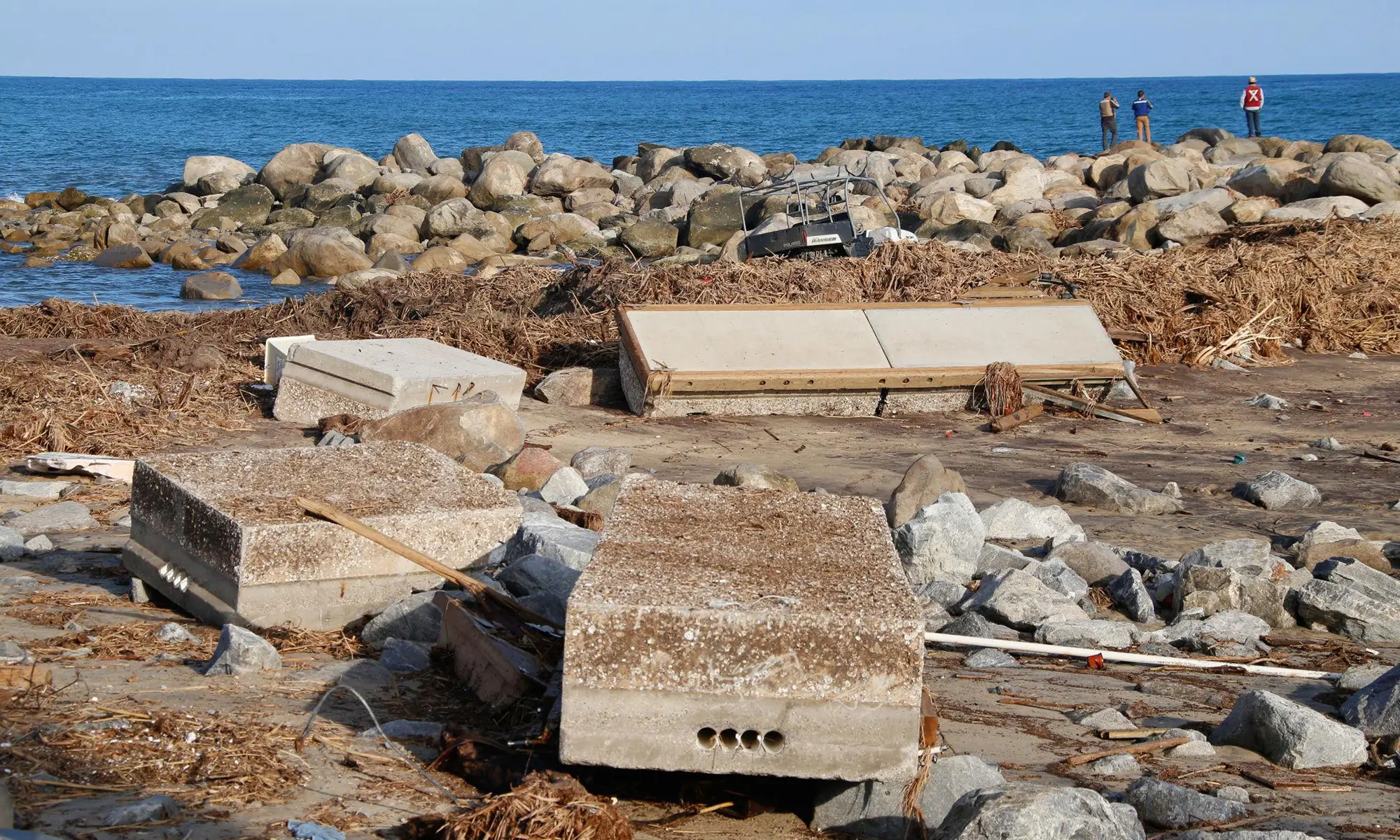
The reason it matters comes down to how insurers price risk. A beachfront property faces bigger waves, more wind-driven sand, flying debris from palm trees and neighboring structures, and far higher exposure to hurricane damage in general. Insurers know this, and the premium on a beachfront home is typically 50 to 100 percent higher than on one further inland. When a policy fails to mark a property as within 500 meters of the ocean, the premium is set for the wrong risk category, and both sides look reasonable on paper until something goes wrong.
What surfaces after a claim is the mismatch. The adjuster visits the property, sees it is beachfront, and flags the discrepancy between what the policy describes and what the property actually is. From there, the insurer has two options. They can refuse the claim outright on the grounds that the risk was misrepresented. More often, they pay a fraction of what’s owed, arguing that the homeowner underpaid for years and isn’t entitled to full coverage now.
To check this, pull the policy and look for the section that describes the property. Find the line about the distance from the ocean. If your house is beachfront and the policy doesn’t reflect that, talk to your agent and amend the policy before the next storm.
Property: hurricane gaps and the outdoor items nobody adds up
Two more items on the property policy deserve a close read. Both are common sources of underpayment and easy to miss.
Start with hurricane coverage. You would assume that any home policy sold in Baja includes it, but that isn’t always the case. Policies sometimes cover earthquake, fire, and theft while leaving out hydrometeorological events, which include hurricanes. The omission may be an oversight by the agent, or it may be a cost-cutting choice made without the homeowner being clearly informed. Either way, a home in a hurricane zone without hurricane coverage is a policy doing only part of its job. Look for the word on your list of covered perils. If it isn’t there, ask why.
Outdoor items are the other common gap. When a policy is written, the homeowner fills out a form listing the contents of the home. There’s a separate line, often called outdoor items or something similar, that covers everything outside the walls: patio furniture, grills, palapas, pergolas, garden equipment, pool gear. Many policies treat this line as an afterthought. The agent puts a round number on it, ten thousand dollars, for instance, and moves on. The homeowner signs without doing the math.
The math rarely works out in the homeowner’s favor. A well-furnished outdoor space at a Baja home can easily run to twenty or thirty thousand dollars once you add up everything a hurricane could damage or carry off. When a claim comes and the coverage caps at ten, the homeowner gets ten. The way to catch this is to ask your agent for the itemized breakdown of outdoor coverage and compare it against what you actually have outside. It’s a short conversation that pays for itself the first time a storm passes through.
Vehicles and boats: the small details that give insurers a way out
The same principle applies to property, vehicles, boats, and ATVs. The policy has to match the asset. When it doesn’t, the insurer has room to reduce or deny a claim, and that room is almost always in the paperwork.
The most common issue is how the vehicle is classified. A car brought in from the US and nationalized in Mexico must be registered accordingly, with the correct title and documentation on file. Policies sometimes list the vehicle as a tourist import when it’s actually been nationalized, or vice versa. Either mismatch can be used to void a claim after the fact. The same goes for the VIN. A wrong digit in the original paperwork sits quietly in the system for years and becomes a problem only when you need the policy to work.
Boats carry their own version of this. Engine specifications, hull length, registered use, and storage location all have to match what’s on the policy. A boat listed as stored on a trailer when it actually lives in the water is a different risk profile, and a claim can turn on that distinction.
The validation that catches these issues isn’t complicated, but it does take time. A good agent will ask to see the original title, compare the VIN against the vehicle, confirm the classification, and verify the details before the policy is bound. Clients sometimes find this frustrating when they want to close the paperwork quickly. It stops being frustrating the first time a claim comes in, and the policy does what it’s supposed to do.
Health insurance: why cheaper than the US doesn’t mean simpler
Health insurance in Mexico is less expensive. For comparable coverage, premiums often run 50 to 200 percent lower than what the same person would pay in the US. For expats spending most of the year in Baja, that’s worth considering seriously. The policies available in Mexico can cover care at the major private hospitals in Los Cabos and La Paz, and some plans extend to international coverage at top facilities abroad.
Two things are worth understanding before shopping. Start with the age cap. Most Mexican health insurers stop issuing new policies at around age 70. If you’re approaching that threshold and don’t have coverage yet, the window is narrowing. Once you’re on a policy, renewal works differently from initial enrollment, so the important move is to get in before the door closes.
Then there’s the question of whether health insurance is the right product at all. For expats who split their time between Mexico and the US, a Mexican health policy often isn’t the answer. Insurers won’t write a policy for someone who’s only in the country a few months a year. The better fit is travel insurance through a credit card, a bank, or a US insurer, which covers emergency care while you’re here. For major procedures, most part-timers fly back to the US anyway.
The application process itself is straightforward. An insurer will typically ask for basic personal information, a statement on smoking and pre-existing conditions, an ID, and proof of residence in Baja. From there, you’ll receive quotes from several companies and can adjust the coverage and deductible to fit your budget. The validation is thorough at the front end, which is part of why health claims in Mexico tend to process smoothly once a policy is in force.