

|
Getting your Trinity Audio player ready...
|
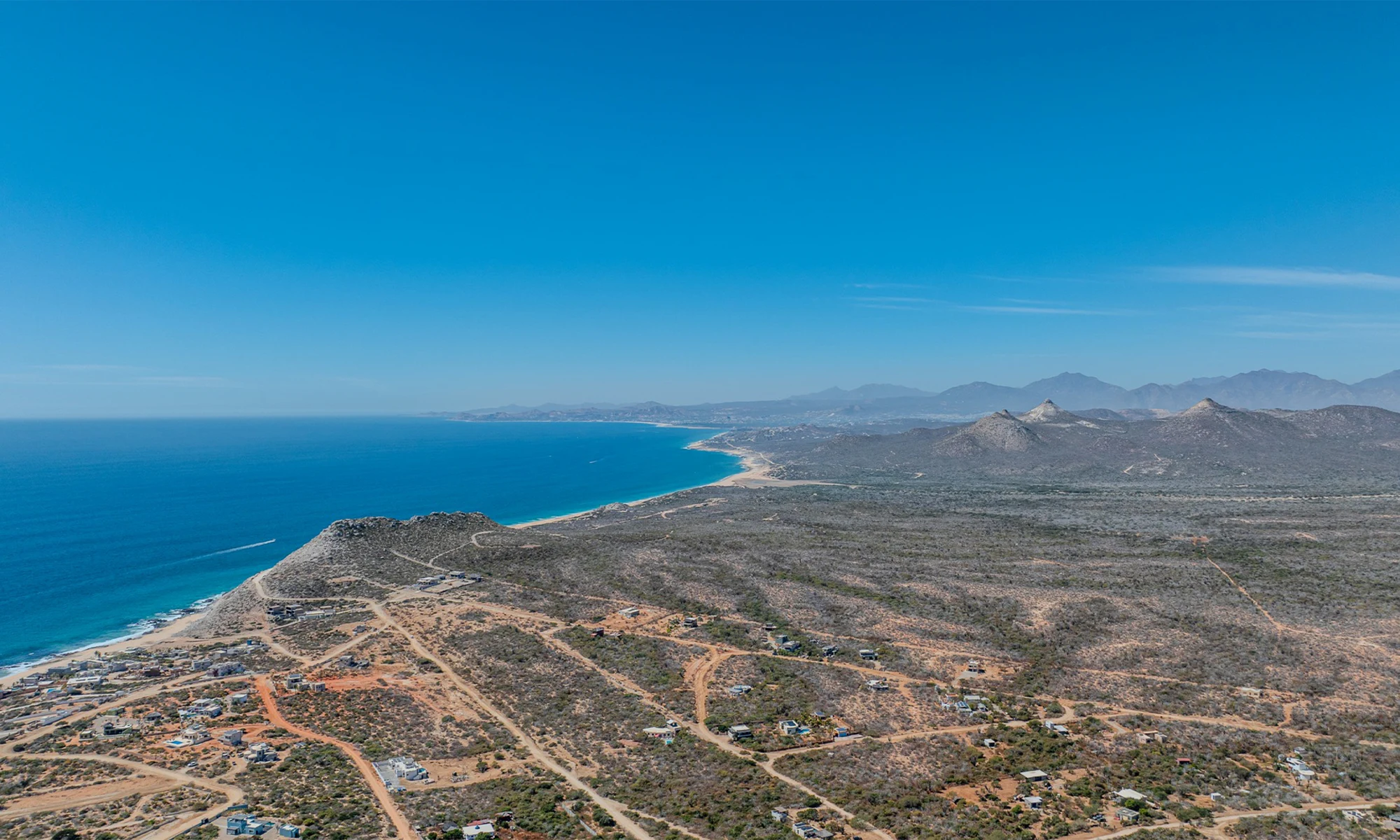
For many people who think they know Baja, the mental map stops at San Jose del Cabo. Everything east of there doesn’t quite register.
In recent years, especially during and right after the pandemic, that started to change. The East Cape is pulling a different kind of attention: buyers looking for open land before prices catch up, travelers who have done Cabo and want to know what comes next. What the East Cape will become over the next decade is an open question.
Where the Map Runs Out
William Scott has been watching the East Cape for twenty-plus years. As a broker and founder of Baja Smart Real Estate, he’s seen enough cycles to know when a market is early and when it’s late. His read on the East Cape right now: early, but not for long. Before anything else, however, you need to know what you’re actually talking about when you say East Cape.
As William defines it, the boundary runs from Zacatitos to Cabo Pulmo, entirely within the Los Cabos municipality. Above Cabo Pulmo, the jurisdiction shifts: La Ribera, Los Barriles, and La Ventana are already part of La Paz, with different permitting rules and a different political logic. That’s also where the luxury brands landed: Costa Palmas, in La Ribera, now hosts the Four Seasons and Aman, drawing a different buyer entirely.
Further south, from Cabo Pulmo back toward Zacatitos, the infrastructure thins out. No municipal water, no grid electricity. A two-lane road that asks for patience.
The Maverick Market
The buyers who got there first weren’t shopping for amenities. William calls them mavericks, people willing to wire in solar and figure out their own water supply. The East Cape lacked the infrastructure that makes a real estate market understandable to most buyers, and that was, for a specific kind of person, exactly the point.
What the place offered was harder to price. One of the most impressive reefs in the world. Wind that is consistent enough to build a life around windsurfing. William has a term for it: organic amenities, the things only geography can make. No developer can manufacture a reef, no brand can replicate a wave, no master plan can produce a surf break that has been drawing Californians since before anyone was tracking it. The buyers who understood that came early and built accordingly.
What Money Can’t Build
This is significant beyond the personal, because these amenities don’t depreciate in value. A marina can be outcompeted, a hotel brand can lose its shine. A reef that supports world-class diving is either protected, or it’s gone. William argues that the East Cape’s value proposition is, in this sense, more durable than anything being built in the Los Cabos Corridor. The question now is whether development respects the area’s privileged naturescape or consumes it.
The profile of who’s arriving is shifting, but not dramatically. The East Cape still selects for people who want open land and ocean views over hotel pools and concierge services. What most visitors describe is a place that feels like Cabo might have felt thirty years ago: unfinished, with the pull of somewhere that hasn’t been figured out yet.
The Price of Entry
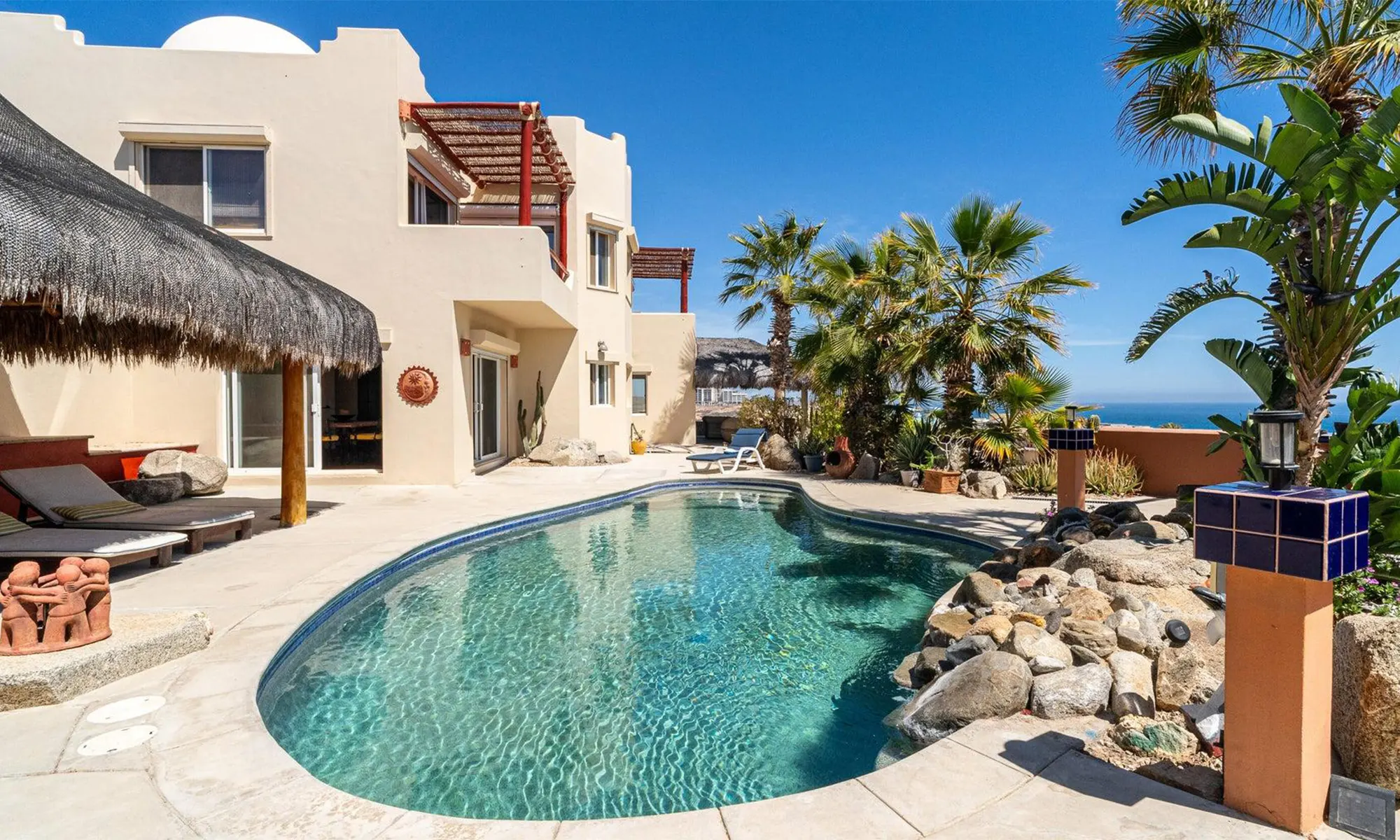
Photo by Baja Smart Real Estate
Before a single foundation gets poured in the East Cape, a developer has to answer to the federal government. Mexico’s environmental authority, SEMARNAT, requires an impact assessment and a compensation plan, which calculate what the land loses and what must be restored elsewhere. Impacting 1.2 hectares might mean compensating for five hectares of vegetation elsewhere, paid in full before a building license is issued.
William frames this more as a filter than as an obstacle. The cost of compensation jumped four to five times in the current administration. What may have run 200,000 pesos not long ago now runs closer to a million. Developers who can’t absorb that tend not to proceed.
The filter has precedent. Powerful developers have been stopped at Cabo Pulmo for skirting the environmental process. When projects collapse, as some do, the damage moves down the chain. Buyers who committed early absorb losses, and the land gets left with whatever was half-built.
Underneath the federal process sits another layer. The East Cape currently falls under the POEL — an ecological land-use plan that governs density and development types across the region. William describes it as an old document that predates the current wave of interest and hasn’t kept pace with it. The plan divides the territory into environmental management units, each with its own density ceiling. Most of those ceilings are low.
The Road Question
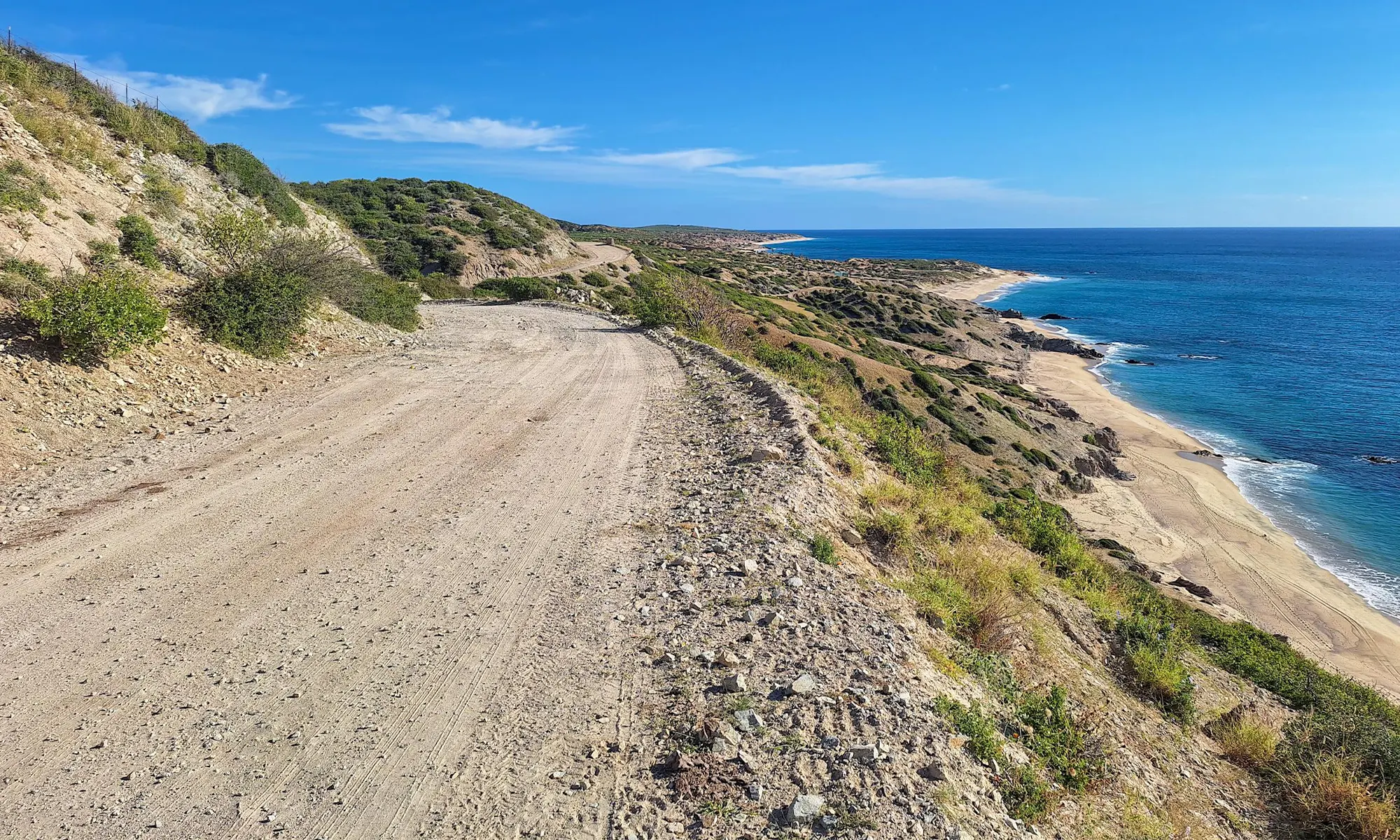
Then there’s the road. The existing Camino Viejo runs close to the coastline. It’s scenic, slow, and increasingly contested. There are conversations underway about an alternate road, roughly two kilometers inland, that would absorb traffic without cutting through the most sensitive coastal land.
William would rather see the old road become something else entirely: a panoramic route, cycling trails alongside it, a reason to move slowly rather than get somewhere fast. Whether that vision survives contact with development pressure is another open question.
Baja California Sur is the least developed state in Mexico. What gets built on the East Cape now sets the terms for what it can be later. The entitlement process is where that gets decided.
Sanctuary, For Whom
William’s vision for the East Cape is precise: a sophisticated sanctuary. Buyers who invested enough to care about the land around them, development at a density that doesn’t consume what drew people there.
The vision also tends to favor those who arrive with capital. The East Cape that rewards the maverick buyer, raw, genuinely open, may perhaps not be quite the same place William is describing. Sophistication has a price, and that price tends to close doors.
Demand is finding the East Cape, figuring out what it wants from it. The road from San Jose takes long enough that the place retains a certain friction of the type that keeps the wrong kind of developer one step behind. How long that holds is the question nobody can answer.