

|
Getting your Trinity Audio player ready...
|
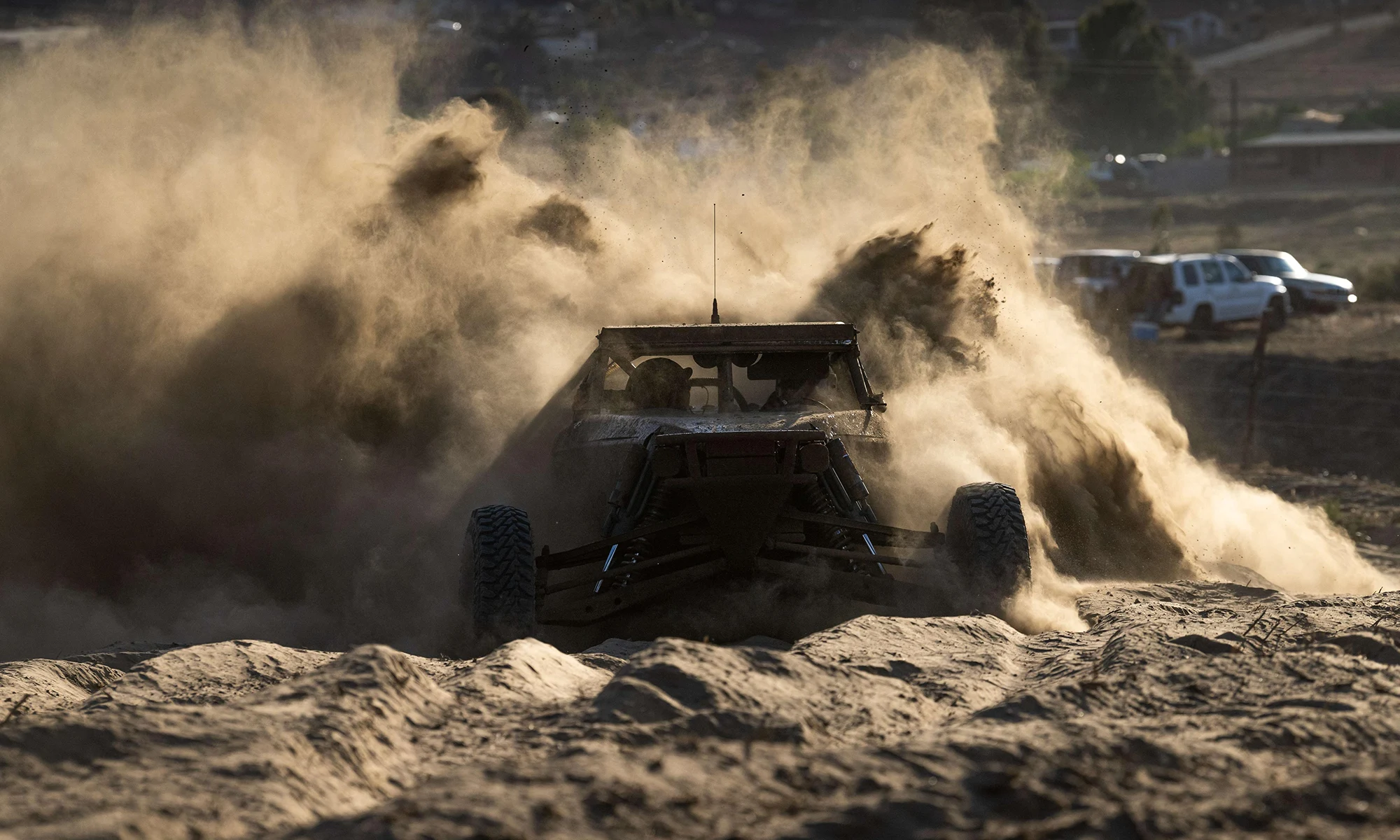
Off-road racing in Baja California Sur returns to the spotlight this week with the Dos Mares 500, taking place from May 1 to May 3. The race begins in La Paz, but it does not stay there for long. Within minutes, the course moves to the mainland, following existing routes across the landscape. Arroyos, mountain passes, coastal tracks, and ranch roads become the race itself, stretching across terrain that cannot be contained in a single view.
As vehicles leave in intervals, the field spreads out and disappears into the desert. What follows is experienced as a series of segments shaped by surface and timing. A fast section opens the pace, then narrows into technical terrain. Visibility shifts with dust and light. Support crews move separately, navigating their own routes to reconnect with the race. Spectators gather at isolated points, each seeing only part of what is happening.
The Dos Mares 500 provides a clear view of how off-road racing works in Baja California Sur. It sits within a broader system that operates on two parallel tracks. One is global and highly structured, led by an international series that defines the sport’s prestige. The other is regional, built around races like this one, which move through the peninsula’s backroads and smaller communities using the terrain as it is.
The Regional Backbone: Races That Define Baja Sur

Photo by Dos Mares 500
The Dos Mares 500 is not an isolated event. It reflects how racing is organized across the state. A ceremonial start gathers vehicles and spectators in an urban setting along the La Paz waterfront. From there, the course itself runs for roughly 500 kilometers, looping through inland points such as San Evaristo, La Purificacion, and Ciudad Constitucion before reaching the Pacific side and turning back toward La Paz.
Distances are long enough to require planning, but close enough to remain tied to local geography. Many participants know sections of the route through prior use, either from racing, pre-running, or supporting other teams. The field often mixes experienced competitors with newer entrants, all moving through the same terrain under different conditions.
Other events follow a similar pattern. The Loreto 500 extends that structure north, connecting coastal and inland terrain in ways that shift quickly over short distances. Together, these races form the local framework of the sport.
The International Circuit: Baja as a Global Stage
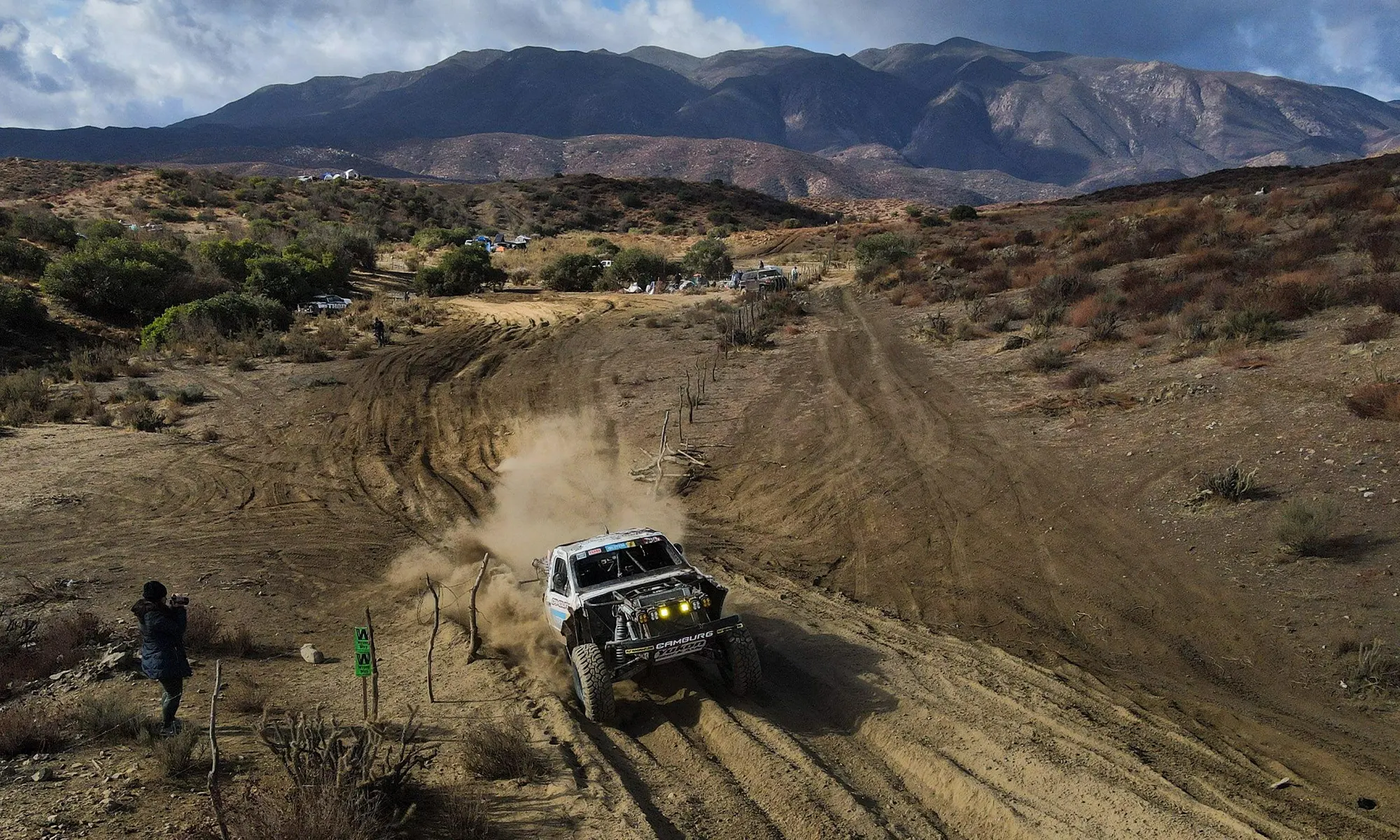
Photo by Offroad Bilstein
On the international side, the same landscape is used differently. Events organized by SCORE International follow a defined calendar and a standardized structure, even as routes shift year to year.
The Baja 1000 represents the most complete version of that system. Vehicles run for extended distances, often through the night, supported by coordinated chase teams, scheduled pits, and detailed pre-running. The race is followed from the air, from tracking systems, and from fixed checkpoints.
Other events in the series, such as the Baja 500 and the San Felipe 250, operate within the same framework at different scales. Together, they form a circuit that can be measured, compared, and followed over time.
Where regional races are shaped by access and familiarity, these events are shaped by coordination. Teams arrive with defined roles, equipment, and schedules. The terrain remains unpredictable, but the response to it is planned in advance.
A Calendar That Moves With the Peninsula
The racing year does not stay in one place. Early months tend to center on regional events in Baja California Sur, where conditions are manageable and routes are accessible. As the year progresses, attention shifts north toward the larger international races, then returns south as new routes are organized.
Movement becomes part of the structure. Teams, organizers, and spectators travel along the peninsula, following the calendar rather than a fixed venue. Each race builds on the last, even when the terrain changes.
Watching a race means choosing a position and waiting. There are no continuous viewing areas across most of the course. Access points are determined by local roads, prior knowledge, or guidance from others who know the terrain.
A quiet section can remain empty for long stretches, then become active without warning. Vehicles arrive in intervals, separated by time and speed. Dust lingers after they pass, often obscuring what comes next.
Movement is common. Spectators relocate between sections, trying to see more than one part of the race. Preparation tends to focus on access and self-sufficiency. Fuel, water, and navigation matter more than proximity to the start.