

|
Getting your Trinity Audio player ready...
|
Leon Robles, founder of Wild Canyon Adventures, on the mountain range that supplies a significant part of the region’s water, holds species found nowhere else in Baja, and sits an hour from the beach corridor most visitors never leave.
Discovering the Sierra de la Laguna
Imagine someone who spent a week in Los Cabos without leaving the corridor: beach, restaurants, hotel. What did they miss?
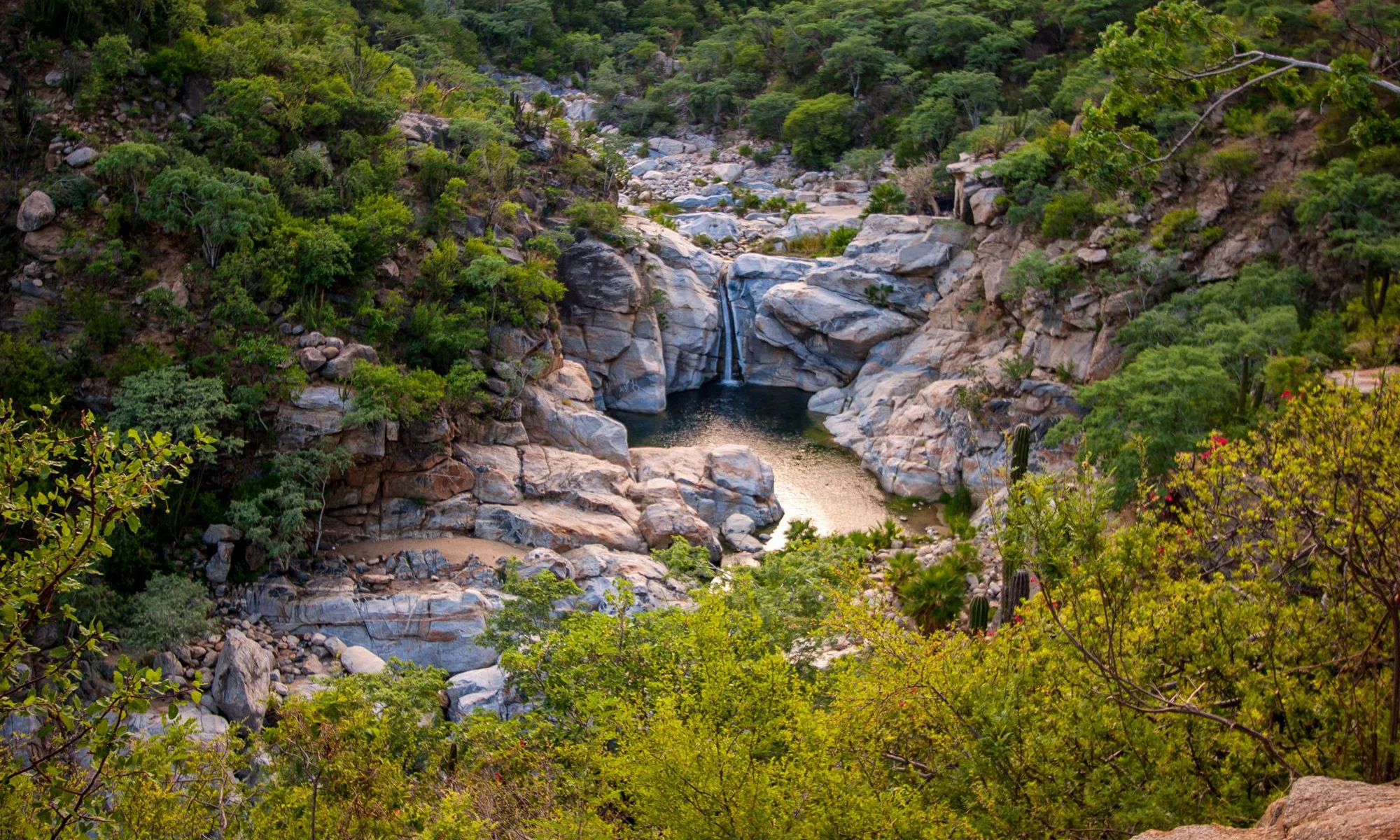
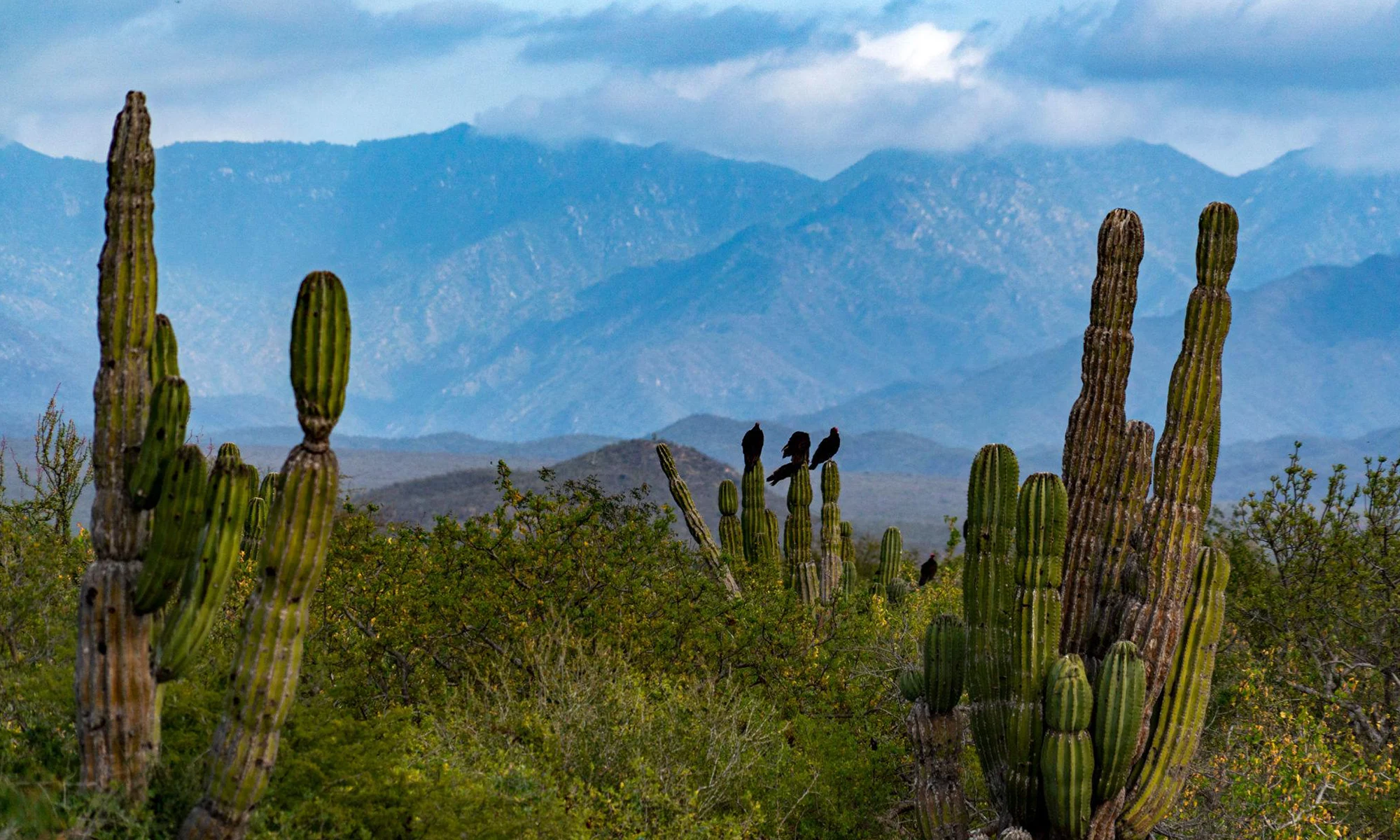
The other face of Los Cabos. The Sierra de la Laguna is a mountain range with valleys, sharp granite peaks, freshwater rivers, waterfalls, natural pools you can swim in. In some areas, the granite formations could remind you of parts of Spain, or somewhere completely unexpected for Baja. And all of that is about an hour from San Jose. The average tourist with four to six days here doesn’t make it a first stop. It’s more for someone who’s already been and is exploring further. What’s up there isn’t like the rest of Baja; there are species you only find on these mountains, and a few that only exist here and in places like Nayarit, from when the Cape region was a separate island.
The Ascent, the Routes, and the Practical Details
If someone makes the full ascent, from desert at the base to pine forest at the top, what are they going to see along the way?
There are different ways to experience the Sierra. You can go for the day. Enter through Miraflores, visit a rancho like Don Cata’s at El Refugio in San Dionisio, hike to a swimming pool in the river, eat the food they make themselves. Or you can do the full expedition, three or four nights, sea to sea. You enter through San Dionisio on the Sea of Cortez side, climb to the valley at the top, summit El Picacho, and descend toward Todos Santos and the Pacific.
I prefer the San Dionisio ascent. It’s greener, and you get more shade on the climb. The Todos Santos side is shorter, you can do it in a single day, but it’s much steeper. From San Dionisio, you’ll spend the first night around six hours in, at a place called Poza de Pepe. A swimming pool right there, the guides cook for you. The second day, you reach the valley itself, set up camp, and from there you can do another four-to-six-hour trip up to El Picacho. From the peak, you get a 360-degree view: Los Cabos to La Paz, La Ventana, the Sea of Cortez, and the Pacific. Two things to watch out for. Rattlesnakes, so wear good boots and stay alert. And wild bulls, feral cattle that escaped or were released from ranches at some point and formed their own community in the mountains
The Ranchero Families Who Have Worked the Sierra for Generations
You mentioned Don Cata and the family at Rancho el Refugio. What’s the relationship between these families and the Sierra, and what does their continuity mean for the place?
Don Cata is in his seventies now. He spent fifty or sixty years climbing the Sierra — he still goes up on horseback sometimes. His family lives in a rural environment with their cattle, their mangos, their orchards, their water. What strikes me most is the love his children have for the place. They’ve taken on the work of guiding people up to the valley and to El Picacho, and they do it well.
The rural tourism aspect is what makes the encounter. Being received by them, eating what they make, and watching how they live with the land. They cook for you. The handmade flour tortillas, the machaca tacos from their own cattle, their cheese, their mangos. Most of the people who go to them are local visitors, Mexicans who already know where they’re going. But for anyone coming from abroad, it’s a different kind of contact with Baja.
The Threat of Mass Tourism in a Place That Depends on Remoteness
There have been attempts to build permanent installations in parts of the Sierra: cabins, tourism infrastructure. Where do you think tourism in the Sierra is headed, and what worries you?
I don’t want to get into politics, but there have been news items about zones in the Sierra where people want to build cabins or facilities to provide tourism services. I disagree with that direction. The remote natural environment of the Sierra is its value, as much for Los Cabos as for all of Baja California Sur. Our tourism offer today is contact with nature. If we neglect that, we change the balance of why people come here. A five-star hotel can be anywhere in the world. The nature here can’t.
The way the locals have managed the Sierra up to now has value. The moment a large company arrives and tries to mass-produce the experience, that’s when you get contamination and saturation. For people who really want to explore, there’s always somewhere to walk a little further down the river and find a place that’s just yours. A lot of us locals know pools that we’re not going to tell you about. There are still many access points to rivers, with swimming and bouldering on the rocks.
Wild Canyon as a First Encounter with Inland Baja
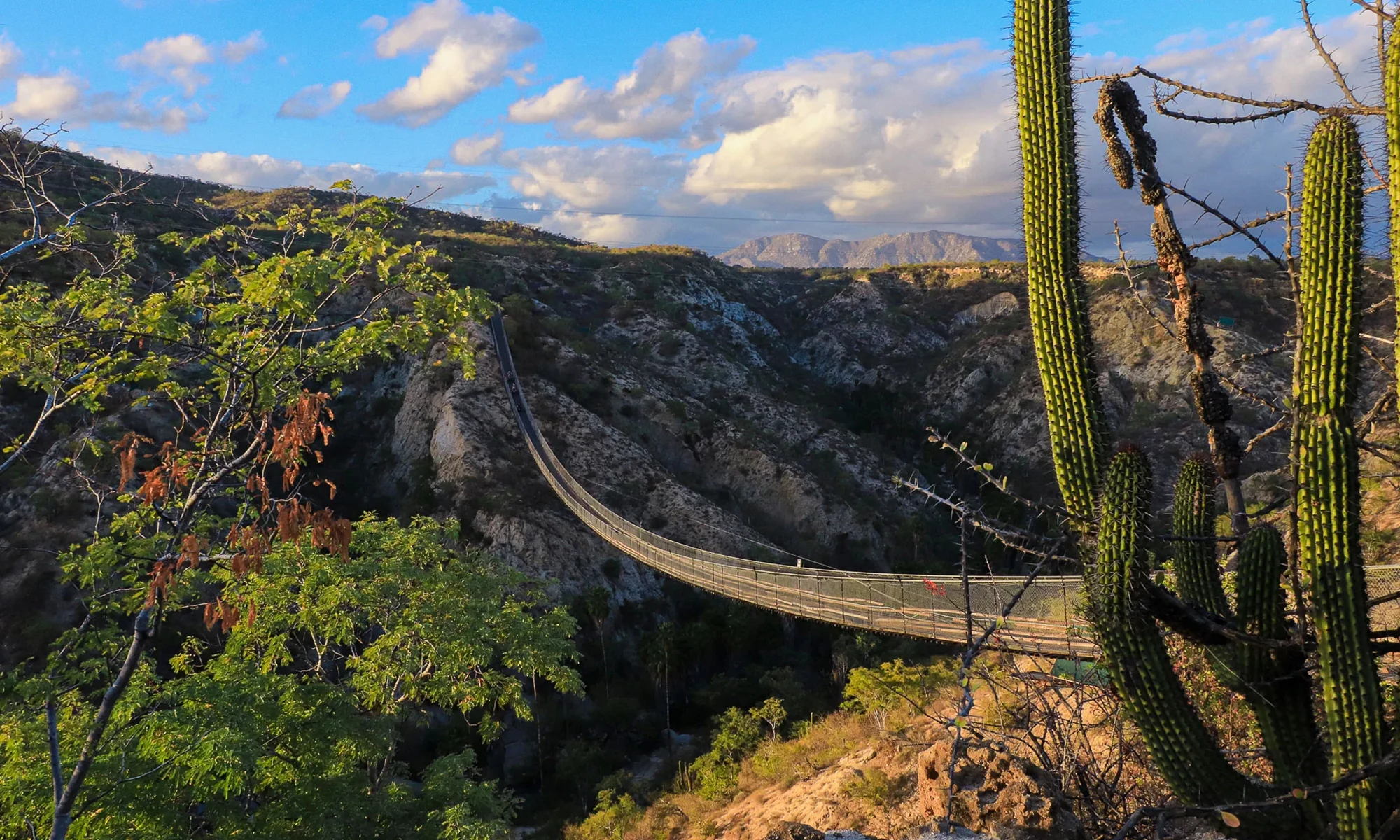
Photo by Wild Canyon Adventures
Wild Canyon sits along the Tourist Corridor, but in a canyon, on the mountainside. It’s the edge of the Sierra. What do you want someone to take away from a day there?
We’re the entry point to the Sierra de la Laguna. Our arroyo is born from the Sierra. The mountain chain extends down to us. So when people come to Wild Canyon, what I want them to encounter is the desert, the mountain, the dry arroyos, the waterfalls, our oasis. A taste of what the Sierra is. We don’t have the big rivers — those only come in the rainy season — but it’s a taste, a “probadita.”
What I want people to take away is the satisfaction of having done something different with their family, having pushed past their comfort zone. I want them to be surprised by the service. And I want them to leave knowing more than they came with. That there’s a mountain, an arroyo, a deer, a fox, all the bird life. One last thing. To anyone who’s been to Cabo before: explore. What we sell here is contact with nature, in a very low-tourism, low-population-density setting. We’re surrounded by unique places. The Sierra de la Laguna is the spine of all of it.