

|
Getting your Trinity Audio player ready...
|
From Cabo Loreto is six hours north through Todos Santos with the Pacific on your left, then inland toward La Paz, then across the peninsula again through Ciudad Constitucion, where the highway runs through the desert with nothing on either side. The drive tests your stamina, and then, about an hour further, the Sierra de la Giganta appears, right there, filling the windshield, forcing the road into curves that demand your full attention.
You climb; you descend. The Sea of Cortez opens below in turquoise: clear, scattered with islands, as if the sierra ran straight into the water. The first developments appear. Danzante Bay, Nopolo. Then further north, Loreto proper: a small, quiet town on the water, unmistakably Mexican in a way that parts of Los Cabos no longer are.
You cannot stumble into Loreto. The distance kept it what it is. That is beginning to change, as the town now has direct flights from California, Texas, Arizona, and Canada, and the six-hour drive is no longer the only way in.
The Oldest City in the Californias
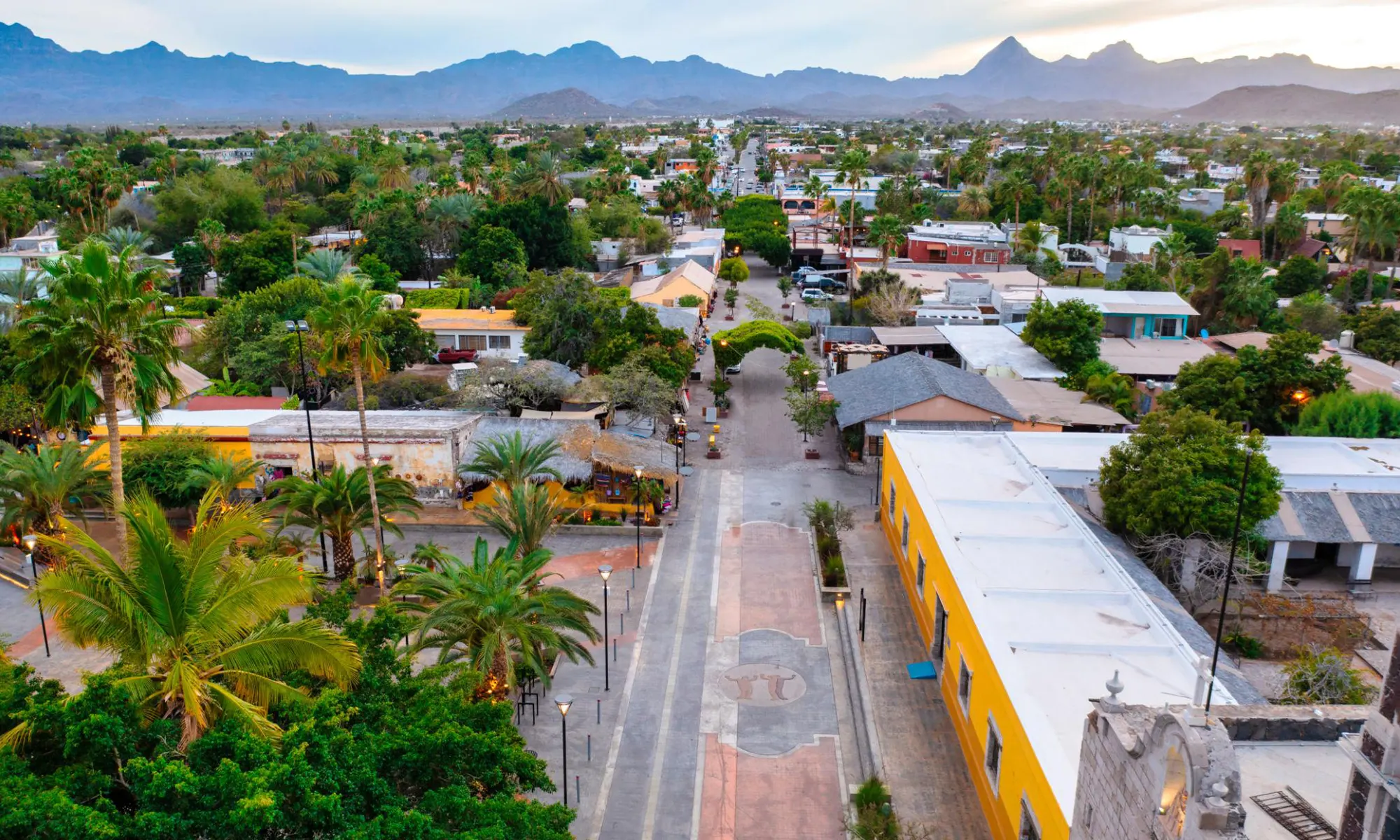
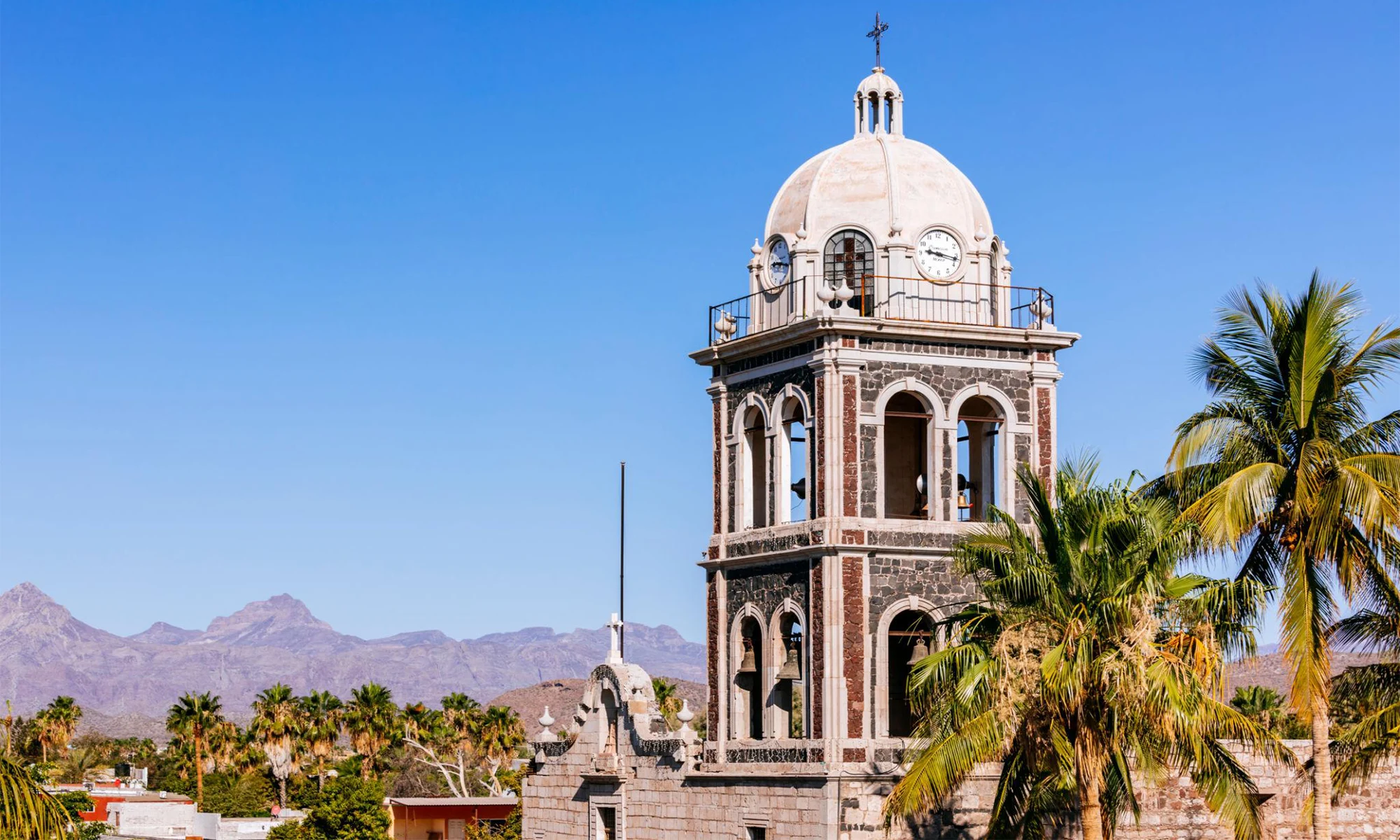
That change arrives somewhere with a long memory. Loreto was the first capital of both Californias, established by Jesuit missionaries in 1697. They came by sea, into the middle of nowhere, and built a city. The mission still stands at the center of town, modest, unchanged. La Paz eventually took the capital, the attention moved south to Cabo, and Loreto remained.
The malecon is quiet, and the streets are walkable. No nightclubs visible from the highway, no timeshare salesmen on the sidewalk. The Sierra de la Giganta rises directly behind the town, a wall of desert rock. On the other side, the Parque Nacional Bahia de Loreto protects one of the most biodiverse marine ecosystems in the world. An albino blue whale was sighted in these waters earlier this year.
Between the mountains and the marine park, the envelope for development is narrow. Loreto cannot sprawl, yet demand has steadily grown over the last few years, and development is trying to match it.
What the Numbers Show
Baja California Sur has a unified MLS covering the entire state, from Los Cabos to La Paz to Loreto. Coverage is stronger in Los Cabos than elsewhere. In Loreto, many transactions happen through personal networks, direct developer sales, and relationships that predate any formal listing system. The numbers are incomplete.
Yet, what’s there points in one direction. Median prices for houses and condos have risen roughly 60 percent since 2021, from around US$325,000 to over US$500,000. Transaction volumes in 2025 reached their highest levels in at least four years; they were driven partly by a handful of high-value sales early in the year, but the underlying trend holds across the full dataset. Land inventory has multiplied several times over in the same period. For a market the industry has barely begun to cover systematically, that’s meaningful movement.
A Broker Who Knows the Long Game
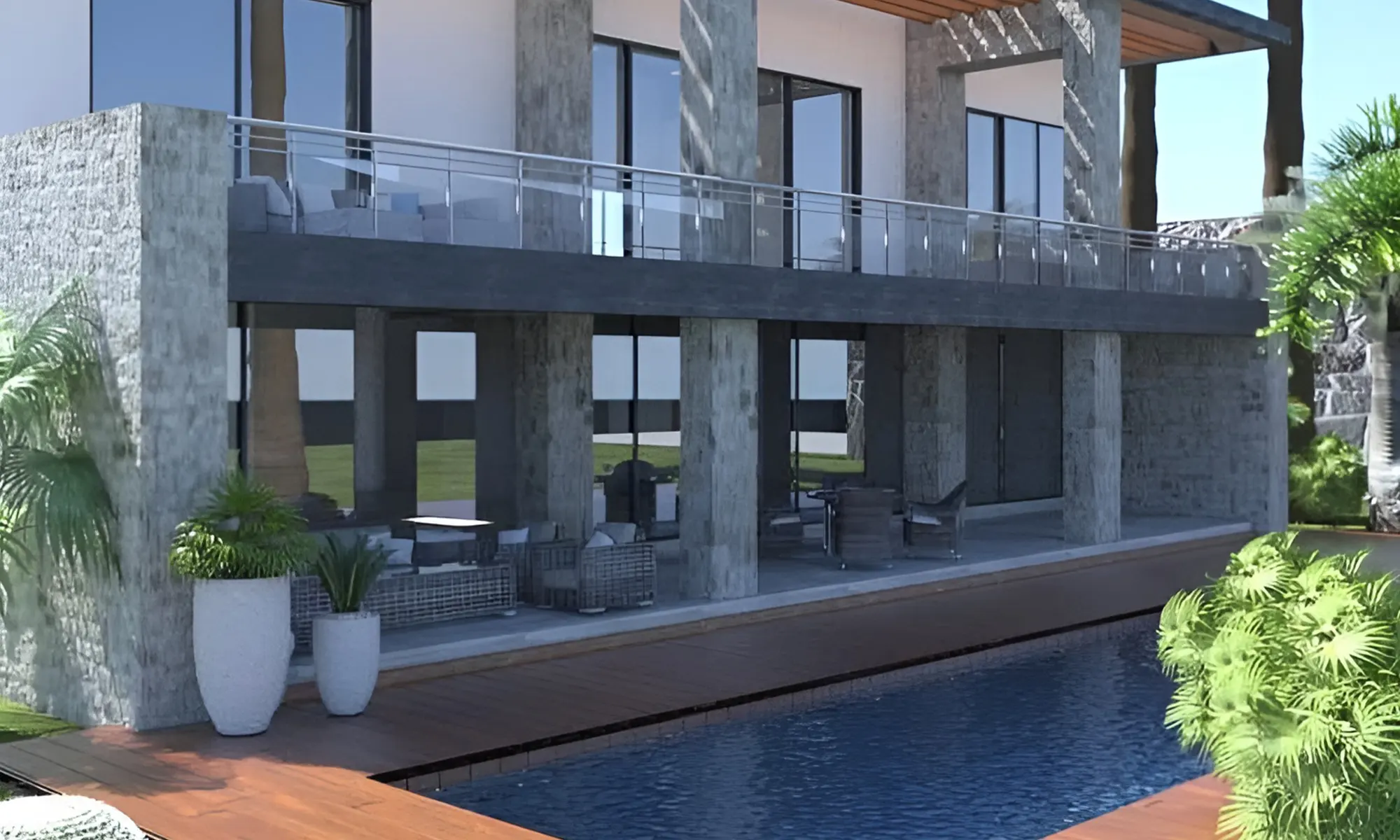
Photo by Costa Loreto
The numbers have not gone unnoticed. Harry Schikora has been selling real estate in Baja California Sur for 35 years. He was a two-term president of AMPI Los Cabos, served on PROFECO’s advisory board during the implementation of consumer protection regulations for real estate transactions, and has worked closely with state licensing authorities to raise professional standards across the industry.
He recently signed an exclusive agreement to represent Costa Loreto, a development north of town with a marina, multiple residential tiers ranging from US$600,000 to over US$3 million, and a commercial zone. The project’s permits date back 20 years, including a marina concession from 2006, a SEMARNAT environmental authorization with a 20-year window, and a master plan that has been updated twice. It is one of several serious projects reaching this stage in Loreto at roughly the same time.
“It takes 20 years to make an overnight success,” Harry says. The line is about Costa Loreto specifically. But it’s also about Loreto generally, a place where the conditions for development have existed for decades and where demand has only recently caught up.
What Growth Could Cost
“Cabo is fun,” Harry says. “Don’t get me wrong. Cabo is fun. But it wasn’t that way for my dad.”
His father came to Cabo fifty years ago, when it was a fishing village of a few thousand people, before the tourism and real estate explosion swallowed the coastline. That Cabo is gone. What replaced it is successful and enjoyable, yet largely unrecognizable to anyone who knew it before.
Harry wants slow and steady growth for Loreto. He’s also selling a marina project with a commercial strip, a hotel, and hundreds of residential lots. The geography offers some reassurance, as the marine park and the sierra constrain what can be built here in ways that aren’t true elsewhere in Baja. But those are physical limits. The feeling of a place (the pace of it, who it’s for) isn’t protected by geography.
The malecon, the mission, the streets that feel like Mexico rather than a version of Mexico designed for people who’ve never been: that’s harder to protect. Development that gets the pace wrong doesn’t announce itself as a mistake. It accumulates, quietly, until the thing that made the place worth coming to has shifted into something else.
Why Now
The Jesuits who founded Loreto in 1697 were making a bet on a remote coastline with no infrastructure and no guarantees. They built a city in one of the most remote places on earth, and it’s still there.
People are making bets on it again. Projects that have been in development for years are coming online. Buyers are arriving who have already done Cabo and are looking for whatever comes next. The conditions are as good as they’ve been.
What Loreto will look like when all of that has settled, whether it will still feel like the place that made it worth betting on, that depends on decisions being made right now.