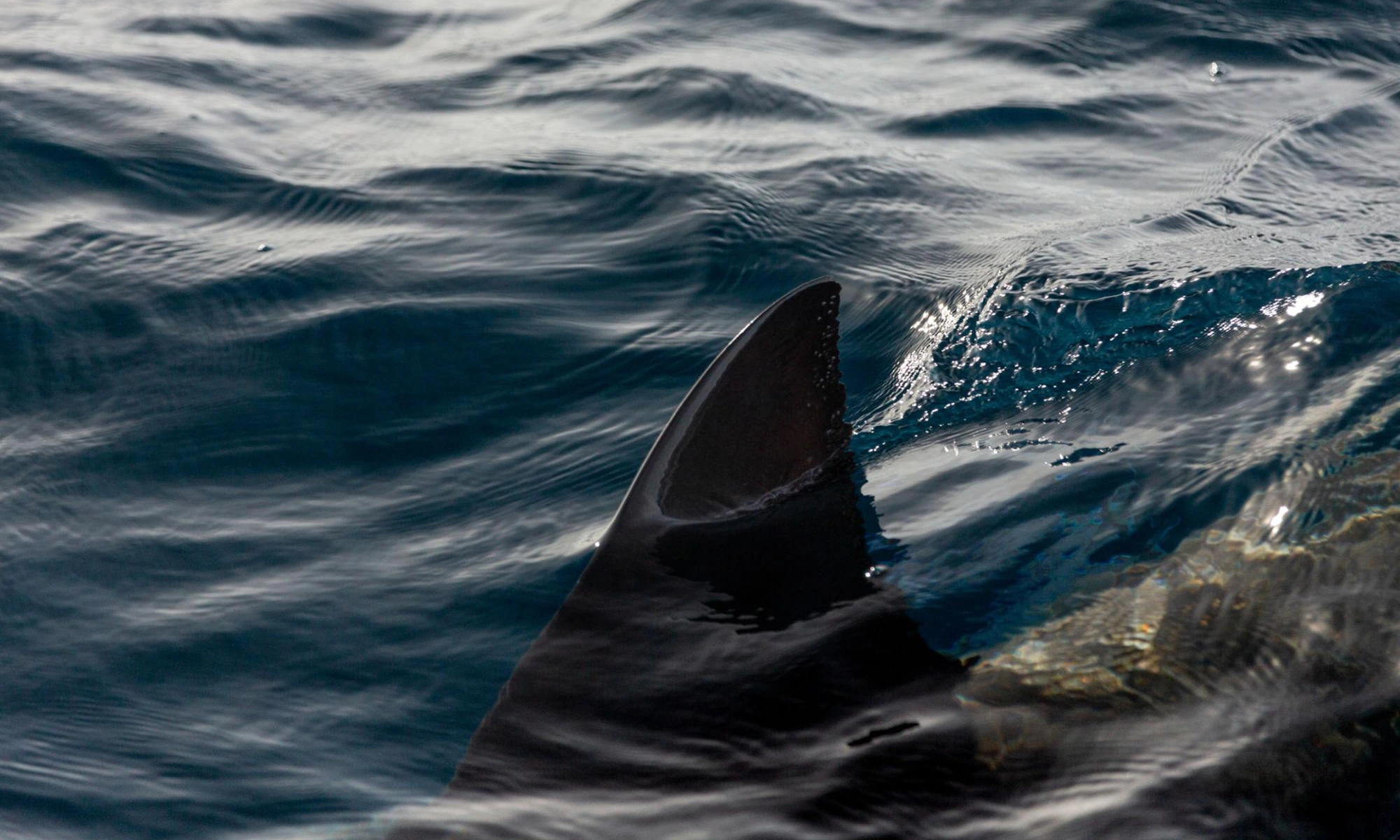
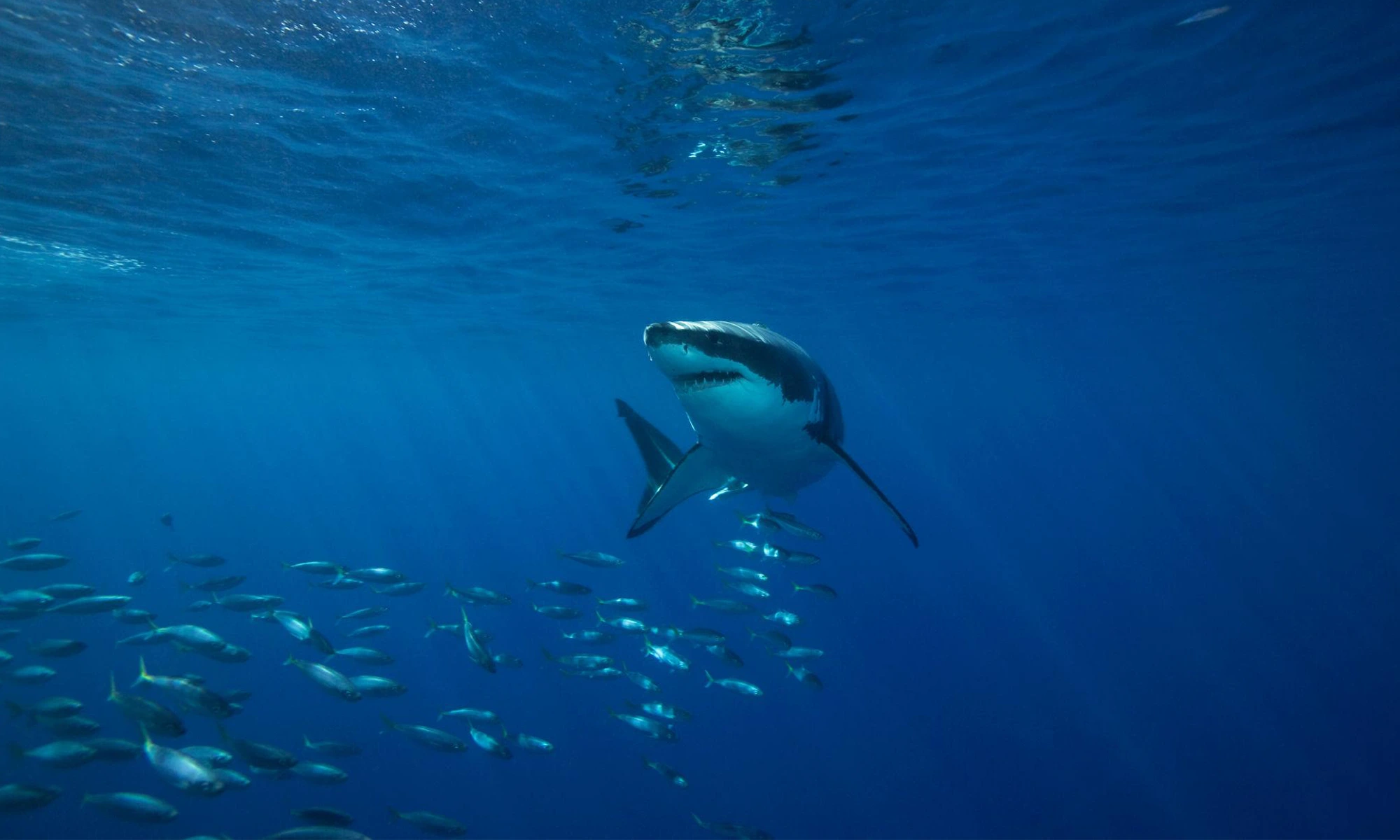
A white shark was recently filmed near La Paz, with the footage circulating quickly online before national media picked it up. The shark was spotted near Espiritu Santo Island. The footage is brief, but the animal is close enough to identify clearly.
White sharks are not typically associated with the southern Gulf of California, but they have been documented along the Baja California peninsula for decades. Most wildlife tourism in the region focuses on other species, such as whales, mobula rays, whale sharks, and marlin, which arrive on a predictable schedule.
Great White Sharks and Baja
Most documented white shark activity occurs farther north. Guadalupe Island, off the coast of Baja California state, became one of the world’s primary sites for studying great white sharks and, until recently, one of Mexico’s most-visited wildlife tourism destinations.
Researchers there identified hundreds of individual sharks over the years, a body of work that helped establish the eastern Pacific as one of the species’ core ranges.
Baja California Sur sits at the southern edge of that range. The waters here connect the Pacific Ocean and the Gulf of California, and large marine animals move through them seasonally. White sharks are not residents here. The same thermal shifts and prey movements that pull everything else through this corridor also pull them through.
The Sharks Visitors Are More Likely to Encounter
White shark sightings are rare in Baja California Sur, but the region has a real shark tourism industry built around the species that arrive on schedule.
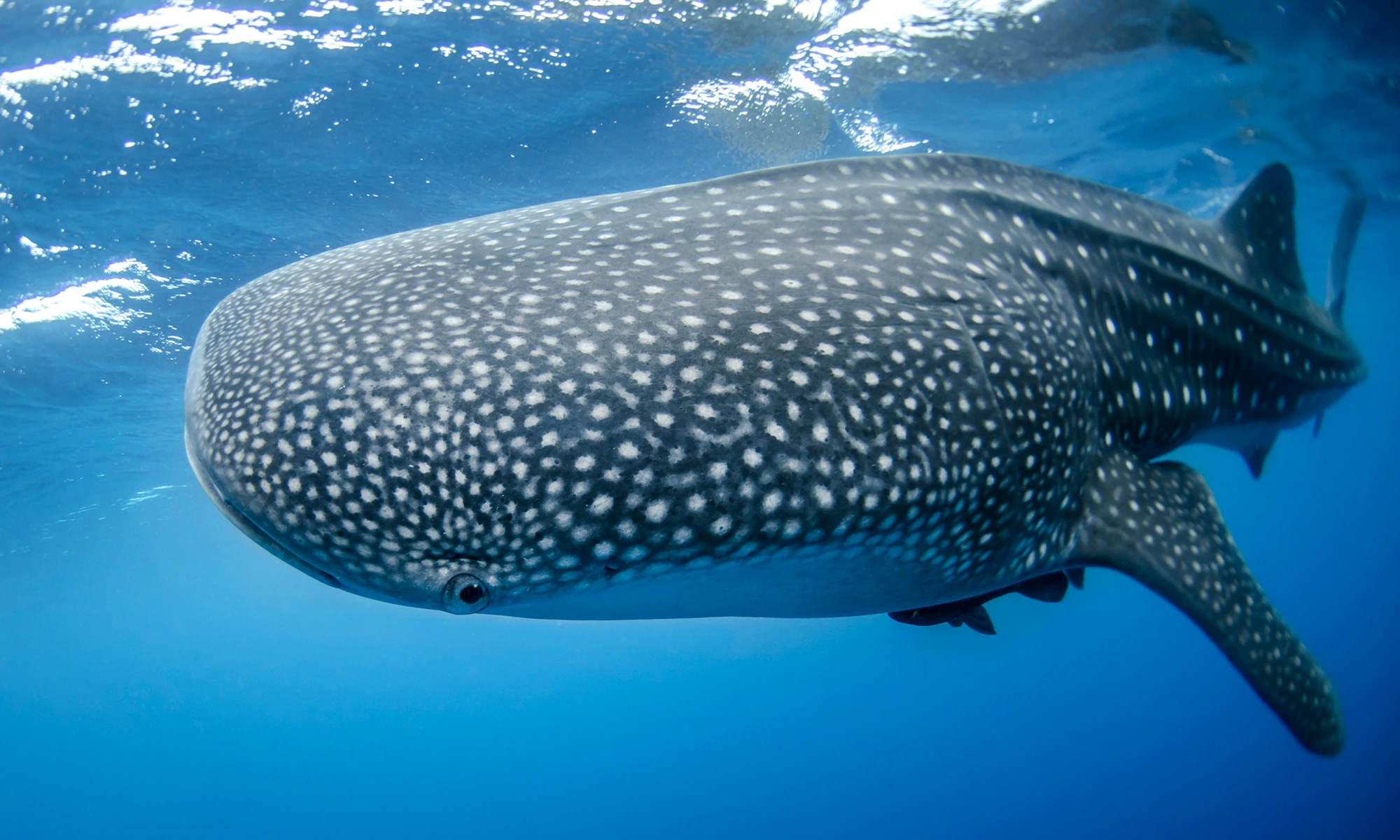
The most established program is swimming with whale sharks in La Paz Bay. The animals arrive between October and April, drawn by the bay’s warmer, plankton-rich waters. Permitted operators run tours that put visitors directly in the water with them. The program runs on a permit system with designated entry zones and interaction limits that have helped keep the aggregation returning year after year.
Open-ocean shark diving draws a smaller and more committed audience. Operators take groups into offshore waters on both coasts, where pelagic species concentrate at different times of year.
From December through May, blue sharks and shortfin makos become more common as temperatures cool; from May onward, silky sharks and smooth hammerheads become the more common encounters as the water warms.
These trips run far offshore, and the outcome depends on conditions in a way that the whale shark season, with its predictable aggregations, does not.