

|
Getting your Trinity Audio player ready...
|
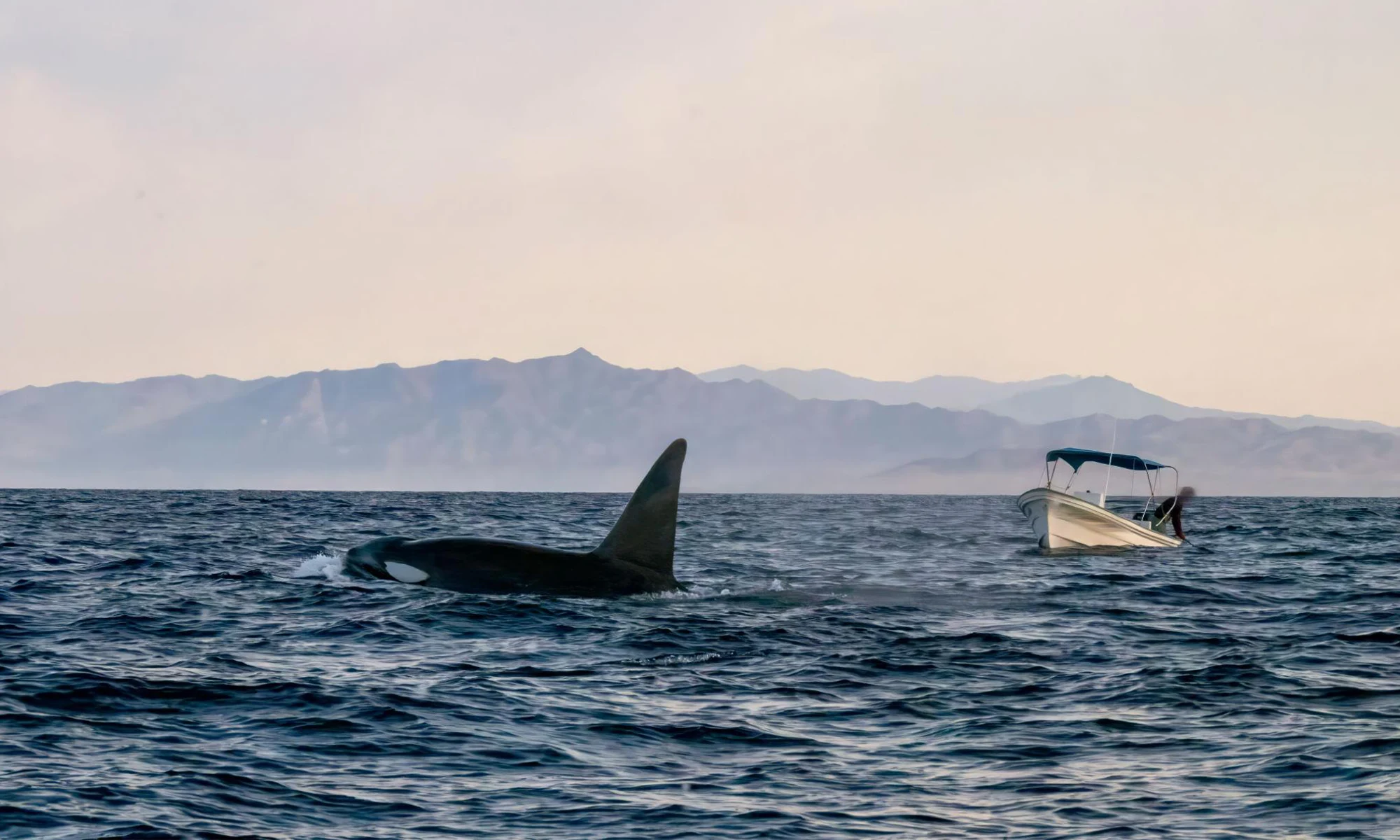
As of 2026, La Ventana is one of only two locations worldwide where people can legally swim with orcas. The regulations have already been set in place, but research into the impacts of orca tourism on wild populations continues as scientists work to catch up.
The Science Behind the Boom in Baja California Sur
Afelandra Gonzalez Cibrian, a La Paz-based marine biologist and tour operator who has been diving in the Gulf of California for the last two decades, notes that in Baja California Sur, she has seen orca-watching expand from very sporadic offshore encounters to what she characterizes as a huge boom. For the first time in 2026, regulations are in place for this activity. However, both regulations and scientific studies lag behind tourism, and the development of responsible orca watching in Baja is still an ongoing effort.
A Recent Obsession
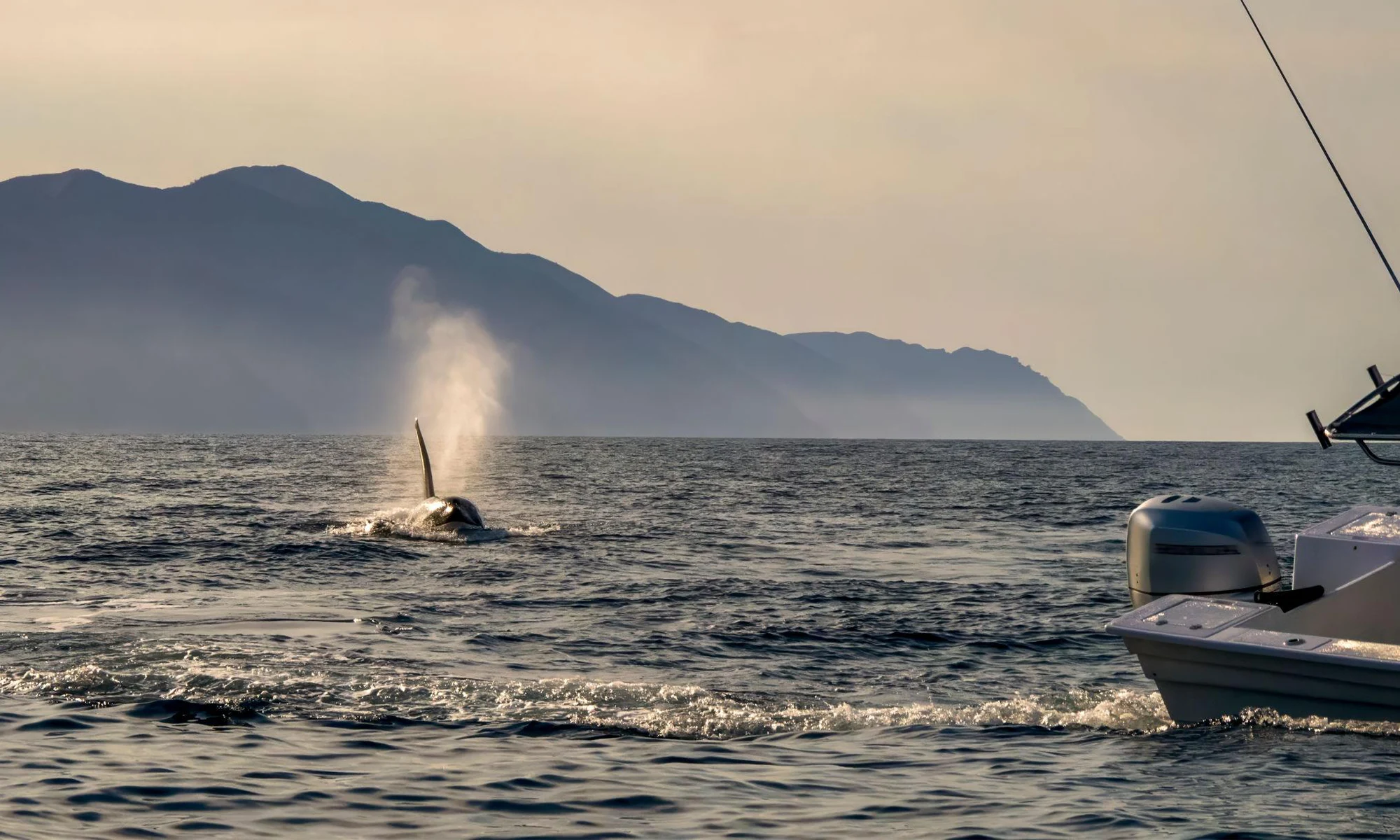
Afelandra says that the intensification of interest in orcas is recent. “There’s been an immense increase since the COVID pandemic, and it feels like every month it gets more acute. A lot of people are in love, are interested, or are even obsessed with these animals.”
When she first began her work in marine tourism in Baja California Sur, it involved diving and seeing various wildlife during specific seasons throughout the year. Orcas were not really on people’s radars. In fact, until recently, almost everyone thought of orcas mainly as dangerous predators feeding on marine life and wanted to see them from a safe distance, from stadium-style seats, as they do at Sea World.
But then some friends jumped into the water to swim with them, which led to videos going viral. “It’s also important to consider that there are only two places in the world where it’s currently legal to swim with orcas. One is Norway, where the conditions are extreme: freezing water, drysuits. And the other is here.”
Who Are These Orcas
Despite their massive size, very little is known about the orcas that come into the Gulf of California. “It’s interesting because it’s a huge animal, you’d think it would be easy to find them, but the truth is we don’t know that much about them. They live in all oceans, from the tropics to the poles, all over the world, and it appears that the orcas in Baja California Sur range widely.”
Sightings have been reported as far north as California and as far south as the Galapagos Islands and Costa Rica, but the animals seen in La Ventana could be the same animals returning to the area or different ones passing through. Essentially, the long-term tracking of sighted animals is conducted by informal networks of tour guides who compare notes.
“We’d say, ah, she’s in such-and-such place, now she’s here, now she’s over there, like a family,” Afelandra recalls. One orca, Ketzaly, became recognizable across the Gulf for the distinctive notches on her dorsal fin. Guides followed her movements between Bahia de los Angeles, Loreto, La Paz, La Ventana, and Cabo Pulmo. A La Paz-based NGO called Marea is building a photo-ID catalog, partly through citizen science: guests on tours can submit images that help researchers piece together the larger picture.
The First Regulated Season
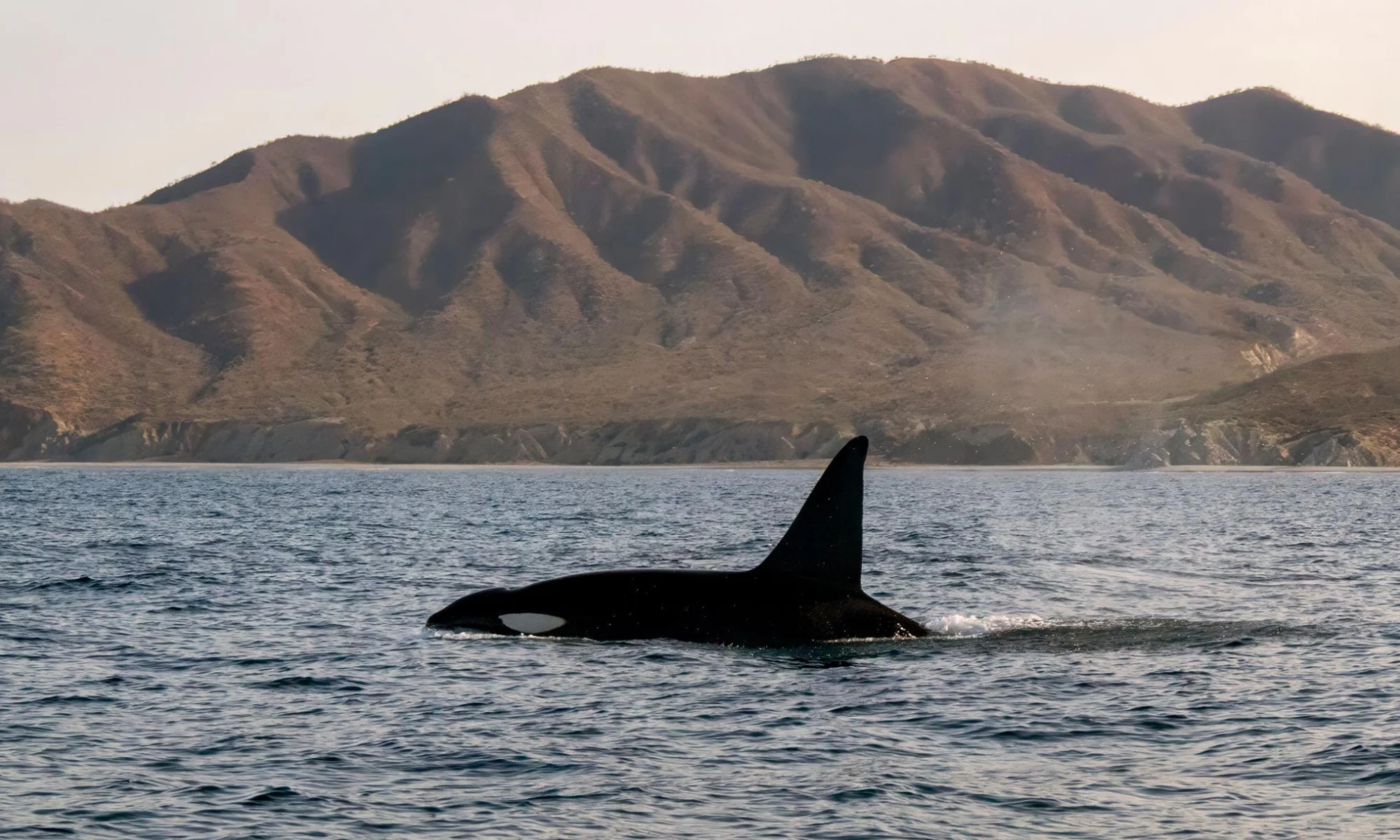
“The boom attracted attention, and the state government said, look, this is happening and we have to regulate it, because it’s really getting out of control.” She remembers some seasons in 2023 and 2024 when 30+ boats would gather in one spot around a single pod. There were swimmers jumping in from all different directions. In the fall of last year, the captains and guides went through training to prepare for the upcoming season, and as a result, the activity will be conducted with formal rules for the first time.
There will be a limit on the number of vessels allowed near the animals at the same time, and on the number of swimmers (four, in addition to a guide) allowed in the water at any time. A rotation system for the boat operators will be implemented, whereby two vessels will interact with the animals and, once they are finished, step aside for the next two vessels. There will continue to be limits on the number of vessels permitted in the area daily.
The design used has reservations from Afelandra: “Most of the people who wrote the rules worked before with other species, some of them with whale sharks. If you look at the rules, they’re very similar to the whale shark ones. But orcas are a very different species. They should have different rules.”
What the Rules Don’t Reach
Afelandra is mostly concerned with behavior that is not captured by the rules. The most concerning behavior to her is the use of apnea; guests diving to take a closer look at orcas for a photograph while they are hunting or traveling. “It’s like someone filming you while you’re eating,” she says. “Move, why are you filming me, let me eat, let me hunt.” Her point is that, generally, there is enough opportunity to observe the whales from the surface.
The push to move past the acceptable limit is often instigated by visitors themselves, as Baja Wild Encounters, a tour operator, recently pointed out. “Permits permit usability, but do not ensure that what we are doing has positive benefits for the animals.”
Afelandra poses a more subtle question about the orca as an intelligent mammal with its own social culture: as adults teach young how to behave, she wonders what the increasing number of people entering their surroundings each year is teaching them about humanity. The answer is something only the orcas will know.
Follow Afelandra Gonzalez Cibrian’s work on Instagram: @afelandrina