After more than a decade of legal disputes and uneven enforcement, ride-hailing platforms and traditional taxi groups have entered into a form of cooperation. The arrangement allows concessioned taxis to be requested through digital platforms, while continuing to operate under their existing permits.
The arrangement is a private-sector alignment built around access to demand, because the legal structure governing transportation in Mexico remains in place, even as how rides are requested begins to change.
What Is Actually Changing
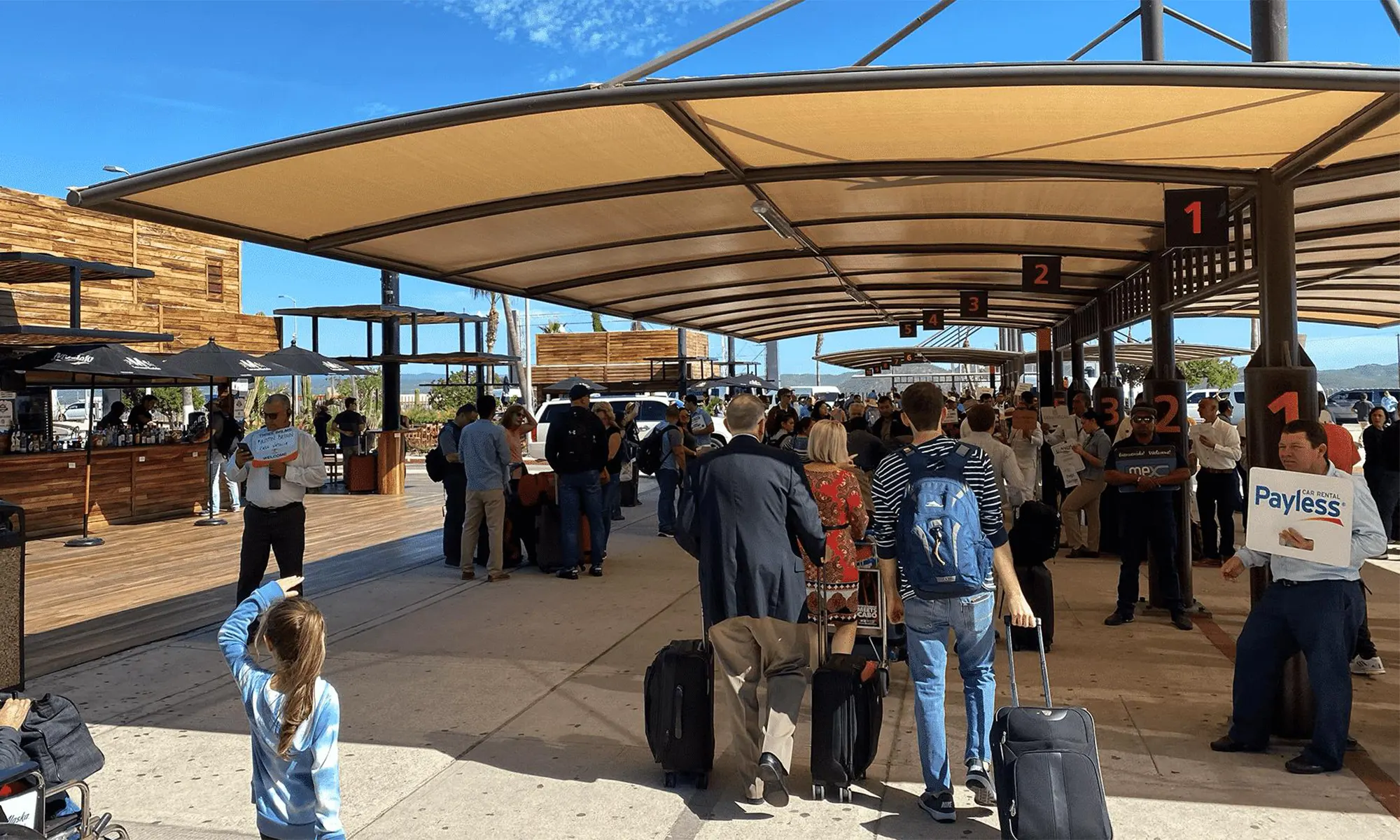
Photo by Los Cabos Airport
The shift is operational. Platforms that once competed directly with taxi services are now opening their systems to them. For users, this introduces a single interface for requesting different vehicle types. For drivers, it creates an additional channel for securing trips without altering their legal status.
The arrangement reflects that reality. Ride-hailing platforms expanded rapidly by responding to user behavior, while taxi systems retained their position through regulation. Neither displaced the other. Both became embedded in the same market, serving overlapping demand under different rules.
The Long Road to This Point
The tension between these systems has shaped transportation across Mexico since the mid-2010s. Ride-hailing platforms entered cities without fitting into concession-based frameworks governing taxi operations. That mismatch led to disputes over legality and economic impact.
Platform drivers operated in a space that was, at times, tolerated and, at others, restricted.
Both systems continued to function in parallel, often under conditions unclear to users and subject to change without notice.
Los Cabos: A Local Expression of a National Conflict
Photo by Los Cabos Passport
In Los Cabos, the conflict shows up in everyday logistics. The corridor between Cabo San Lucas and San Jose del Cabo has no transit infrastructure aimed at tourists, leaving hired ground transportation as the practical default for most arrivals
The sharpest friction point is Los Cabos International Airport. Transportation within the airport operates under federal concessions, with authorized providers controlling pickups inside the terminal area. Ride-hailing drivers have not been part of that system and cannot pick up inside the terminal.
What This Means on the Ground
For travelers, this has translated into workarounds. Meeting points outside designated zones and unpredictable availability have been part of the experience. These conditions follow directly from overlapping systems operating without a shared framework.
The current arrangement does not immediately resolve these structural conditions in Los Cabos. There is no confirmed indication that local authorities in Baja California Sur have modified regulations or formally adopted this model.
The arrangement shifts incentives. Taxi operators gain access to a broader pool of users through digital platforms. Platforms, in turn, expand their networks by incorporating vehicles already operating within the legal framework.
For visitors, change will be gradual. If implemented locally, the distinction between taxi and platform-based rides may disappear at the booking level, even if operational differences persist at the airport.