

|
Getting your Trinity Audio player ready...
|
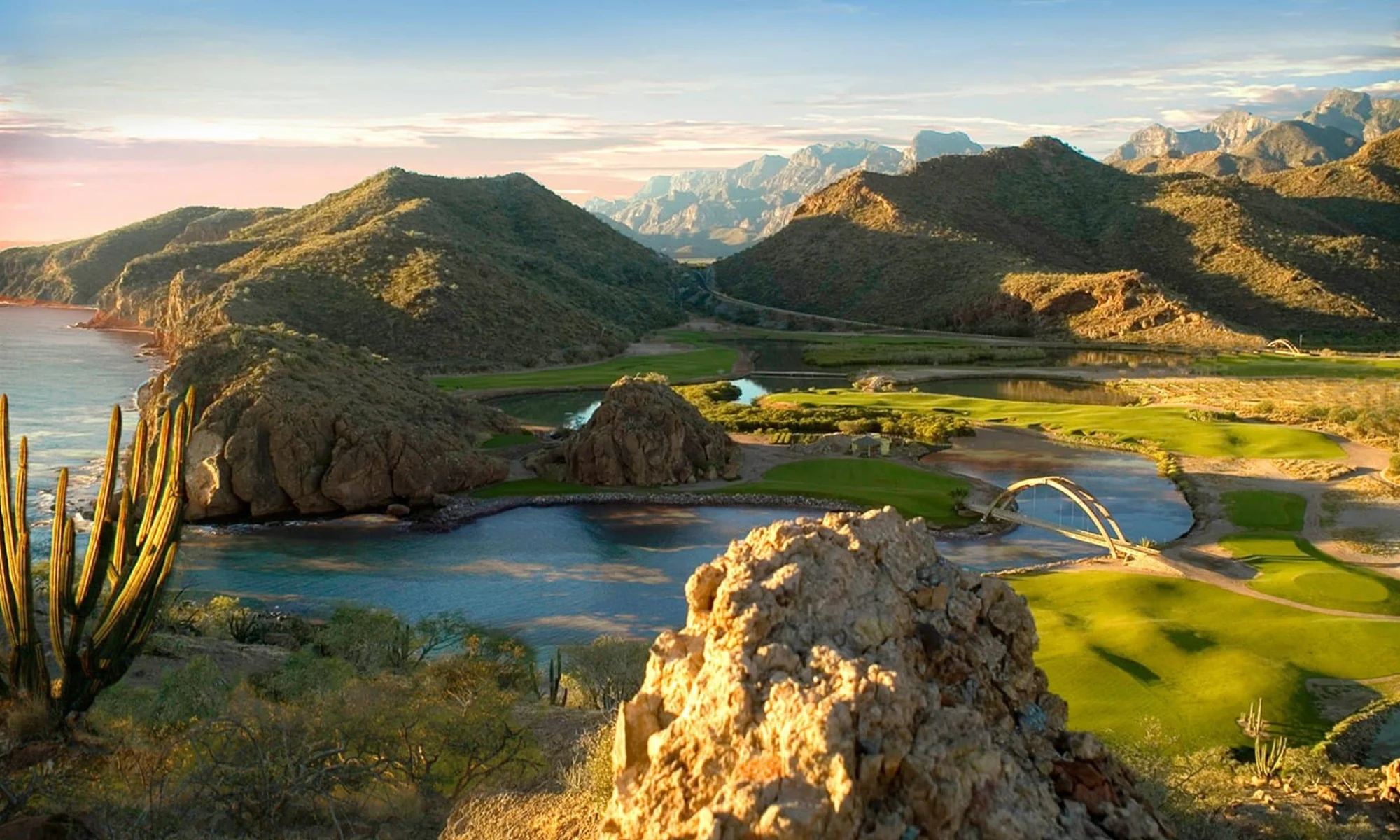
Travelers who want to understand the northern half of Baja California Sur often find that the region reveals itself best through its roads. This road trip starts north from Loreto through a sequence of coastal bays, river oases, desert stays, and protected cultural sites.
Each stop reveals a different facet of the peninsula: palm-lined riverbanks in Mulege, long empty beaches at Bahia de Concepcion, prehistoric rock art in the Sierra de San Francisco, and world-class surf at San Juanico. Driving these distances clarifies how landscapes and livelihoods change with latitude and how services taper as the road moves into more remote territory.
Loreto: Coastal Anchor and Gateway
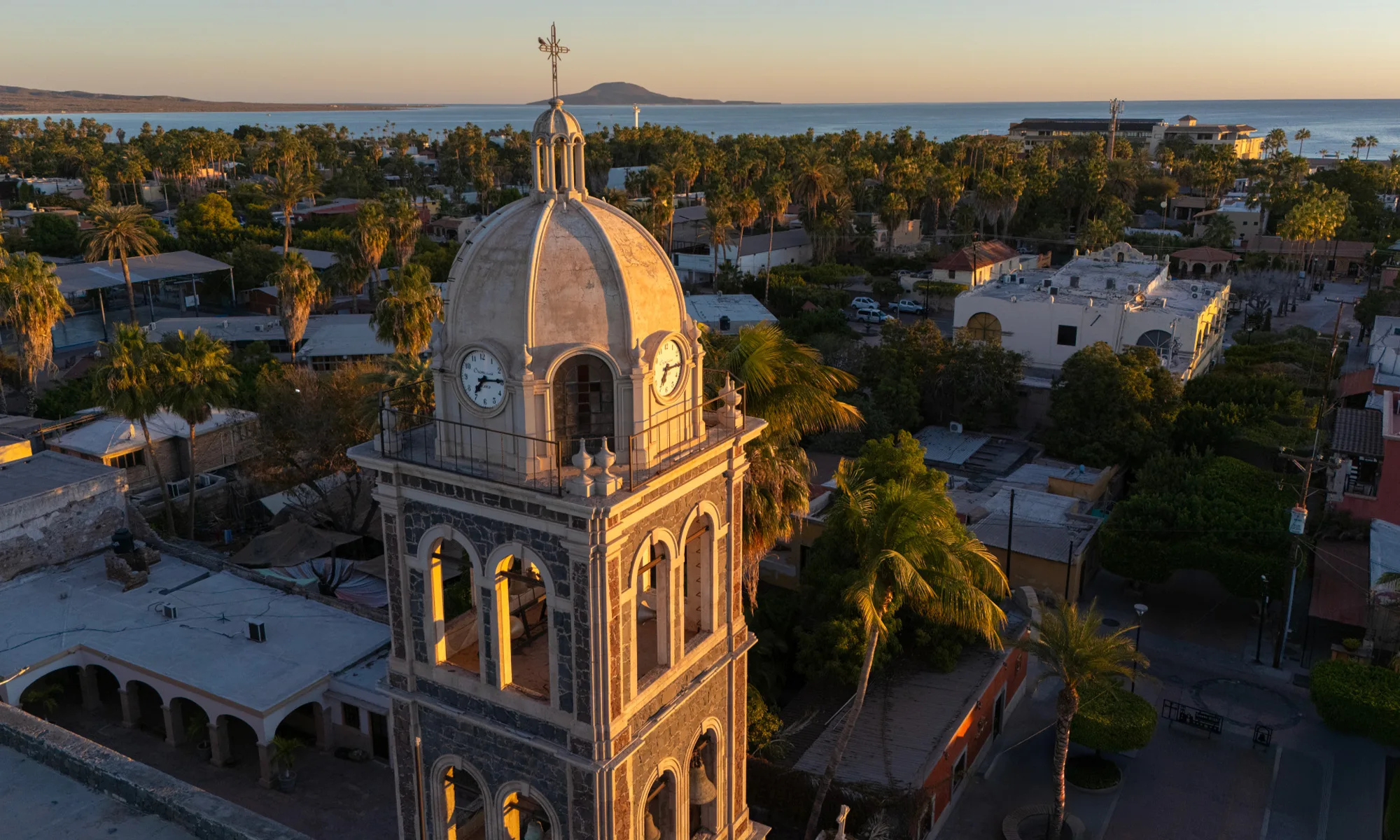
Loreto functions as the starting point and the return point of the route. The town’s Jesuit mission, compact historic center, and marine park create a balanced introduction to the region. The Loreto Bay National Marine Park protects five volcanic islands that support kayaking, snorkeling, and seasonal whale watching.
Blue whales arrive from February to March, and boating conditions are generally favorable from October to May. Lodging ranges from small boutique hotels to larger properties such as Villa del Palmar at the Islands of Loreto, which provides resort-style services close to nature-focused activities.
Bahia de Concepcion: The Beaches of Highway 1
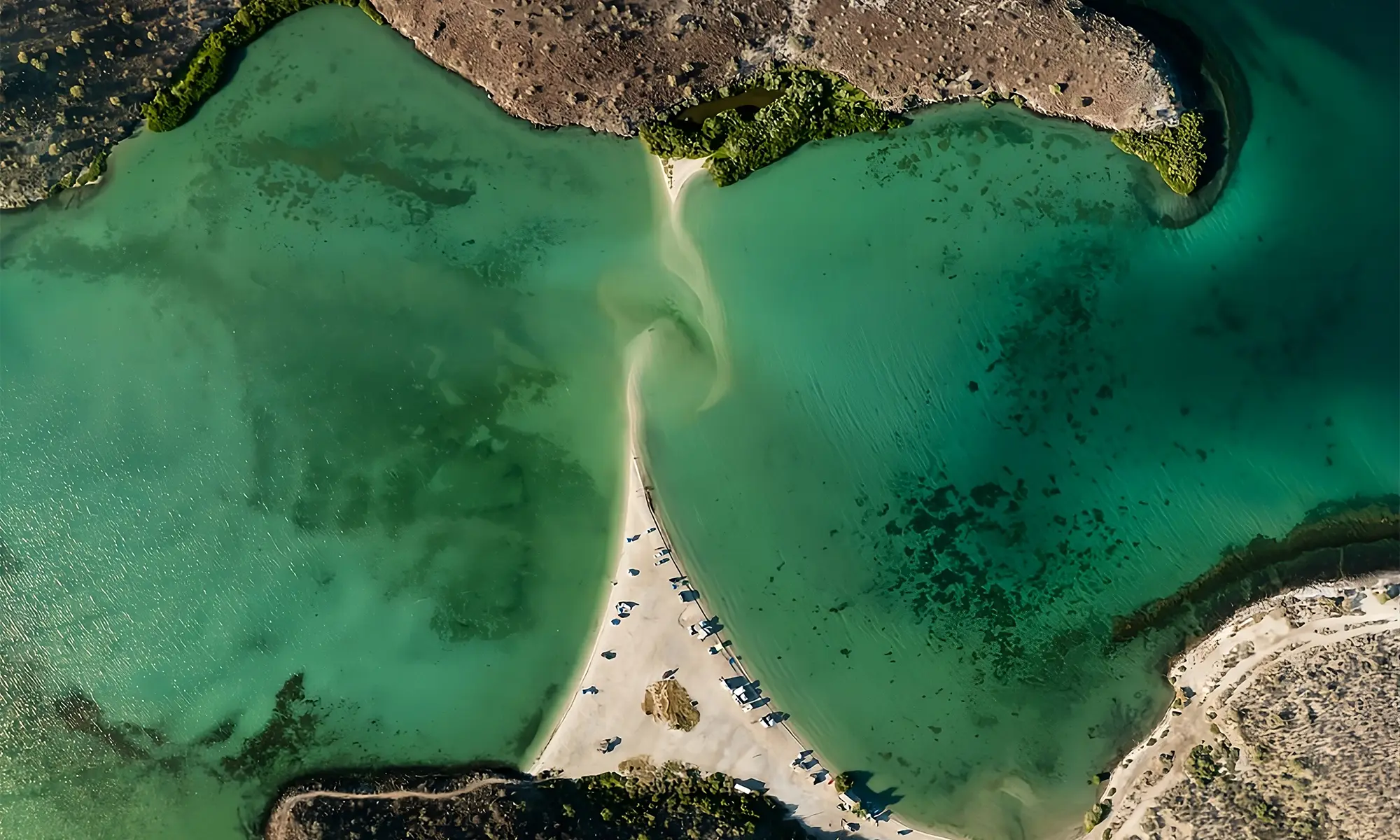
One hour north of Loreto, Highway 1 reaches Bahia de Concepcion. This protected bay contains a sequence of white sand beaches with shallow turquoise water suitable for swimming and kayaking.
Playa Santispac and Playa El Coyote work as established camping areas with simple services. Morning conditions are calmest, and many travelers plan an overnight stay to enjoy the quiet shoreline at sunrise. Carrying cash is useful since most beach caretakers rely on informal payment systems.
Mulege: Desert Oasis and Colonial Vibe
Mulege sits thirty minutes north of the bay along a river lined with date palms. The eighteenth century mission remains one of the most photographed viewpoints in the peninsula, especially at sunset when light reflects off the oasis.
The town provides fuel, groceries, pharmacies, and small cafés. Birdwatching along the river improves in the early morning hours. Mulege offers a slower pace and works well as a restful overnight stop.
La Purisima: Inland Mountain Settlement
A two-and-a-half-hour inland detour from Mulege leads to La Purisima, where the road enters an isolated landscape of large cardon cacti and vast desert plains. This is one of the quietest settlements in the region. Cabanas La Purisima offers simple lodging and home-style regional meals. Spring and autumn provide comfortable temperatures for short hikes or photography. Clear skies make stargazing reliable throughout the year.
Santa Rosalia: French Legacy and Mining History
Three hours south of the Sierra route and north of Mulege lies Santa Rosalia, a historic mining town with a French industrial past. The Iglesia de Santa Barbara, attributed to Gustave Eiffel, remains its central landmark. Old industrial structures, the restored bakery, and the town’s grid layout reflect its unusual development history. Santa Rosalia offers reliable services, making it a useful stop before entering more remote areas.
Sierra de San Francisco: Prehistoric Art Gallery
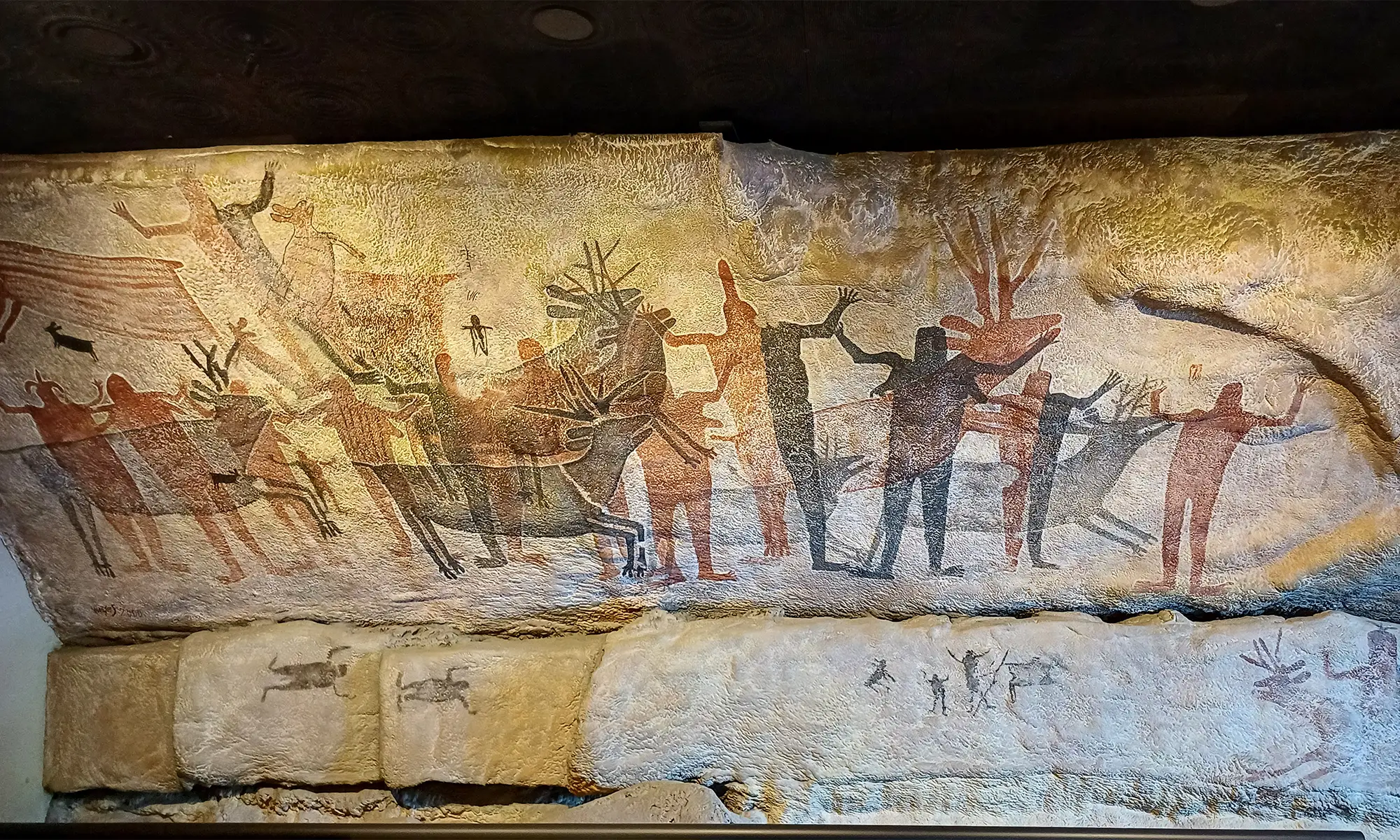
Heading inland for approximately three hours leads to the Sierra de San Francisco, home to some of the most important prehistoric mural sites in North America. The region is protected by UNESCO, and local cooperatives manage access, permits, and guided mule trips.
These expeditions follow established routes into deep canyons where large-scale rock figures remain preserved. Winter and early spring provide the most favorable temperatures for these journeys. Overnight stays are typically part of the guided experience due to the terrain.
San Juanico: Pacific Surf Destination
From the Sierra, travelers reach San Juanico after roughly five hours. The town is known internationally as Scorpion Bay and has a reputation for long, well-formed right-hand point breaks. Swell activity intensifies during summer and early autumn, although the town remains quiet throughout the year.
Hotel Scorpion Bay and Hotel Hacienda sit near the shoreline. Supplies are more limited here, so stocking up in Santa Rosalía or Mulegé is advisable.
Bahia Magdalena: Seasonal Whale Sanctuary
The road trip experience is seasonally enhanced by the potential inclusion of Bahia Magdalena. If the journey occurs between December and April, this 3.5-hour detour leads to a natural sanctuary where Gray Whales migrate to breed, providing opportunities for close observation.
Returning to Loreto: A Slow Conclusion
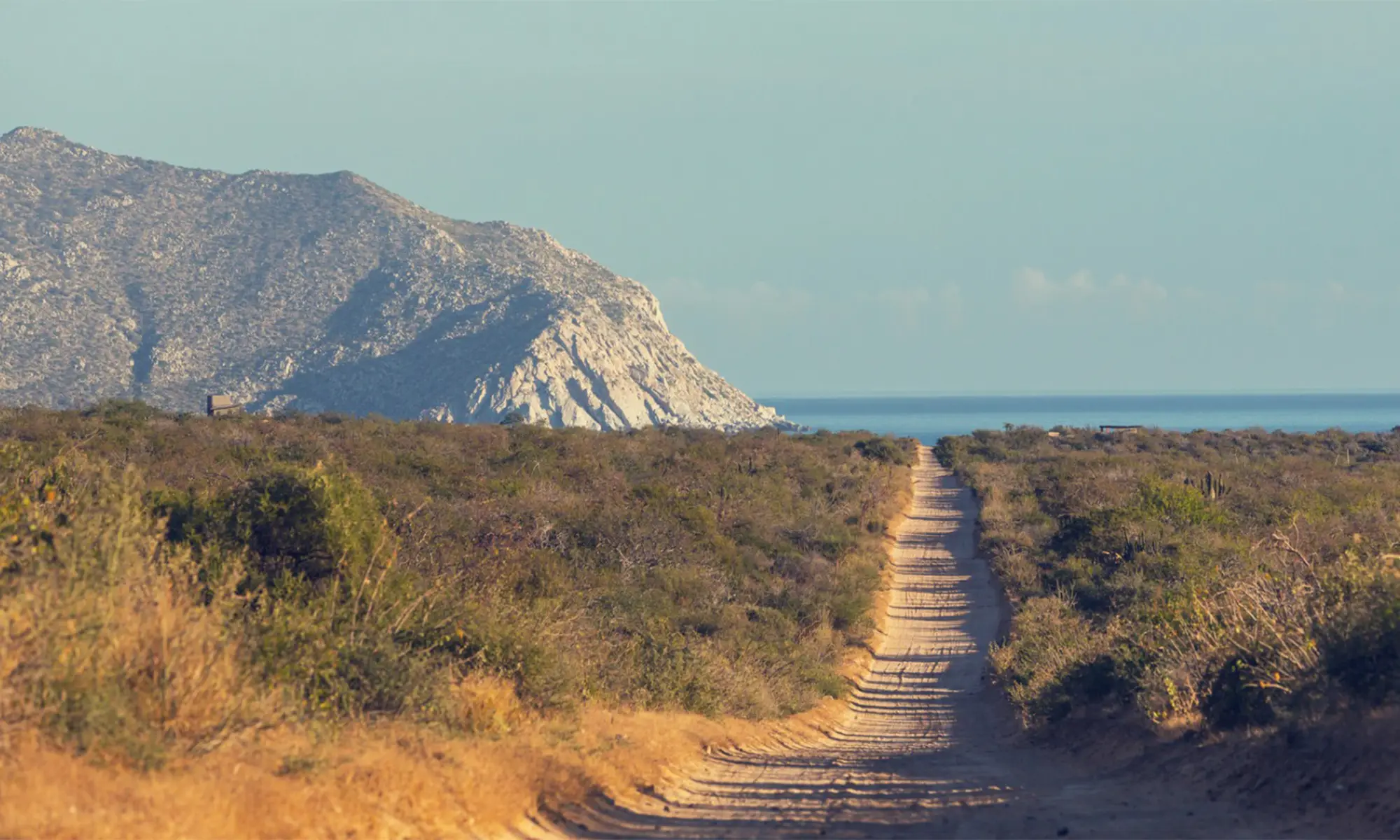
The route concludes with a four and a half hour drive back to Loreto, where travelers can settle into a final evening by the waterfront or schedule a marine tour before departing. Completing the circuit provides a clear sense of the region’s contrasts: volcanic islands, remote desert towns, prehistoric sites, and Pacific surf communities. Encountering these environments by road reveals the layered, varied character of northern Baja California Sur and encourages future exploration with a more grounded understanding of its distances, history, and landscape.