

|
Getting your Trinity Audio player ready...
|
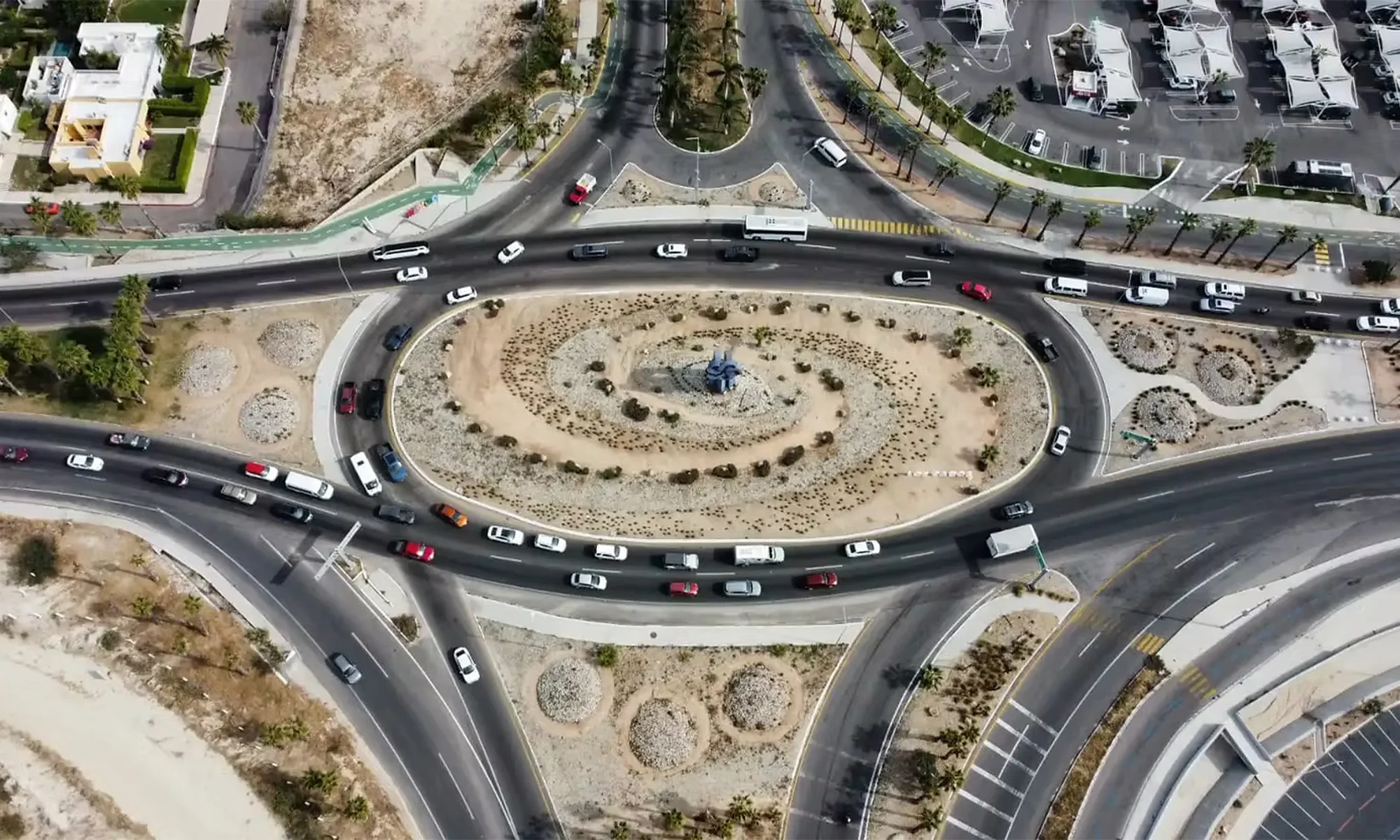
Construction at the intersection commonly known as Glorieta Fonatur in San Jose del Cabo began in May 2025 as part of a major federal and state mobility initiative. The goal has been clear from the outset: resolve one of the most congested traffic points in the municipality and modernize a corridor that connects residential neighborhoods, the hotel zone, and the airport highway.
Located along Mexico’s Highway 1, this junction has long functioned as the main gateway between Los Cabos International Airport, downtown San Jose del Cabo, and the tourist corridor toward Cabo San Lucas. Prior to construction, traffic volumes regularly exceeded 60,000 vehicles per day. During peak hours, delays could extend airport transfers by 20 to 30 minutes, particularly in high season or holiday periods. For residents commuting daily, the roundabout became a consistent bottleneck.
What Is Being Built
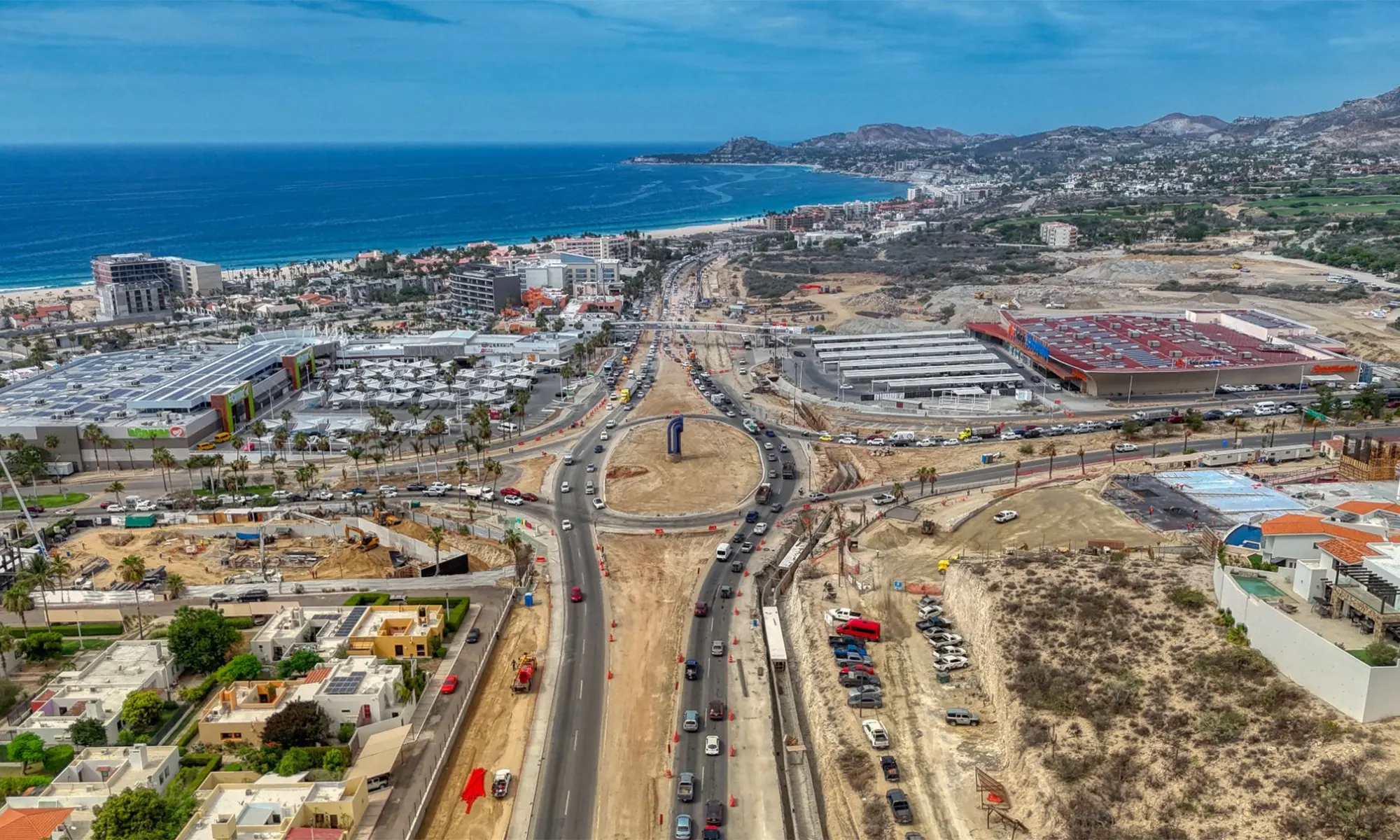
The project replaces the traditional roundabout configuration with a grade separated solution. At the center of the redesign is a multi lane underpass that allows through traffic on Highway 1 to continue moving without stopping at the intersection. Surface level lanes remain for local access, now supported by traffic lights, updated pedestrian crossings, lighting, and improved urban infrastructure.
The intervention stretches approximately 1.5 kilometers and represents an investment of roughly MXN $469 million in federal funds. Beyond reducing congestion, the redesign also aims to improve road safety and provide more organized vehicle flow between airport traffic, hotel transportation, delivery vehicles, and local drivers.
Construction Timeline and Early Impact
Groundbreaking took place in May 2025. From the first weeks of excavation and structural work, lane reductions and temporary detours altered daily traffic patterns. Drivers encountered shifting alignments, provisional access roads, and occasional congestion during peak commute times.
Airport transfers were among the most visibly affected. Transportation providers began advising travelers to allow extra time when heading to SJD, particularly during holidays and high occupancy periods. Authorities implemented alternate routes near Costa Azul and surrounding streets to reduce pressure on the construction zone. While these measures helped maintain circulation, travel times remained inconsistent throughout mid 2025.
By late 2025, officials reported the project had surpassed 50 percent completion, with bridge structures and the underpass alignment clearly visible. Structural phases progressed steadily, and updates suggested the project was advancing on schedule.
Progress Through Early 2026
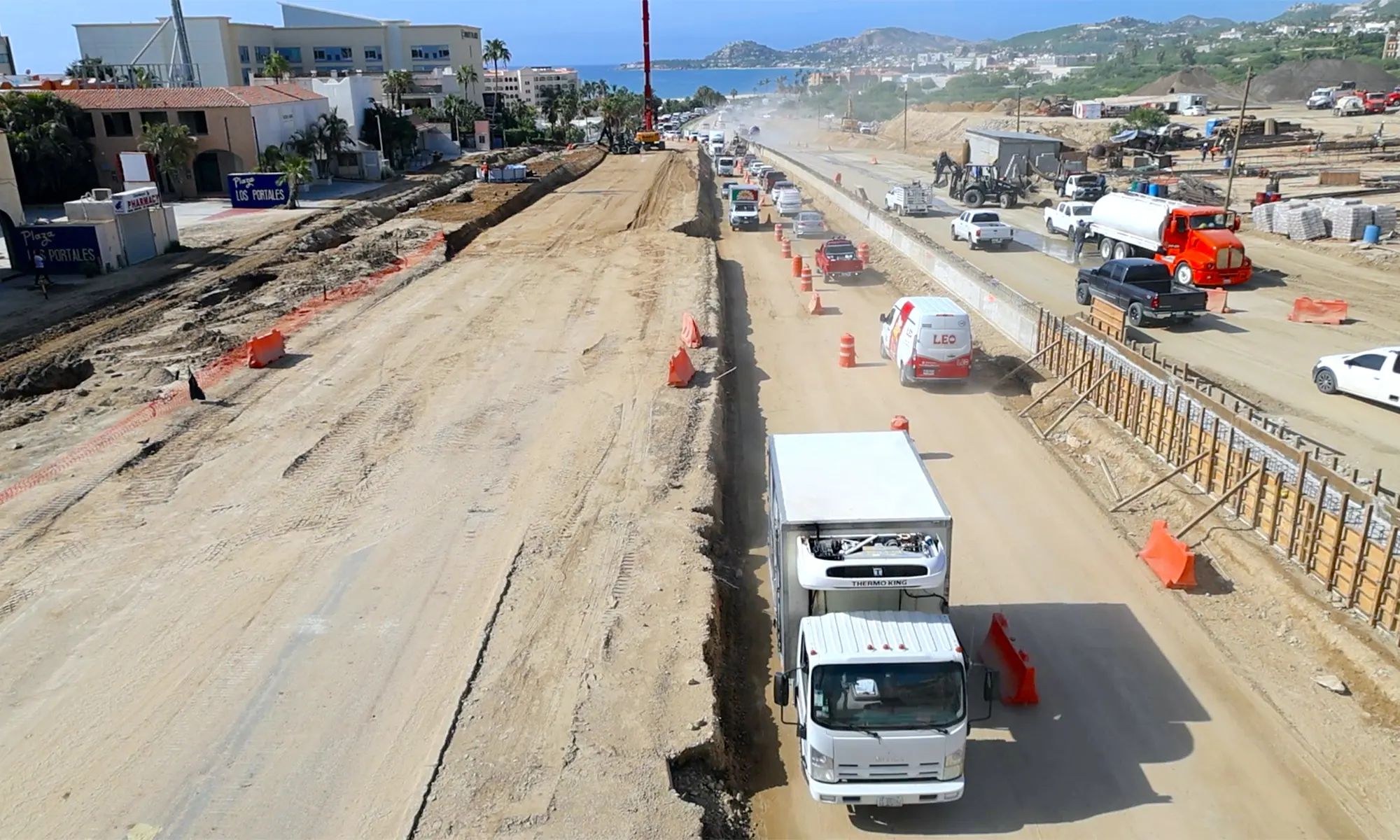
As 2026 began, municipal authorities confirmed that the project had reached approximately 70 percent completion. Major structural components were largely in place, and paving, drainage systems, and finishing work became the primary focus.
Recent updates indicate that traffic will be shifted in phases as final layers of asphalt, signaling systems, and safety elements are completed. While full operation has not yet been declared, officials have signaled that the intersection could become fully functional in the coming months, potentially ahead of the original projected completion window.
What to Expect Moving Forward
Until final works conclude, drivers should continue to expect periodic lane adjustments and temporary slowdowns. Airport travelers are still advised to build in buffer time, particularly during peak traffic hours.
Once operational, the new configuration is expected to significantly reduce stop and go congestion along this stretch of Highway 1. For residents, that means more predictable daily commutes. For visitors, it should translate into smoother transfers between the airport, San Jose del Cabo, and the resort corridor.
The Glorieta Fonatur project represents one of the most significant infrastructure upgrades currently underway in Los Cabos. As the region continues to grow, mobility improvements of this scale are becoming increasingly central to maintaining both quality of life for residents and efficiency for the tourism sector.