

|
Getting your Trinity Audio player ready...
|
This article is based on a conversation between Rene Cicero from Cabo Pulmo Travel and Alejandro Donnadieu, originally published as a podcast on The Baja Brief.
Cabo Pulmo has a well-deserved reputation. New residents in Baja often hear it mentioned. Travelers recognize the name, even if they don’t fully understand why.
The reef sits on a quiet stretch of the East Cape, where boats are still pushed into the surf by hand and the day begins without ceremony. Yet what happens underwater is anything but ordinary. A single morning in this UNESCO-recognized national marine park reveals why the place has become one of the strongest examples of marine recovery anywhere in the world. And why its success matters far beyond the dive community.
The First Dive: The Sandy Plain and the Geometry of Life

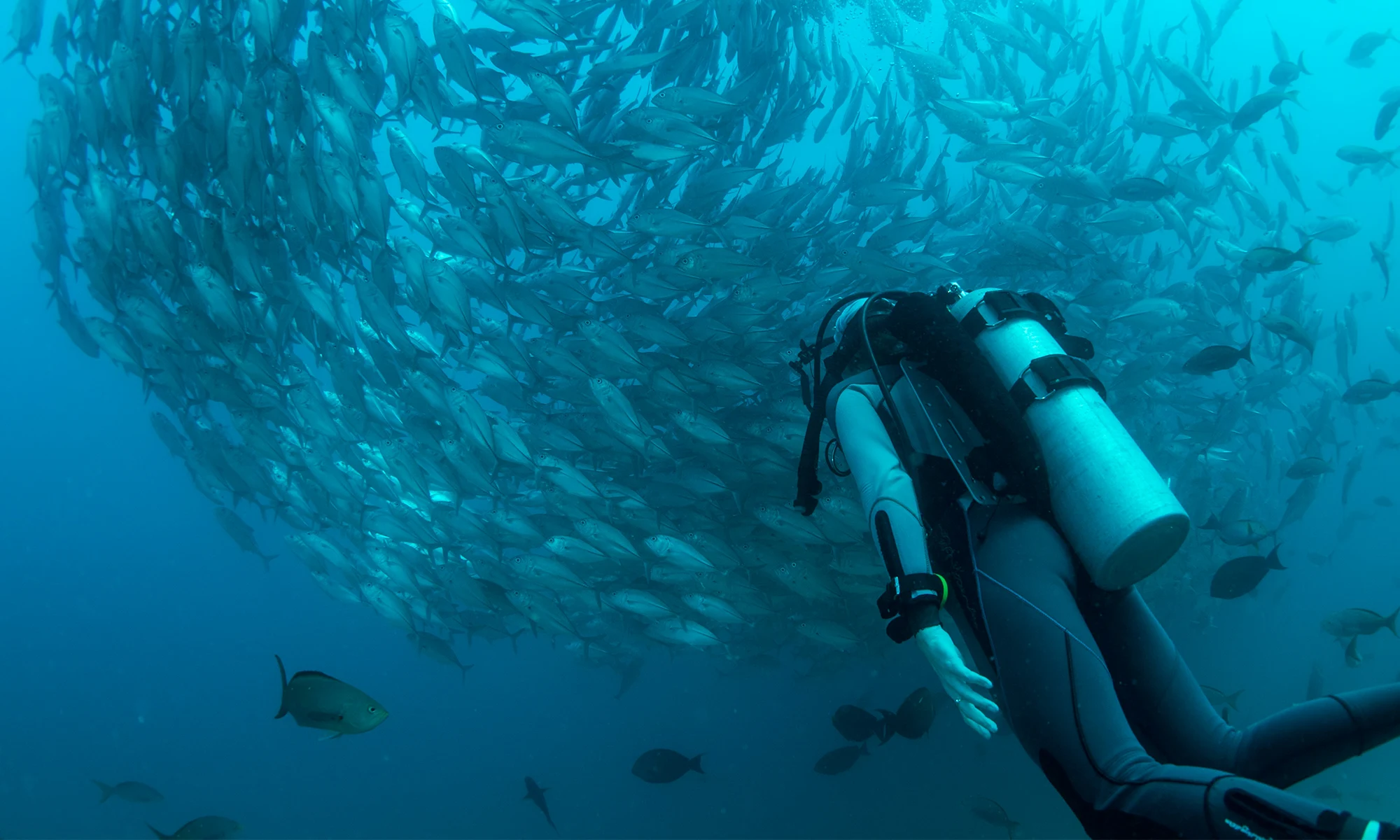
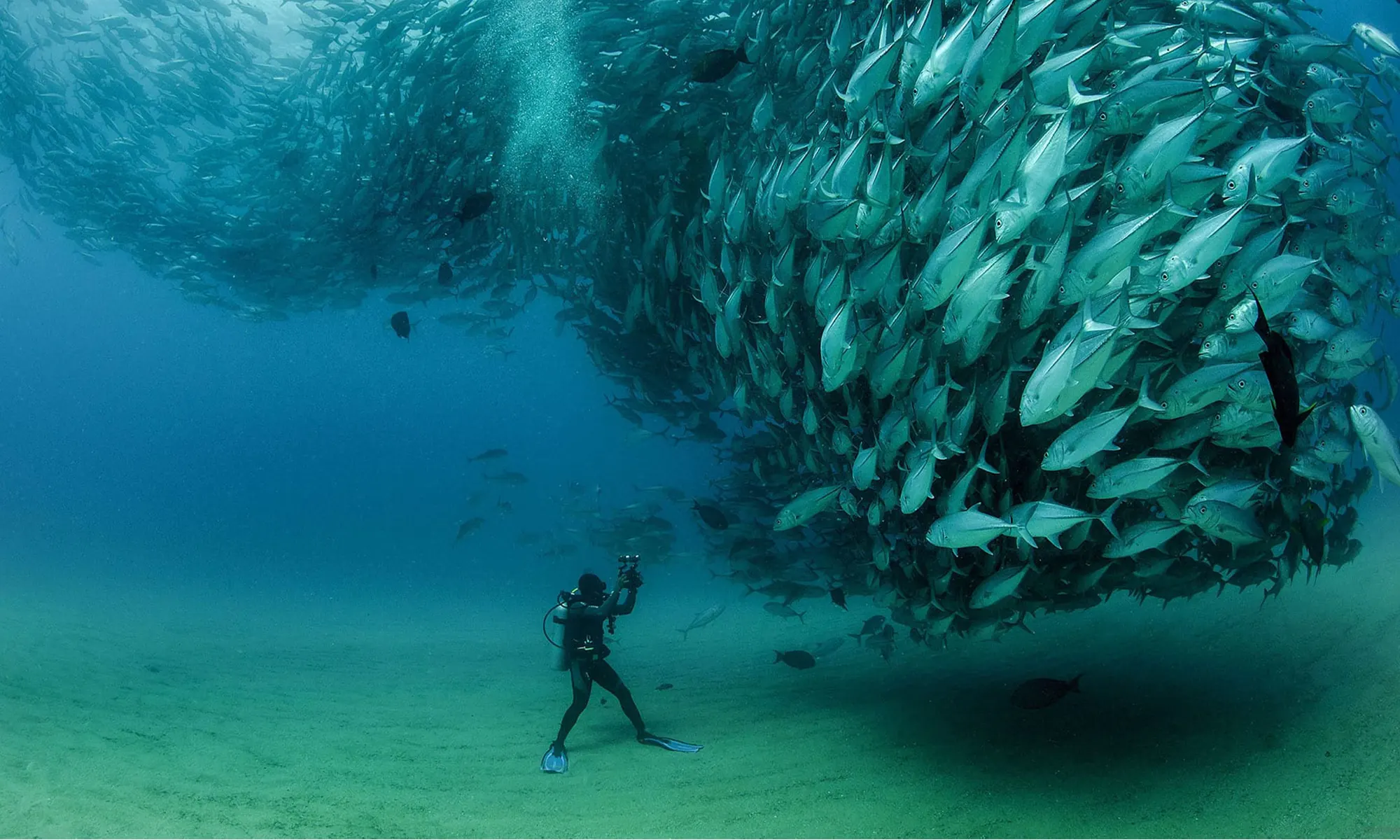
The first descent begins north of Los Morros, over a sandy bottom shaped by currents and light. Visibility shifts as the sun angles higher. The plain looks empty at first, then folds of movement appear at the edge of vision. A school of jacks materializes as a dense, shifting mass, its geometry changing as thousands of silver bodies arc around one another. In seconds, a quiet space becomes a corridor of pressure and synchronized motion.
This abundance is not decorative. It reflects how the ecosystem now functions after years of protection. Sandy-bottom zones in Cabo Pulmo operate as natural exchange points where predators, forage species, and transient wildlife converge. Jacks gather here because the reef’s biomass has recovered to levels that support these large congregations. Their presence reshapes the dive itself, turning a simple descent into an encounter with the architecture of a rebuilt ecosystem.
Other species rise through the water column with the same matter-of-fact presence. Groupers, snappers, and mobula rays appear at steady intervals. None of these sightings exists in isolation. Together, they show a reef that has regained density, layering, and the subtle interactions that define a mature marine system.
The Story Behind the Recovery
Not long ago, Cabo Pulmo was a village under strain. Years of overfishing had reduced catches, and fish were shrinking in size. Families who relied on the sea were confronting a future with fewer resources and opportunities.
The decision to change course did not come from a single actor. It was a convergence of community will, government action, and scientific guidance after a long period of documented decline.
When the marine park was established, and fishing stopped, the transition required new habits and new work. Families who had fished the area for generations became guides. Their knowledge of the coastline remained valuable, but its purpose shifted. Boats were still launched by vehicle and navigated through familiar waters, but the goal became preservation rather than extraction.
This change in livelihoods created a practical commitment to protecting the reef. Conservation in Cabo Pulmo is visible, not theoretical, in the routines of operators, in the discipline required to manage visitor demand, and in the shared recognition that abundance is fragile.
Rising tourism has placed a strain, but it has also reinforced the economic rationale for conservation. The reef thrives because people choose to protect it and continue to organize their lives around that choice.
The Second Dive: El Bajo and the Architecture of a Recovered Reef
El Bajo offers a different kind of density. The reef begins as a patchwork of color and movement, then expands into a sustained field of life. Eels weave through coral heads. Puffers drift with deliberate slowness. Snappers and groupers fill the midwater. The scale of activity is continuous, which gives the site its reputation as one of the park’s most complete ecosystems.
Predators, too, shape the landscape. Bull sharks frequent the region when temperatures shift toward the mid-twenties. They visit cleaning stations, such as the one at El Vencedor, a shipwreck that has become an artificial reef. The presence of sharks signals a functioning food chain, indicating that the system now supports higher-level predators that were scarce before protection.
Unscripted encounters remain part of the experience. Dolphins sometimes cruise over the reef, moving with the same casual authority they show offshore. On rare days, humpbacks pass near dive sites during their migration north. These moments underscore a simple truth. Cabo Pulmo is not a controlled environment. It is a living system responding to seasons, currents, and the return of species once absent from daily view.
The Broader Ecosystem at Work
Whales begin appearing as early as November, usually entering the region from the south. Their migration patterns highlight the park’s position within a broader marine movement corridor. In winter, the presence of humpbacks becomes part of the daily rhythm, visible from the surface and audible underwater.
Dolphins and mobula rays follow their own logic. Dolphins often gather near Los Morros, drawn by the same schools of jacks that attract divers. Mobulas rise in groups, using the sandy areas as staging grounds for their vertical movements. These interactions reveal how species overlap, feed, and shift within the park’s boundaries, shaped by temperature, oxygen levels, and reef structure.
Seasonal currents influence where animals appear. Bull sharks stay deeper in warmer months and move into shallower areas as temperatures drop. The behavior of pelagic species shifts accordingly. All of it demonstrates how complexity returns when a marine area is given the time and conditions to rebuild itself.
A Community Shaped by Protection

Life in Cabo Pulmo now depends on the park’s health. Guides operate within strict schedules. Morning and afternoon trips are coordinated across operators. Boats fill quickly in high season, and the absence of a pier adds logistical friction that shapes daily work. These constraints exist because protection has value. The park’s long-term viability is tied to the discipline of those who use it.
Responsible visitation is part of that equation. Booking in advance reduces pressure on operators. Following dive protocols limits stress on wildlife. These behaviors help sustain the reef that now supports an entire community.
What a Day Underwater Reveals
A day in Cabo Pulmo shows more than a list of species. It reveals the outcome of decisions made by people who chose restoration over continued decline.
The abundance visible across the park is not incidental. It reflects community action, scientific guidance, and a long period of protection that allowed the reef to rebuild itself layer by layer.
For visitors and new residents, the experience offers a clear message. Cabo Pulmo is not only beautiful. It is instructive. It shows what marine ecosystems can become when given room to recover and when the people who depend on them commit to their protection.
The reef is a reminder that change is possible and that the effort required to sustain it remains worth the work.