

|
Getting your Trinity Audio player ready...
|
Art has circulated in Los Cabos for years without taking root. The region has money, visibility, and a constant international audience — factors that tend to accelerate culture elsewhere.
Here, they produced something thinner: exhibitions tied to tourist season, sales that solved the month’s rent, shows that vanished as quickly as they appeared. Work moved through the region, but little accumulated.
That pattern shaped expectations. Art became calibrated for atmosphere and immediacy rather than continuity. Artists passed through, often talented, rarely settled. What was missing was time, structure, and a reason to stay beyond Baja’s beauty.
Francois Paris arrived in Los Cabos early enough to see that imbalance clearly. “There was almost nothing,” he says of the scene he encountered. Two decades later, his work raises a question now facing the region more broadly: what does it take for art to function as a constant, settled practice in a place built on impermanence?
Tourism’s First Role
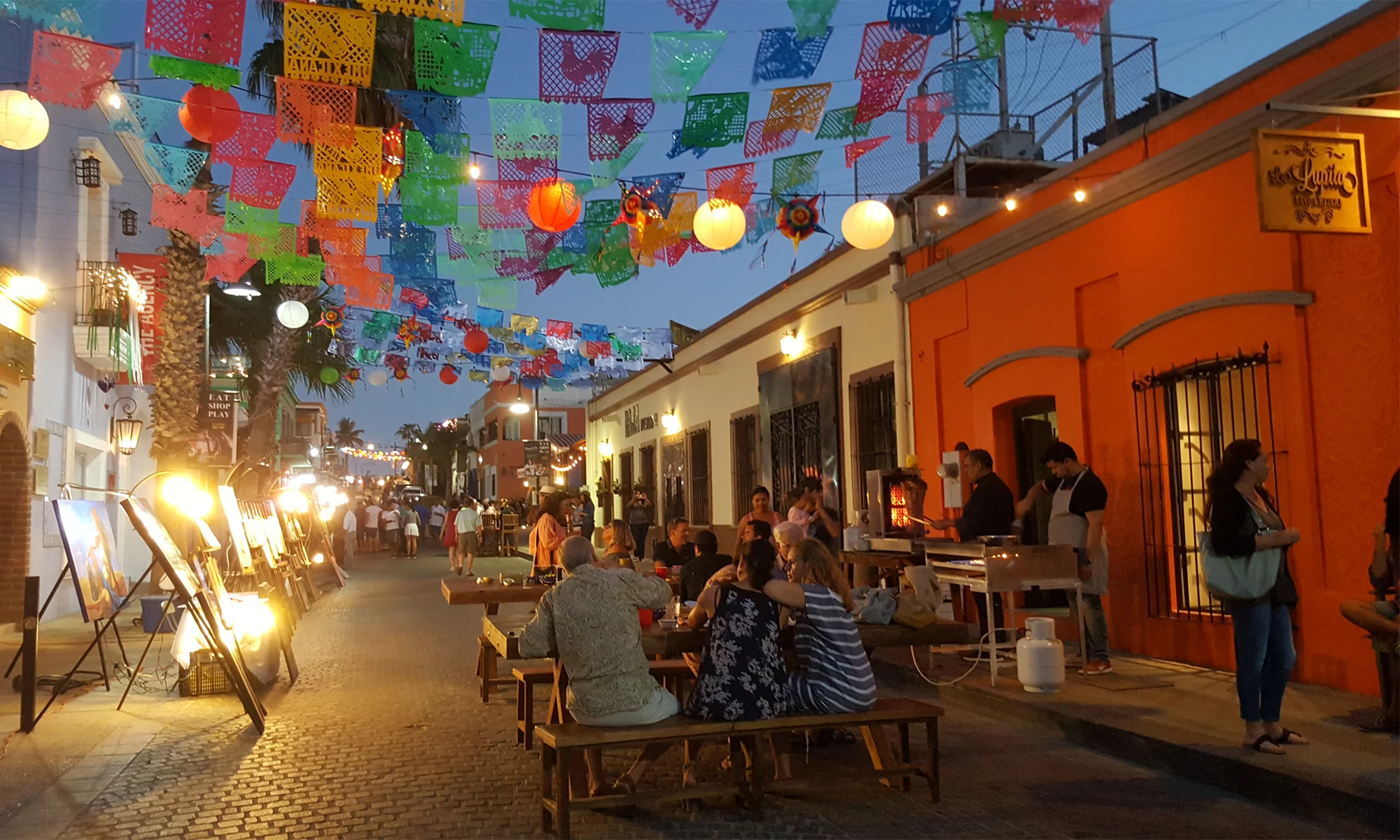
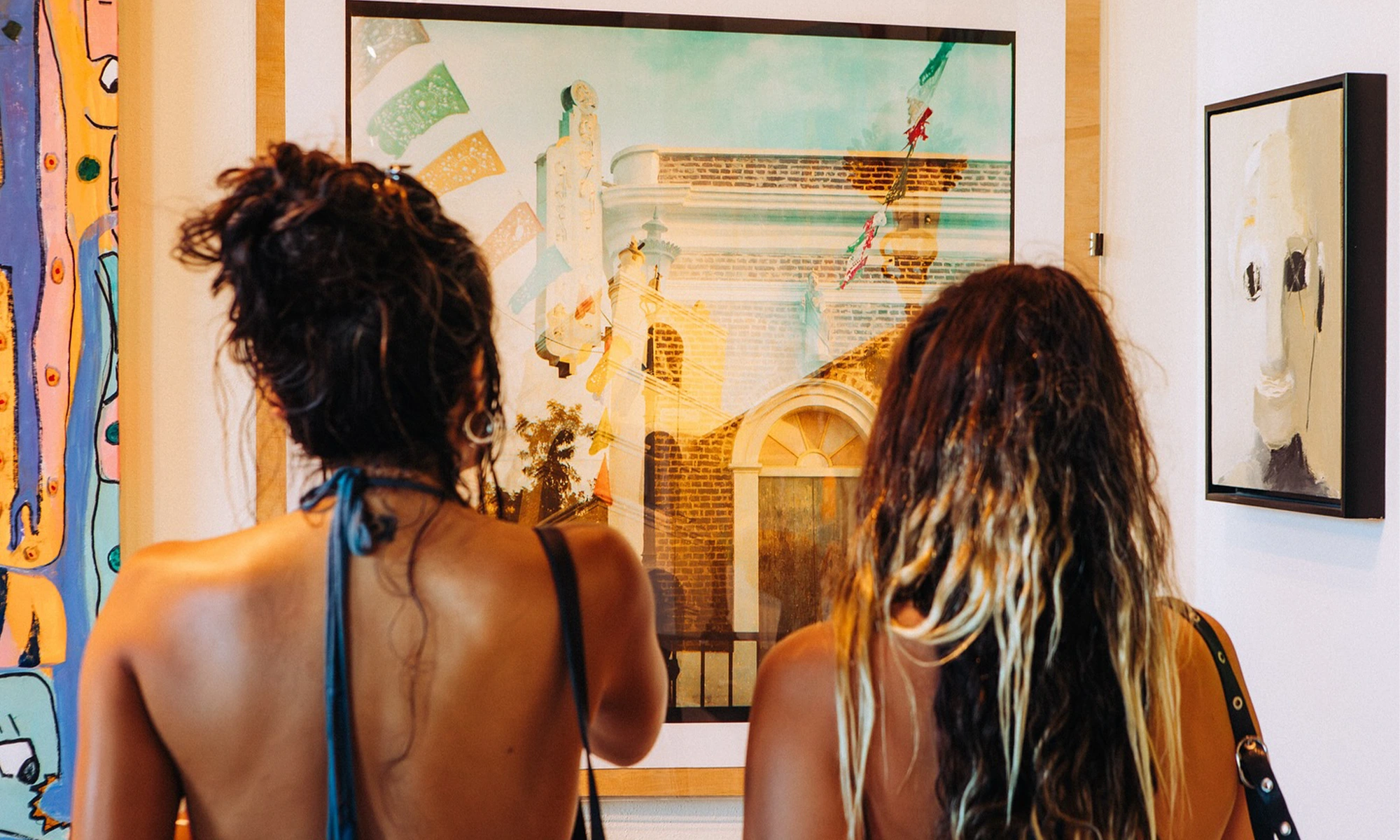
Tourism, as the region’s dominant economic force, shaped the early conditions for art in Los Cabos in enabling yet constraining ways. Galleries depended on seasonal foot traffic, Art Walks, and proximity to hotels and restaurants. Openings followed visitor schedules. Sales followed the same rhythm. For a time, this created circulation and short-term income in a place with few alternatives.
Francois saw the consequences early. “Exposure doesn’t necessarily help you build anything. It might help you survive.” The distinction matters. Visibility kept art present in Los Cabos, but it did little to support the long arc of artistic practice.
What Was Missing
There has always been artistic talent in Los Cabos. Painters, photographers, sculptors, and designers kept coming, attracted by the location and its distance from bigger markets. Many artists were also born here, from local families. What was missing was a system that allowed work to build over time. Without sufficient resources, storage, or financial breathing room, most artists worked sale by sale. Each sale helped in the moment, but rarely led to lasting progress.
That constraint shaped the work itself. Artists produced pieces designed to move quickly, often narrowing scope or scale to fit what the market would absorb. Few developed collections or sustained longer research-driven projects. The result was not a lack of quality, but a lack of depth.
Redefining “Local”
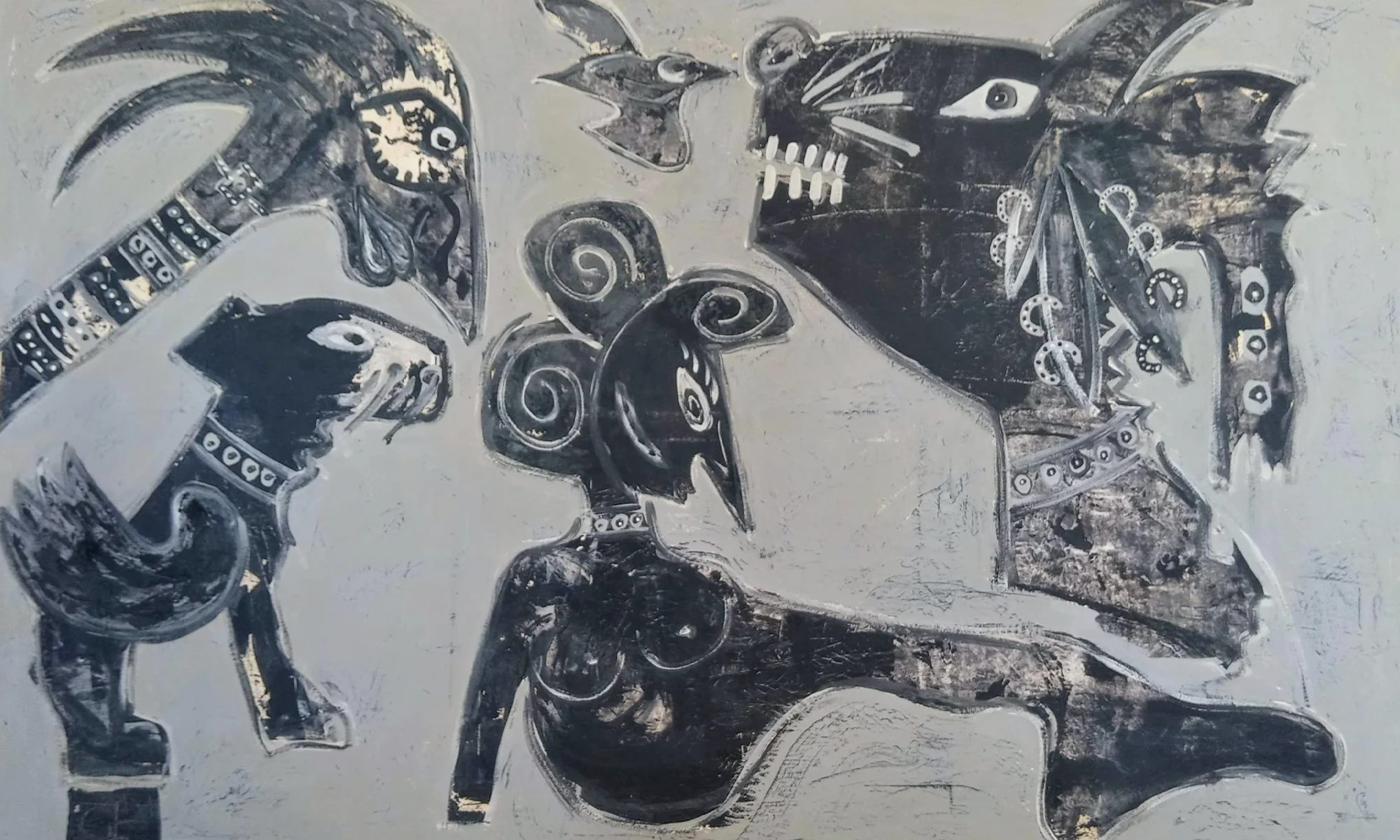
In a place built on arrival, the idea of a local artist requires a different definition. Los Cabos has been shaped by migration for decades, drawing people from across Mexico and from abroad. Birthplace offers little guidance. What matters is duration, contribution, and commitment.
Francois argues for a functional definition. A local artist is someone who lives in the region, produces work there, supports themselves legally, and participates in the shared economy. “If you are here, working, paying taxes, contributing, you’re local.” The distinction carries practical consequences. It shapes access to platforms, representation, and longer-term opportunities.
This framing allows culture to take root without demanding purity. Artistic communities in places like Los Cabos are assembled rather than inherited. Continuity depends on people remaining present long enough for work, relationships, and trust to compound.
A Shift Underway in San Jose
San Jose del Cabo has become the site where these pressures are beginning to resolve. The shift is uneven, but visible in how cultural activity now occupies space and time. Art is no longer limited to single-evening openings. It is embedded in studios, workshops, and programs that assume repetition and return.
Initiatives such as Ballena, an arts center focused on production and process, reflect this change in emphasis. So do longer-standing collaborations between artists, educators, and cultural institutions rooted in the San Jose area. Together, they signal a move toward continuity: supporting work that unfolds over time, with an audience that includes residents and visitors.
What distinguishes this moment is intent. These efforts assume that culture requires structure. They also assume density. San Jose is beginning to function as a cultural node with internal gravity, where artistic activity can persist outside the rhythms of high season.
When Private Capital Starts Supporting Culture
The next phase depends on actors beyond the arts alone. In Los Cabos, private capital has begun to play a more deliberate role in sustaining cultural activity. Hotels, developers, and airlines possess scale and stability that individual artists and small institutions lack. When aligned carefully, that capacity alters what is possible.
Artist residencies offer one example. Early programs, such as those hosted at El Ganzo, treated creative work as part of a longer exchange rather than a single event. International partnerships have since expanded that logic, including a residency initiative involving German artists, supported by a cultural agency and facilitated by Condor’s direct Frankfurt–Los Cabos flight. Platforms such as the Los Cabos International Film Festival and ABC Art Baja California further extend visibility without reducing work to décor.
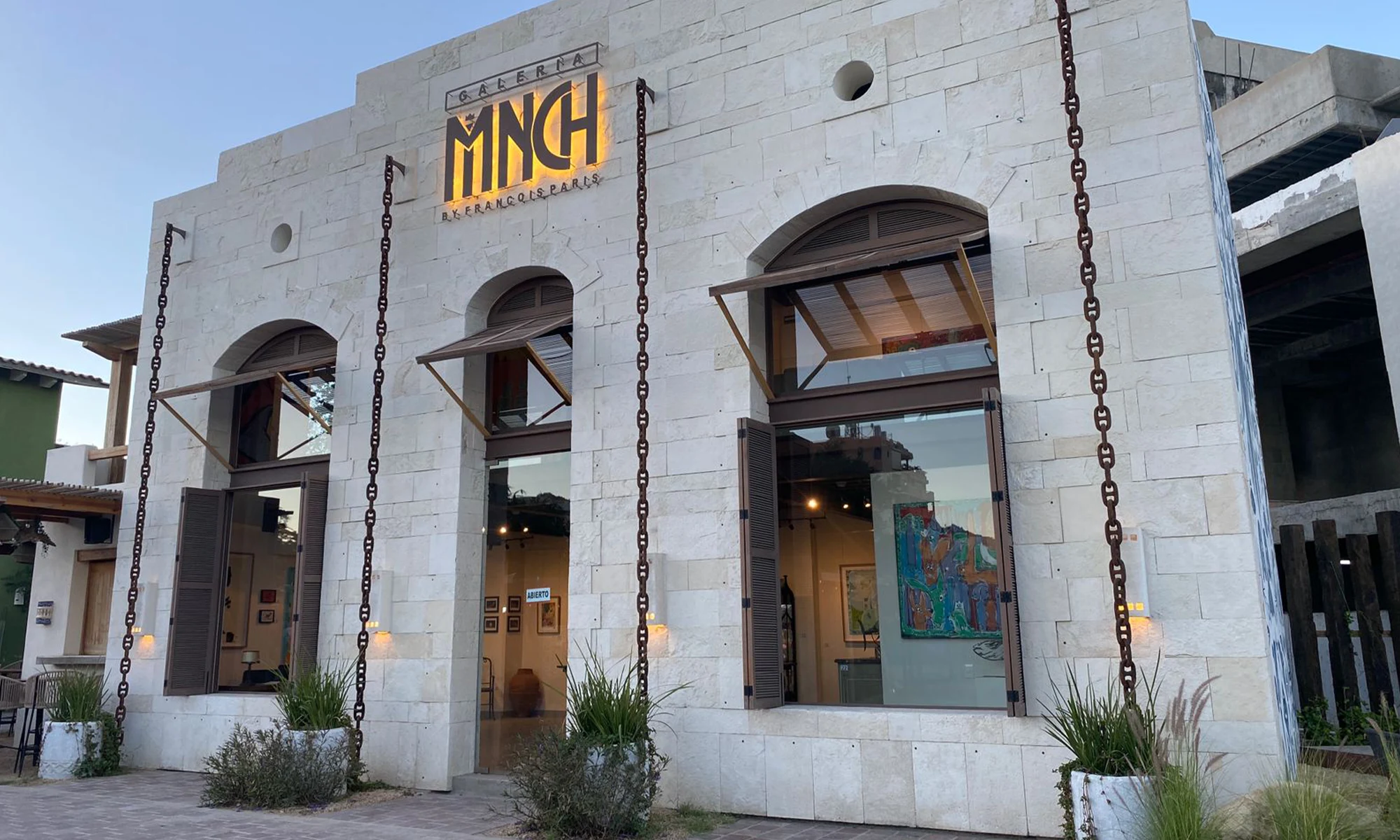
Minch Gallery belongs to this layer. Located in Cabo San Lucas, in the marina area, it operates as part of a privately led reactivation of downtown, including the reuse of a large, long-abandoned building known to locals as the Grey Ghost. Backed by private funding, Minch functions less as a conventional gallery than as cultural infrastructure: a print lab, limited editions, and production capacity designed to support artists economically. It represents an intervention informed by years of scene-building in San Jose, applied to a different urban and economic context.
What Still Needs to Hold
None of this is guaranteed. Cultural scenes in places like Los Cabos remain exposed to familiar pressures: high living costs, short-term thinking, and constant turnover. Infrastructure mitigates risk, but it does not remove it.
What exists now did not exist before. Artists have more than exposure. They have pathways to remain present, to build work incrementally, and to participate in a shared cultural economy. That shift matters. Culture does not emerge simply because a place is desirable. It emerges when people can stay long enough for effort, trust, and work to accumulate. Los Cabos is still testing whether it can offer that kind of time.