

|
Getting your Trinity Audio player ready...
|
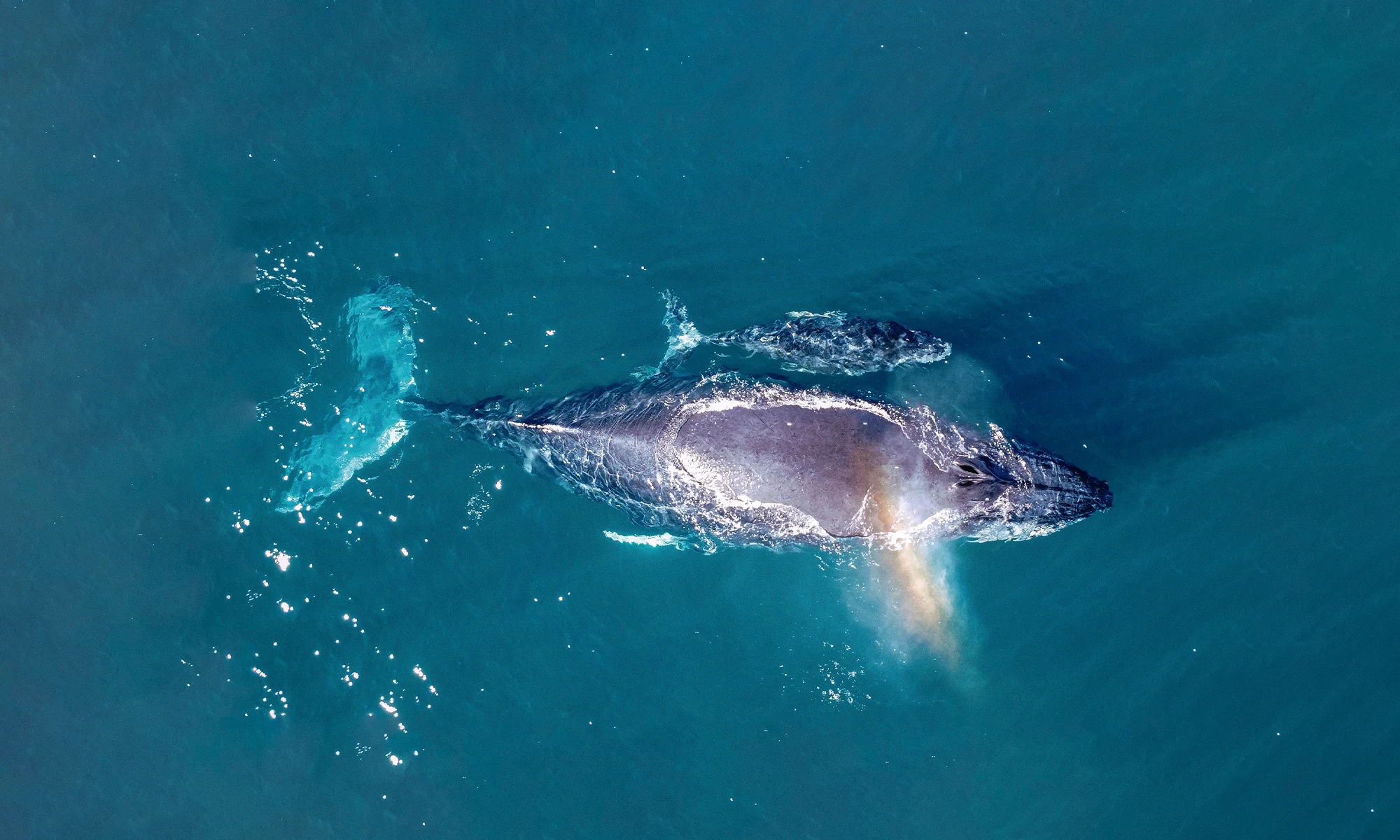
Every winter, the waters off Baja California Sur come alive with movement. A mist of breath rises over the Pacific, a fluke breaks the surface, and for a moment the distance between human and whale collapses into pure wonder. Los Cabos is one of the world’s great stages for this spectacle, home mostly to humpbacks that migrate thousands of miles from Alaska and British Columbia to breed and give birth in warmer seas.
Whale watching here feels elemental, the meeting of two species bound by curiosity. Yet behind every encounter lies a question: how do we witness such power without turning it into performance?
A Geography of Giants
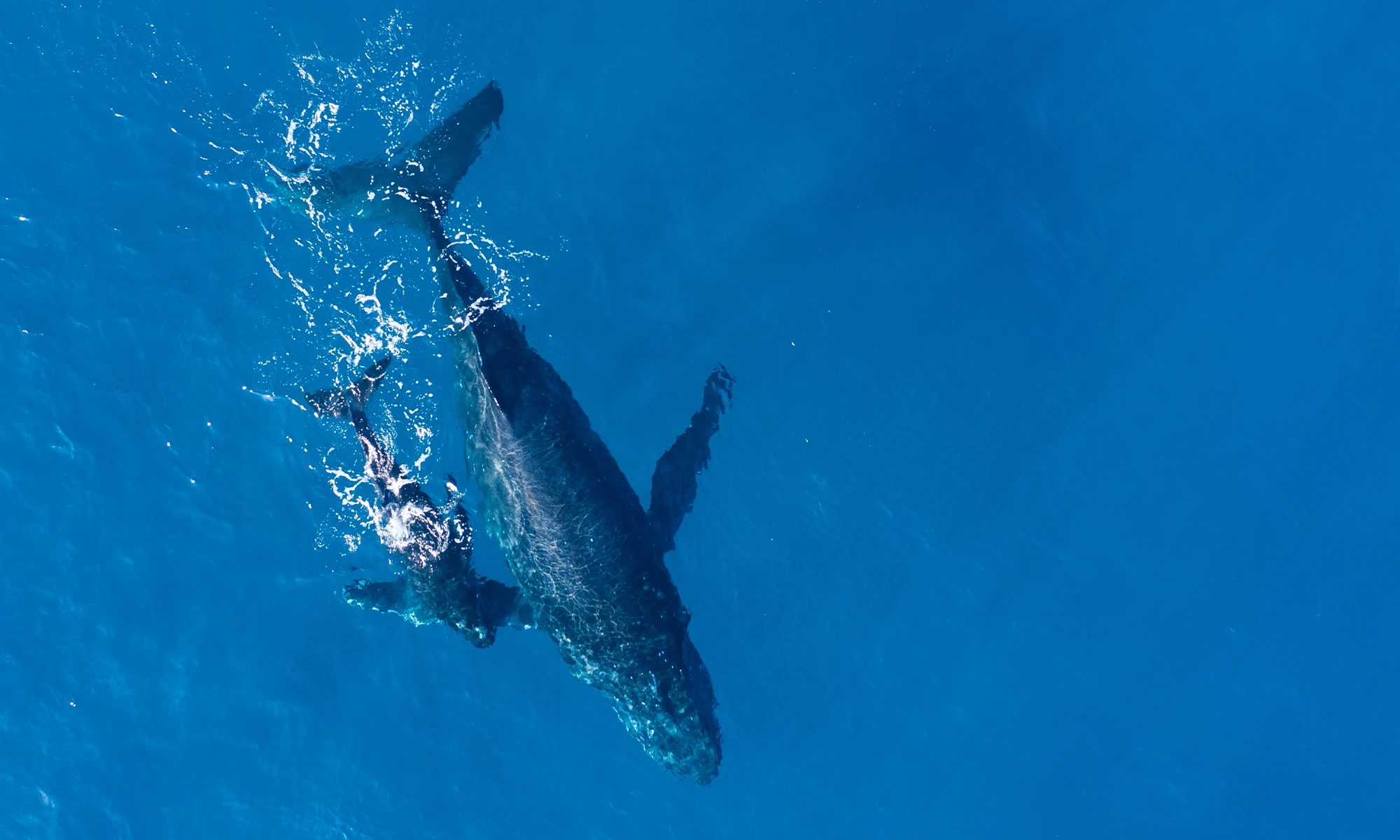
The whales’ return defines Baja’s calendar. From December to April, humpbacks rule the southern corridor, breaching in the deep blue between Cabo San Lucas and San Jose del Cabo.
Farther north, gray whales fill the quiet Pacific lagoons of San Ignacio, Ojo de Liebre, and Magdalena Bay, nursing their calves in calm, shallow waters. On the Sea of Cortez side, Loreto Bay becomes a stage for blues and fins — immense, slow, deliberate — feeding in what locals call “the blue triangle.”
Each region has shaped its own rhythm of coexistence. Magdalena Bay’s fishermen turn to guiding. Loreto’s small-town captains built a code of conduct known worldwide. Cabo’s operators navigate heavier traffic and blend tourism with regulatory discipline. Together, they form an archipelago of practice that keeps whale watching from becoming another extractive industry.
Cabo’s Rules of the Sea
For Jose Manuel Ochoa, owner of Cabo Sails, responsibility begins before the boat leaves the dock. “It’s an organized, regulated activity,” he says. “We have a national standard, a law called NOM-131, that sets the distances, the speeds, and the number of boats allowed near a whale.”
Each season, the environmental authority issues a limited number of permits. Only vessels flying a specific flag are certified to operate. “Maybe a third of the boats have it,” Jose admits. “The rest, they just go out anyway.”
Enforcement is the challenge: budget cuts have left inspectors without fuel or patrol crews. But a new marine protected area — expanding the Cabo San Lucas Bay reserve — could change that. The update will bring almost every whale-watching zone inside official boundaries for the first time.
Still, rules matter only when people believe in them. “We don’t do it just to comply,” Jose says. “We do it to care.” That difference — between regulation and conviction — may decide whether Cabo’s whale watching matures into a sustainable model or drifts toward chaos.
Loreto’s Quiet Revolution
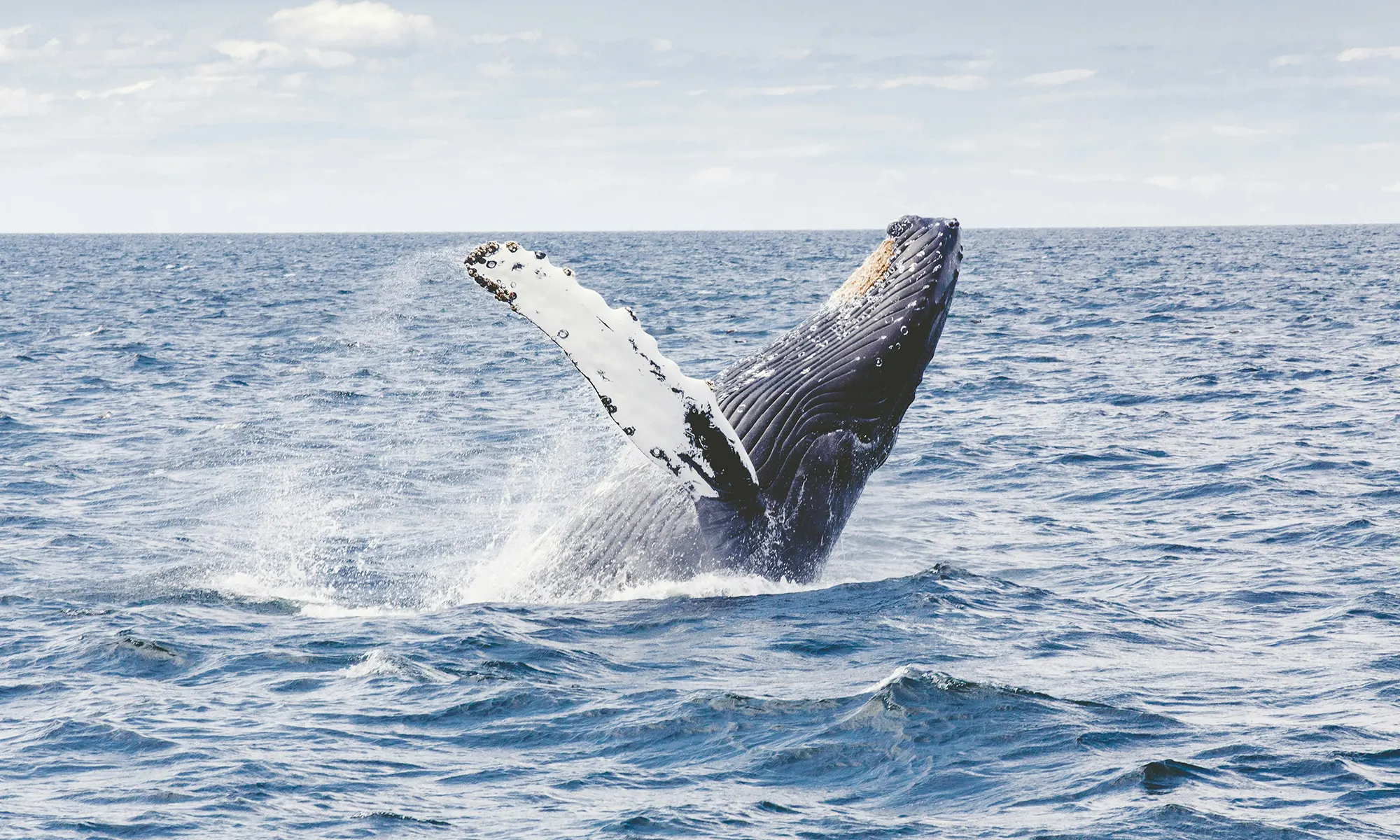
On the Sea of Cortez side, 320 miles north of Cabo, Maria Najera runs Whales of Loreto, where the world’s largest animal, the blue whale, visits each winter. Her town pioneered what’s now called avistamiento pasivo, or passive watching.
“It started here,” she says. “Before, when a whale spouted, everyone rushed toward it. The whale reacted and left.” Working with scientists, Loreto’s guides studied whale behavior. They developed new habits: keeping engines in neutral at 100 meters and watching the animal’s rhythm before deciding whether to move.
“We count the spouts,” she explains. “If she’s feeding, we wait. If she’s traveling, we let her pass.” The method transformed encounters. “We’ve had two whales swim right beside us,” Maria recalls. “Because the engine was off, they kept feeding. They decided to come close.”
Passive watching wasn’t just a scientific success. It became a cultural export. Similar programs now operate as far away as Monterey Bay. Loreto proved that patience can bring proximity, and that restraint can be its own form of intimacy.
The Science of Stewardship
Science travels slowly in Baja, by panga, notebook, and trust. For more than fifteen years, the Oceanic Society has collaborated with local cooperatives and guides to integrate conservation with local livelihoods. “Responsible whale watching,” says Wayne Sentman, VP of
Conservation Travel Programs, “is rooted in respect for the whales, the communities, and the ecosystems that sustain both.”
That respect has structure. In San Ignacio Lagoon, 400 miles north of Cabo, operators rotate turns on the water and give whales rest periods between visits. The model, built on local ownership, ensures that tourism income stays in the community while encounters remain limited and meaningful.
Distance, patience, and silence define the craft. Captains learn to read whale behavior: when to cut the engine, when to move on, when not to follow. Because whales depend on sound, reducing engine noise is as important as maintaining space for them. “It’s best when all these practices work together,” Sentman says, “in the hands of people who know the sea.”
As climate change and vessel noise reshape migration, adaptation is essential: fewer boats, shorter viewing times, and even higher fees if that funds protection. “When managed thoughtfully,” he adds, “whale watching remains both a conservation tool and a sustainable livelihood.”
The Visitor’s Responsibility
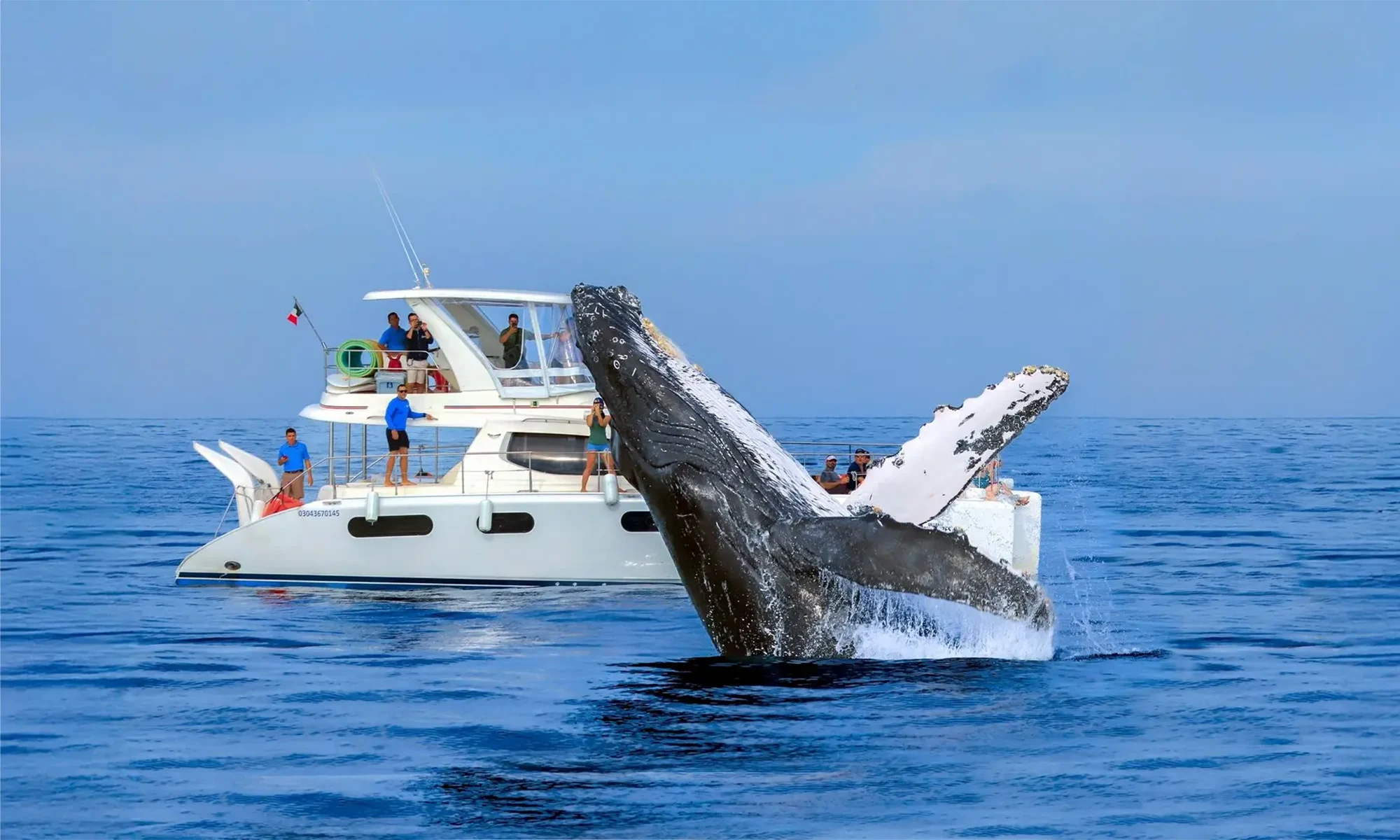
Travelers may not control policy, but they control participation. Choosing an operator is a vote for either stewardship or spectacle.
“The first thing you should look for is the flag,” Jose says again. “If the boat doesn’t have it, it’s not authorized.” Beyond paperwork, ethics show in behavior: small groups, quiet decks, guides who explain the rules before departure. The opposite — loud music, engines chasing flukes — signals indifference disguised as adventure.
“Most people want to do it right,” says Beth Koopmann, from Cabo Adventures, a Cabo-based operator. “But some come expecting a show. They think they’re buying a guarantee.” Education, she argues, turns curiosity into care. When travelers understand why a captain cuts the engine or drifts away, frustration becomes awe.
And as Maria reminds us, patience pays off: “When we wait quietly, the whales decide to come.”
Listening to the Sea’s Giants
Every winter, Baja fills with the sound of breathing. It is a pulse that connects science, livelihood, and wonder. From the gray whales of Magdalena Bay to the blues of Loreto and the humpbacks of Cabo, each species follows its own script, written long before tourism arrived.
To watch them responsibly is to accept that nature keeps the pace. Operators like Maria, Jose, and Beth, the ejidos of San Ignacio, and researchers such as Wayne all work toward the same truth: conservation succeeds only when it’s lived daily, on the water.
The measure of a good whale-watching season isn’t how many whales are seen, but how many return. And if they keep coming back to these lagoons, these channels, this coast, it means Baja is still listening.