

|
Getting your Trinity Audio player ready...
|
This article is based on a conversation between Toby Nunn and Fletcher Wheaton, originally published as a podcast on The Baja Brief.
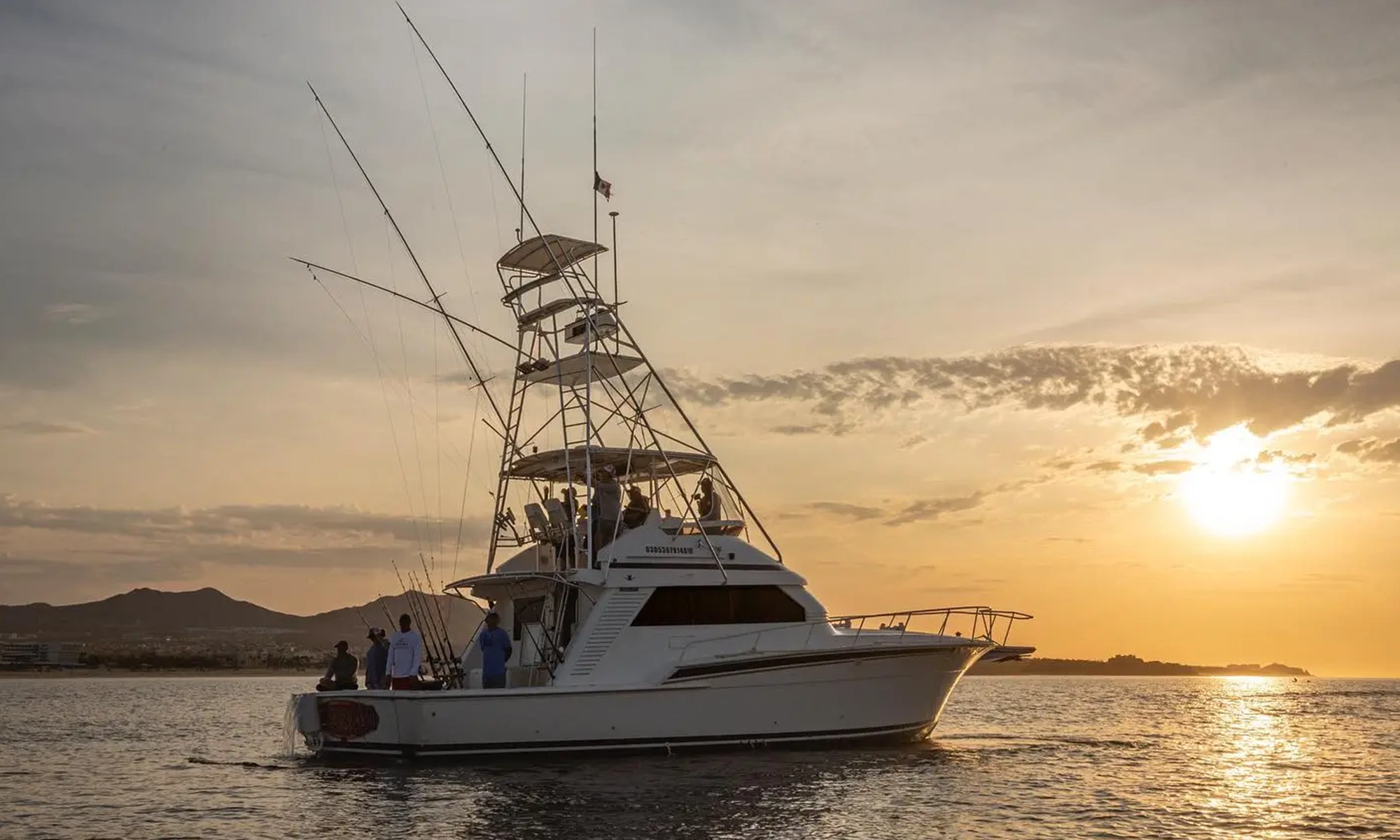
Before sunrise, the marina stirs. Diesel engines turn over in a steady rhythm, deckhands coil lines, and the docks fill with the sound of gear shifting into place. Under the first light, a fleet of boats pushes past the granite towers of Land’s End, rounding the curve where the Pacific and the Sea of Cortez collide.
Out beyond the Arch, the water opens into one of the most productive marine environments on the planet. Deep canyons fall sharply away from the coastline, drawing currents and baitfish close to shore. Within minutes, outriggers lock into place, and lures trace their paths over cobalt water that has shaped livelihoods here for generations.
“You don’t have to run far to make it happen here,” says local expert and charter captain Toby Nunn. “We’ll often never lose sight of the rock, and we’re already into marlin or wahoo within a few miles.” This is where expectation and skill converge, where anglers from around the world come to test themselves against a fishery known for its diversity, its proximity, and the raw spectacle of what moves beneath the surface.
Where Two Seas Merge

Los Cabos occupies a rare position on the world map. At the southernmost edge of the Baja California peninsula, two great bodies of water meet with unusual force: the vast Pacific Ocean to the west and the warmer, protected Sea of Cortez to the east. Their convergence creates shifting currents, nutrient-rich upwellings, and a dynamic flow of marine life that few coastlines can match.
One of the main differences between Cabo and other elite fisheries is proximity. Deep water lies close to shore, where underwater canyons and drop-offs begin just minutes beyond the harbor. Anglers here do not spend hours running to find action; they spend time directly on the water rather than in transit.
That structure shapes everything: accessibility for newcomers, competitiveness for seasoned crews, and an ecosystem where boats of every class share the same grounds. “Cabo is built on the edge of two oceans,” Toby says. “That clash of water brings everything in close: bait, predators, all the big species.”
A Fishery Defined by Its Range
The waters surrounding the cape support an uncommon concentration of species. Billfish are present throughout the year, especially striped marlin, which anchors much of the region’s reputation. Blue and black marlin arrive as water temperatures rise, and sailfish appear across broad stretches of the season, giving crews the chance to pursue multiple species in the same day.
Pelagic fish add a different dimension: yellowfin tuna move in powerful schools, sometimes pushing extraordinary weights, and wahoo deliver blistering runs and exceptional table value. Dorado, flashing gold and electric green at the surface, remains a favorite for its fight and its unmistakable color.
Closer to shore, roosterfish, snapper, grouper, and amberjack offer their own challenges for those who prefer sight casting or inshore tactics. The range allows anglers to design a day around ability and interest, choosing between offshore endurance, targeted pursuit, or variety within a single outing.
More than a Catch

Even on busy days, the experience offshore extends beyond pursuit. Whales, dolphins, sea turtles, and sea lions move across the same waters that anglers watch, creating encounters that leave a lasting mark.
Humpback whales arrive each winter, using the shelter of the cape as a nursery where calves learn to swim and breathe before beginning their long migration north. Gray whales approach from the Pacific and often travel farther south than expected, giving observers a chance to see them within sight of the shoreline.
Encounters with blue whales — the largest animals on Earth — instantly reshape scale and perspective. “There’s nothing more humbling than seeing a whale surface beside you. It reminds you just how alive these waters are.”
Orcas appear at times as well, commanding attention with their precision and speed.
A Global Stage for Competition
Each year, teams arrive to take part in a tournament circuit that includes the Pelagic Triple Crown, the Bisbee’s series, the Los Cabos Billfish Tournament, the Los Cabos Offshore, and the Western Outdoor News Tuna Jackpot.
Prize pools climb into the millions, attracting large sportfishing yachts and highly trained crews. Yet some of the most celebrated victories come from smaller local boats, proof that knowledge and instinct compete well against scale and technology.
When a local captain and crew take a significant win, the impact spreads well beyond the marina: “It shows what kind of talent we have here.” These tournaments fuel investment in charter operations, marine trades, and hospitality, and they reinforce a culture where skill and perseverance carry real weight.
A Culture Shaped by the Sea
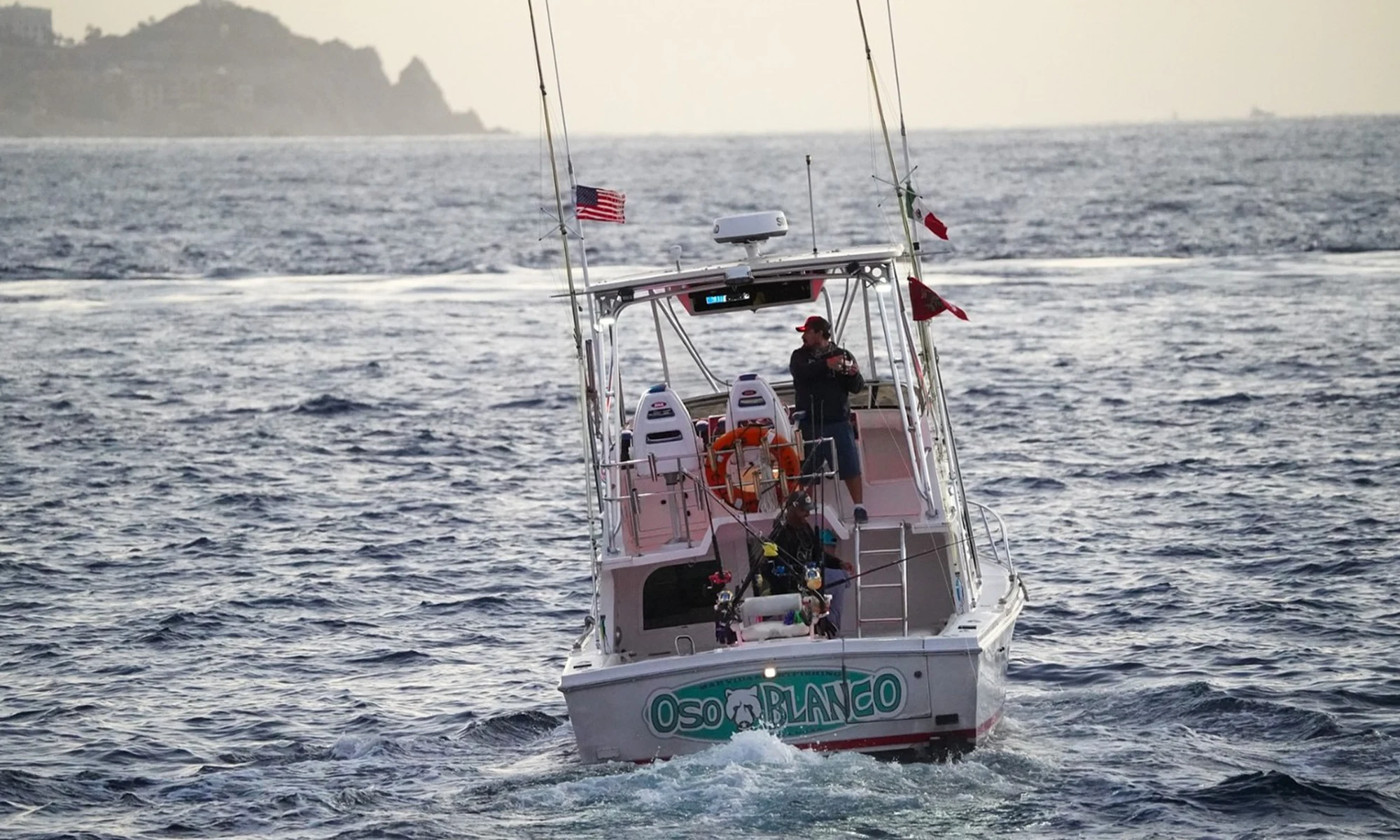
Many captains began on pangas as children, learning to read water and weather long before they learned to manage outriggers or electronics. Their fluency comes not from instruction alone, but from immersion: hours spent watching birds work bait balls or waiting for surface tension to fracture, signaling movement below.
Knowledge here is passed down by those who grew up on these waters. That depth of experience shapes Cabo’s identity, and the authenticity of that culture is felt the moment someone steps on a boat. Visitors recognize this immediately: the calm confidence on deck, the teamwork without words, the sense of place that can’t be imitated.
Where Time Works Differently
Frequent direct flights connect Los Cabos to major cities across the U.S. and Canada, bringing travelers from the airport to the marina within hours. Many arrive before noon and head offshore the same day. A half-day charter often offers the same promise as a full-day trip elsewhere, and those with limited time find the experience condensed without losing depth.
“Most places, you spend more time getting to the fish than actually fishing,” Toby says. “Here, the moments that matter are right in front of you.”
When the boats turn back toward the harbor and the Arch comes into view, coolers are opened, stories traded, and the energy shifts from anticipation to reflection. The return carries the sense of completion that distinguishes days spent well.
Why It Endures
The strength of this fishery is not measured solely in records or tournament payouts. It lives in the discipline of mornings on the water, the pulse of a line when a strike hits, and the silence when a whale surfaces close enough for its breath to cut through the sound of the ocean.
Ordinary days hold the possibility of something extraordinary, available to anyone willing to step onto a dock before first light. What draws people back is a connection to a coastline that rewards focus and respect, sustained by local knowledge and renewed with every tide. For many, that understanding begins with a single trip offshore. For most, it never really ends.